
Upgraded Watt Power Meter Plug
4.6Editor score
Multiple display modes
Overload protection
Adjustable backlight time
This guide compares ten top-rated electricity meters for RVs, detailing their accuracy, installation needs, and monitoring features to help you choose the
Finding a reliable electricity meter for RV use ensures you track power consumption accurately while traveling or stationed at a campsite. Modern units offer digital displays, surge protection, and sub-metering capabilities to suit various electrical setups.
We evaluated ten leading models based on their measurement precision, installation complexity, durability against weather, and compatibility with standard RV pedestals. Each option was assessed for real-world usability and long-term reliability in diverse power environments.
Each pick highlights key strengths like clear LCD readouts, energy monitoring features, and protective functions. Keep in mind that availability and pricing can shift over time, so verifying current stock before purchase is always recommended for best results.
4.6Editor score

4.8Editor score

3.5Editor score
This side-by-side comparison outlines the core specifications and primary use cases for each model. From simple plug-in monitors to hardwired sub-meters, these options address different needs in RV power management and energy tracking.


This digital electric sub meter stands out for its precision and adaptability in RV and rental applications. With a solid 4.5-star rating, it offers users a reliable way to monitor power consumption without guessing. Its high-definition display ensures that key metrics like voltage and current are always visible, making it a top choice for those serious about energy management.
We may earn a commission when you buy through this link, at no additional cost to you.
The meter supports sub-metering across multiple circuits, which is essential for landlords or RV park operators. It can track import and export energy for solar systems, ensuring that any excess power generation is recorded correctly. The labeled terminals simplify wiring, and the Pulse and Reverse LEDs provide immediate feedback on correct installation.
While the device is robust, it assumes access to a standard meter box or panel setup. DIY enthusiasts may need some electrical knowledge to integrate it safely. However, once installed, its long-term stability and ability to retain data during outages make these trade-offs worthwhile for consistent performance.
Anyone looking for a professional-grade solution to manage RV power usage should consider this model. It balances ease of use with advanced features like Modbus communication. If you need accurate billing data or solar insights, this meter delivers dependable results year after year.
The reverse-flow LED and import-export tracking allow users to verify inverter behavior and detect polarity issues quickly.
The sealed housing protects internal circuitry from humidity and temperature changes, ensuring reliable operation in outdoor RV pedestals.
We may earn a commission when you buy through this link, at no additional cost to you.
This 240V energy monitor is a strong contender for budget-conscious users who still demand quality. Boasting a 4.7-star rating, it offers accurate measurements and a straightforward interface. The backlit LCD makes it easy to read data even in dimly lit utility rooms, ensuring you never lose track of your energy consumption.
We may earn a commission when you buy through this link, at no additional cost to you.
Its ANSI Form 2S standard ensures compatibility with many standard meter sockets, which simplifies setup for RV pedestals. The device handles systems up to 200A, making it suitable for most residential and light industrial applications. Stored data is retained during power outages, so your records remain intact without needing reset.
While it lacks advanced communication features like Modbus, it delivers on the core promise of reliable monitoring. The rugged construction supports both indoor and outdoor use, which is ideal for variable RV environments. If you need a no-frills solution that just works, this is a practical choice.
Ideal for travelers or renters who want to track power without complex setups. The durable build and clear display make it a dependable option for daily checks. Just remember to confirm your socket compatibility before purchase to ensure a smooth installation experience.
Designed to fit standard 4-Jaw meter sockets, this monitor ensures a fast install for RV and residential systems.
Energy data remains stored even if power is lost, preventing the need to manually re-enter consumption records after an outage.
We may earn a commission when you buy through this link, at no additional cost to you.
This watt power meter plug offers an affordable way to monitor specific appliances in your RV. With a 4.6-star rating, it tracks energy, voltage, and cost over time. The 2.36-inch screen is large and backlit, making data easy to read day or night. Its seven modes let you cycle through useful metrics quickly.
We may earn a commission when you buy through this link, at no additional cost to you.
Overload protection is a standout feature. If an appliance exceeds the set limit, the display warns you to prevent damage or trips. The adjustable backlight time helps save power when the unit is unused. Data memory ensures you don't lose historical info when unplugging the device.
The main limitation is its plug-in nature. It only measures devices plugged directly into it, not the whole RV system. However, for checking high-draw items like AC units or heaters, this targeted approach is effective. It is also a great tool for testing energy efficiency.
Recommended for campers wanting to identify power-hungry appliances without major electrical work. It balances functionality and price well. If you need to reduce consumption and save on bills, this meter gives you the insight to make informed changes.
Users can input unit costs to see how much each appliance contributes to their total electricity bill over cumulative time.
The 180-degree viewing angle means you can read data clearly even when viewing from the side, avoiding the need to stand directly in front.
We may earn a commission when you buy through this link, at no additional cost to you.
This digital electric meter is designed for users who prioritize accuracy and safety. Its 4.8-star rating reflects its reliable performance in measuring energy. The 0.5-level accuracy ensures precise kWh data, which is crucial for billing or solar setups. The high-definition display makes readings intuitive and sharp.
We may earn a commission when you buy through this link, at no additional cost to you.
It meets ANSI C12.1 standards, offering robust defensive functions against dust, water, and pressure. This durability supports long-term use in challenging RV environments. The C1S configuration fits standard 4-jaw sockets, simplifying installation for compatible bases. It works well for both residential and RV scenarios.
While highly effective, you must ensure your pedestal matches the socket type. Also, it is not a plug-in unit but requires wiring. Once installed, its defensive features protect the internals from environmental stress. This makes it a solid choice for permanent setups.
Best for RV owners seeking a permanent, precise meter for their pedestal. It balances professional specs with practical design. If accuracy and longevity are your main goals, this model provides consistent monitoring without frequent maintenance needs.
Triple resistance to dust, water, and pressure ensures the meter remains reliable even in humid or dusty RV parks.
The precision LCD offers a clear digital readout, allowing users to track real-time power usage data conveniently.
We may earn a commission when you buy through this link, at no additional cost to you.
This 50 Amp RV surge protector combines safety with energy monitoring. It features a comprehensive LCD screen to display accumulated kWh, helping you verify usage at metered parks. With 16,000 Joules of surge protection, it acts as a shield against lightning and grid spikes to save your electronics.
We may earn a commission when you buy through this link, at no additional cost to you.
You can monitor six key parameters in real-time, including voltage and active power. This helps you balance loads and avoid tripping breakers. An internal temperature sensor adds another safety layer, warning you of abnormal heat at the plug. It is designed for NEMA 14-50 outlets.
While the rating is modest at 3.5 stars, its feature set is premium. The combination of monitoring and protection justifies the cost for those with expensive gear. It simplifies your setup by merging two functions into one plug-and-play unit.
Ideal for Class A motorhomes or 5th Wheels needing both surge protection and usage tracking. If you want peace of mind against voltage spikes while keeping tabs on consumption, this unit is a comprehensive solution.
With 16,000 Joules of energy absorption, this protector sacrifices itself to save your RV's expensive electronics from lightning strikes.
Real-time load monitoring helps you manage draw by turning off heaters before using microwaves to prevent breaker trips.
We may earn a commission when you buy through this link, at no additional cost to you.
This watt meter plug provides a flexible way to monitor household or RV appliances. It offers eight display modes, giving users various ways to view parameters like cost and power factor. The ABS material is fireproof and anti-drop, ensuring durability in daily use. A white backlight enhances readability at night.
We may earn a commission when you buy through this link, at no additional cost to you.
Overload protection triggers a warning when power exceeds 1800W, protecting your devices. The easy reset function allows clearing cumulative data with a single button press. Data memory saves settings and cost info even after unplugging, so you don't lose your configuration.
While it lacks network integration, it covers essential monitoring needs. The fireproof build and simple operation make it user-friendly for non-experts. Its affordability and feature set make it a strong value option for casual users.
Best for campers who want a reliable plug-in monitor for checking appliance usage. It balances protection with usability. If you need to track specific loads without wiring complexity, this model delivers consistent performance.
High-quality ABS material makes the body fireproof and anti-drop, ensuring safety in potentially rough RV environments.
You can reset all cumulative data and settings directly with the M button, needing no special tools to restore factory defaults.
We may earn a commission when you buy through this link, at no additional cost to you.
This digital sub meter is built for advanced monitoring systems. With RS485 Modbus communication, it connects to data loggers for centralized collection. It measures both imported and exported energy, which is vital for solar users. The backlit LCD shows multiple parameters, including voltage and current.
We may earn a commission when you buy through this link, at no additional cost to you.
The pulse output terminals allow integration with external counters or PLC systems. This expands its use to automation projects. Non-volatile EEPROM memory retains data during power interruptions. The IR optical interface supports authorized configuration with compatible tools.
While powerful, it requires professional configuration. The setup is not simple plug-and-play. However, for those managing multiple RV sites or complex grids, this level of detail is invaluable. It offers transparency and control over energy flow.
Recommended for RV park managers or solar enthusiasts needing networked data. If you want to track usage at a system level, this meter provides the necessary connectivity and precision for effective management.
RS485 Modbus allows connection to gateways and data loggers, supporting multi-meter networks for centralized monitoring.
Import and export energy measurement helps users understand the balance between generation and consumption in solar setups.
We may earn a commission when you buy through this link, at no additional cost to you.
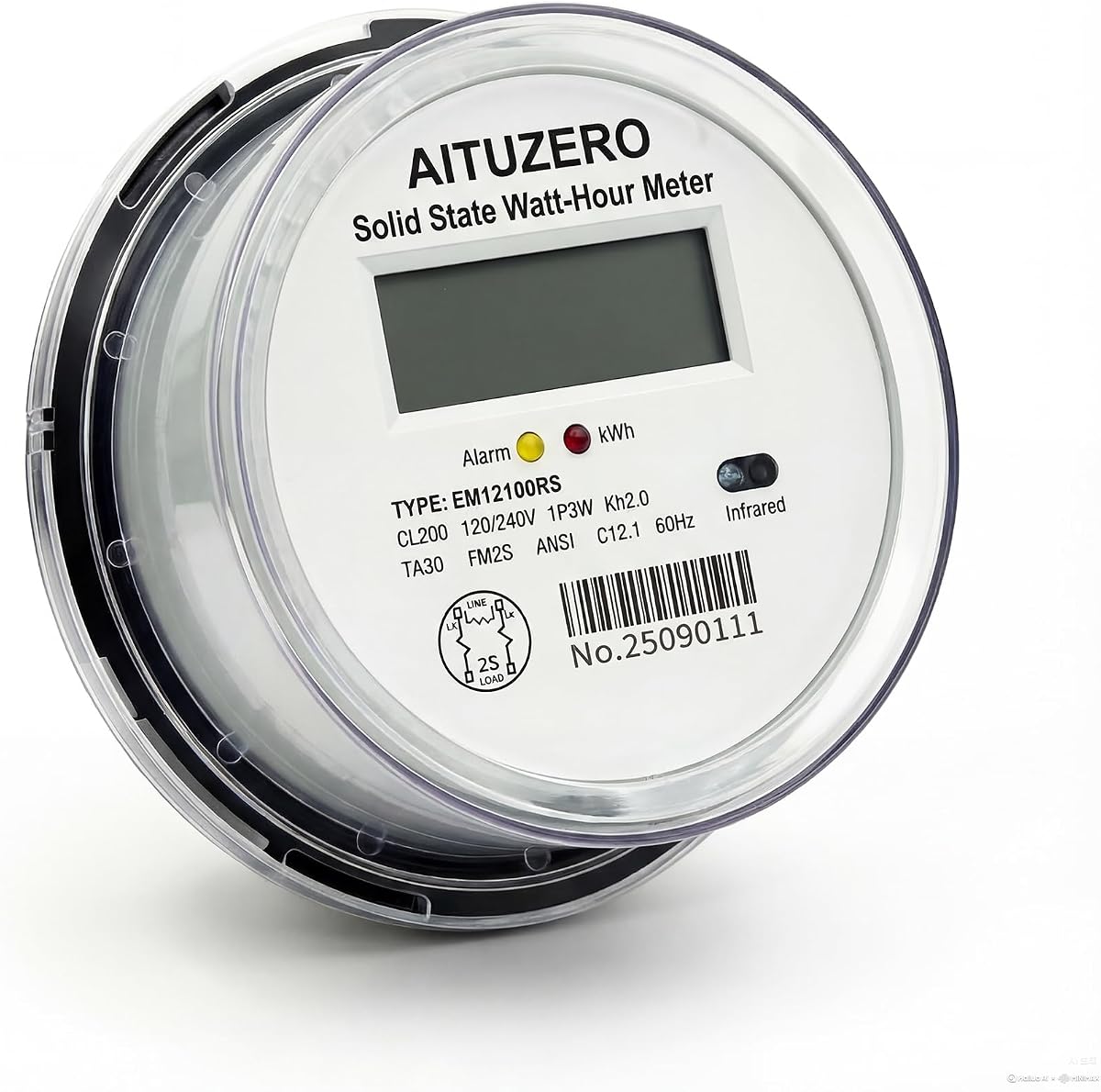
This 240V digital KWH meter is ideal for 2-wire RV systems. It holds a perfect 5.0-star rating for reliability. The Type C1S / Form 2S structure fits standard 4-jaw sockets, making installation straightforward. The clear LCD helps users check consumption quickly without complex steps.
We may earn a commission when you buy through this link, at no additional cost to you.
It supports CL200 kWh monitoring with TA30 current measurement. This covers most daily RV power needs. The sturdy housing ensures stable tracking over the long term. It is suitable for RVs, campers, trailers, and rental properties.
While it is limited to 2-wire setups, it excels within that scope. The clear readout and plug-in design reduce hassle. If your pedestal matches the specs, this unit offers a dependable solution without unnecessary features.
Best for campers needing a straightforward 2-wire meter. It prioritizes clear data and durability. If you want a simple, accurate meter that rarely fails, this model is a solid option.
The Type C1S / Form 2S design ensures compatibility with standard 4-jaw sockets for convenient pedestal installation.
Built-in TA30 current measurement provides reliable tracking for common RV and home power usage demands.
We may earn a commission when you buy through this link, at no additional cost to you.
This 3-wire electric KWH meter is built for harsh conditions. With a 4.8-star rating, it offers 0.5-level measurement accuracy. The dustproof, waterproof, and pressure-resistant housing protects against humidity and voltage fluctuations. This extends service life significantly compared to standard units.
We may earn a commission when you buy through this link, at no additional cost to you.
It fits standard 4-jaw meter sockets via the C1S structure. The high-precision LCD delivers sharp data for real-time viewing. It is designed for 240V systems, making it ideal for residential and RV electrical monitoring.
The main consideration is confirming your wiring type matches the 3-wire requirement. Once installed, its robust build ensures consistent operation. It balances professional performance with everyday usability for those needing durability.
Best for travelers in rough environments. If you need a meter that can withstand heavy dust or humidity, this model provides stable and accurate tracking. Its durability justifies the investment.
Triple dustproof, waterproof, and pressure-resistant protection ensures the meter works consistently across diverse environments.
Meeting ANSI C12.1 specifications, this meter adheres to strict safety standards for both RV and household systems.
We may earn a commission when you buy through this link, at no additional cost to you.
This hardwired power meter is highly flexible for various circuits. Its split-core CT clamps around a live conductor without cutting wires. This simplifies installation for monitoring generators or RV circuits. It supports 80 to 260V AC, covering a broad voltage range.
We may earn a commission when you buy through this link, at no additional cost to you.
It tracks voltage, current, wattage, and power factor. Power-off memory retains data after loss. The visual overload alarm flashes when thresholds are exceeded. It is a compact panel meter for practical troubleshooting and load balancing.
Safety is key during installation. It should be wired with proper precautions. If you need to monitor specific legs of a split-phase system without heavy rewiring, this meter offers a neat solution.
Best for DIYers needing a hardwired monitor without cutting main lines. It is useful for workshops or RV generator setups. If you want a versatile meter that adapts to different voltages, this is a reliable option.
The included 100A current transformer clamps around one live conductor, so you do not need to cut the monitored wire.
Designed for 80 to 260VAC circuits, it is useful for household and RV light commercial monitoring projects.
We may earn a commission when you buy through this link, at no additional cost to you.
Selecting the right meter depends on your power setup and monitoring goals. We highlight the key factors to consider when making your decision.
Ensure the meter matches your RV's voltage and wire configuration. Most RVs use 120/240V split-phase systems. Verify if you need 2-wire or 3-wire support before purchasing to avoid installation issues.
Decide between plug-in monitors and hardwired sub-meters. Plug-in units are easy to use for appliance tracking but do not measure the whole system. Hardwired meters require professional setup but track total energy.
Accuracy is critical for billing or solar tracking. Look for units with industry standards like ANSI C12.1 or high-level accuracy ratings. Reliable data helps in planning solar expansions and verifying generator performance.
A clear LCD display with backlight improves usability in dim lighting. Check viewing angles and screen size. High-resolution displays make it easier to read voltage and current without stress.
Choose a meter that retains data during power outages. Non-volatile memory ensures your historical consumption records remain safe. This feature is essential for long-term usage analysis without manual logging.
Outdoor use demands weather-resistant builds. Look for dustproof and waterproof ratings. Sealed housings protect internal circuitry from humidity and temperature fluctuations common in RV parks.
Advanced users may need Modbus or RS485 support for networked monitoring. These features allow data collection across multiple sites. If you plan to integrate with smart home systems, check communication ports.
Balance cost with necessary functions. Basic models suffice for simple tracking. For complex needs like solar monitoring or surge protection, invest in higher-end models with integrated safety features.
Start by verifying your electrical setup matches the meter specifications. If using a hardwired unit, turn off power at the source before connecting wires to ensure safety.
For plug-in models, simply insert the device into a standard outlet. Set any required parameters like cost per kWh to enable accurate billing calculations.
Regularly clean the display and housing to prevent dust buildup. Check the wiring connections periodically for signs of wear. Reset the data occasionally to clear old records and start fresh.
Installing a plug-in meter is generally safe for DIY. Hardwired meters require professional knowledge to avoid electrical hazards. Always follow safety precautions and consult an electrician if unsure.
Yes, some models track import and export energy for solar setups. Ensure the meter supports bidirectional measurement. This helps verify inverter behavior and system performance accurately.
Most high-quality meters offer close accuracy to utility-grade standards. They are suitable for monitoring and billing. For critical financial data, verify calibration and meet relevant industry specifications.
Compatibility depends on the socket type. Most use ANSI Form 2S standards. Check the specific socket size before buying. If unsure, confirm with the RV park management or check the pedestal specs.
2-wire meters support systems with two hot wires. 3-wire meters handle split-phase setups with neutral and two hot wires. Choose based on your electrical configuration for correct readings.
Solid-state designs offer long-term stability and reliability. Proper installation and protection from extreme weather extend their life. Many models last years with minimal maintenance or recalibration.
These ten options cover a wide range of monitoring needs for RV owners. From plug-in appliances to hardwired sub-meters, each model brings unique strengths.
Prioritize accuracy and compatibility for your setup. If you need solar insights, choose a unit with import-export tracking. For simple tracking, plug-in options offer great value.
Remember to verify current availability and stock before purchase. Conditions change over time, and checking prices ensures you get the best deal for your energy monitoring needs.