Rad Triage 50
4.4Editor score
Fits in wallet
No batteries needed
US military grade
This guide compares the top 10 dosimeter models for accurate radiation detection, featuring expert reviews and key specs to help you choose the right device.
Radiation safety is critical for professionals and hobbyists alike. A reliable dosimeter ensures you monitor exposure levels accurately. Whether for medical, industrial, or emergency use, choosing the right device matters.
We evaluated ten top-rated dosimeters based on accuracy, features, and user feedback. Each model offers unique strengths for different needs. Our analysis highlights performance, ease of use, and value for money.
Each pick shows key specs, pros, and cons to guide your decision. Ratings and availability may change over time. Always verify current details before purchasing to ensure you get the best fit for your requirements.
4.4Editor score

4.6Editor score

4.6Editor score
Explore this side-by-side comparison of the ten best dosimeters available today. Each entry highlights core specifications and unique features to help you quickly identify the model that fits your specific radiation monitoring needs.


The GQ GMC-800 stands out as a top choice for radiation detection. With a 4.6 rating, it offers precision and versatility for both professionals and enthusiasts. Its large display ensures clear readings under any condition.
We may earn a commission when you buy through this link, at no additional cost to you.
This device features five alarm types including visual, audio, and vibration. It meets US national standards with NIST and NRC calibration. Users benefit from ten years of data storage and global sharing capabilities.
While powerful, the device has a learning curve for advanced features. The price is higher than basic models, but the accuracy and features justify the investment. It is reliable for serious monitoring tasks.
Ideal for professionals needing detailed data tracking, this model is highly recommended. It balances portability with robust features. Consider this if accuracy and long-term data retention are priorities.
Store up to ten years of readings with free processing software. This helps track exposure trends over time effectively.
Large fonts and color schemes ensure readability in bright or dark environments. Short learning curve for beginners.
We may earn a commission when you buy through this link, at no additional cost to you.
The GQ GMC-300S offers excellent value for those needing reliable radiation detection. It logs data every second internally. A rechargeable battery ensures convenience without frequent replacements.
We may earn a commission when you buy through this link, at no additional cost to you.
Users can download history data to a computer for analysis. Free PC software aids in interpreting the data. Modes include dosimeter, CPM count, and graph displays for versatility.
It lacks some advanced features of higher-end models. The display is smaller but still functional. It suits casual users or those on a budget needing accurate monitoring.
Recommend this for hobbyists or initial safety checks. It balances cost and performance well. Always check battery life for extended use scenarios.
Internal memory logs real-time data every second. Download history to computer for deeper analysis.
Rechargeable battery lasts longer than standard options. Reduces ongoing costs for frequent users.
We may earn a commission when you buy through this link, at no additional cost to you.
This model emphasizes portability without sacrificing precision. It shares data globally and meets national standards. Ideal for fieldwork or outdoor use where accuracy matters most.
We may earn a commission when you buy through this link, at no additional cost to you.
The large color LCD ensures readable data in sunlight. Users can store data for ten years and share it globally. Alarm types include audio, vibration, and voice alerts.
Price is higher than entry-level options. Setup may require time for full feature exploration. However, the durability and accuracy make it a strong choice.
Best for travelers or professionals needing reliable monitoring. Prioritize this if sharing data across teams is essential. Ensure you understand settings before deployment.
Share radiation data online with built-in protocol. Useful for community monitoring efforts.
Designed to withstand outdoor use. Anti-drop features and rechargeable battery.
We may earn a commission when you buy through this link, at no additional cost to you.
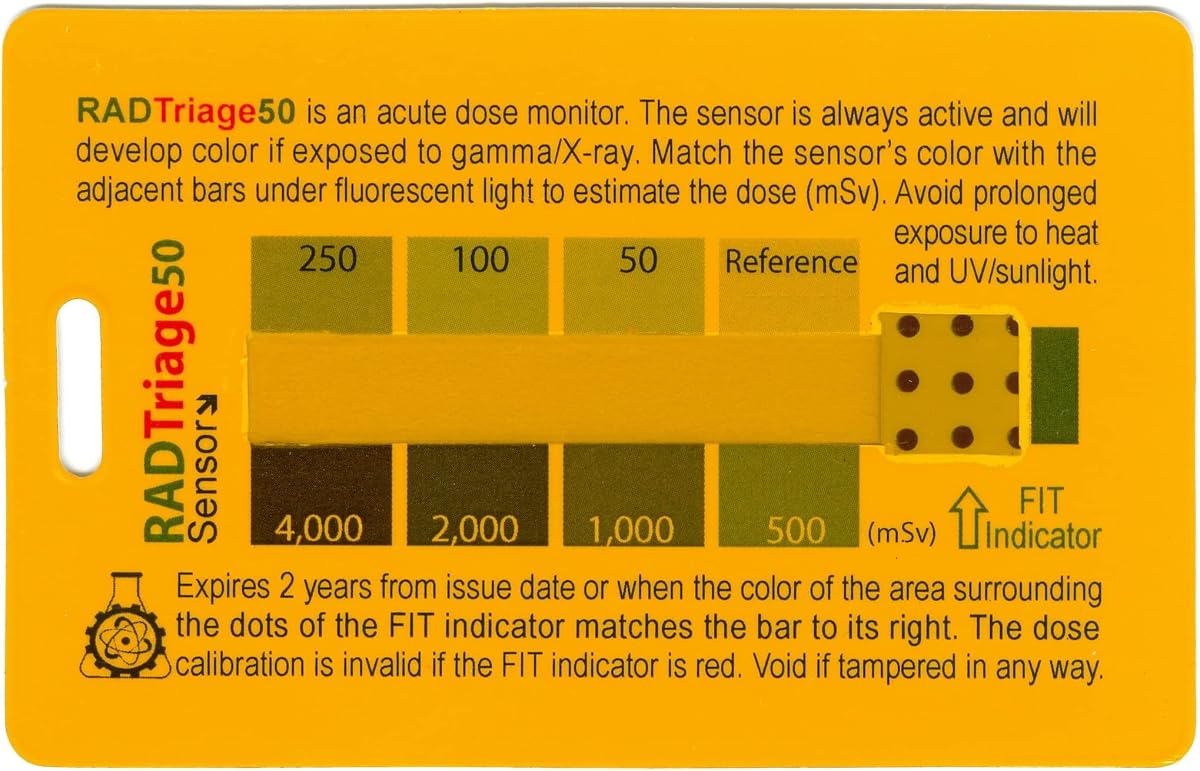
This detector fits easily in a wallet for constant monitoring. No batteries are required, making it ready to use anytime. It offers solid protection for emergency preparedness.
We may earn a commission when you buy through this link, at no additional cost to you.
Shelf life extends to ten years if stored properly. It detects beta, gamma, and X-ray radiation. US military grade ensures high reliability in critical situations.
It lacks digital displays or data logging. It is for personal safety rather than detailed analysis. The simplicity is both a strength and limitation.
Ideal for emergency kits or casual personal safety. Keep one in each vehicle or wallet. Prioritize this for peace of mind in unpredictable environments.
No batteries or calibration needed. Always ready for sudden exposure.
Up to ten years shelf life with freezer storage. Long-term preparedness solution.
We may earn a commission when you buy through this link, at no additional cost to you.
APOWER RD-3 offers accessible monitoring for home or office use. It detects beta, gamma, and X-rays. A triple alarm system ensures users are notified of high levels.
We may earn a commission when you buy through this link, at no additional cost to you.
Battery life reaches eight days with sound off. Type C charging is convenient. Data storage allows reviewing past measurements easily. The interface is straightforward.
It is not as precise as higher-end models. The screen is smaller. However, it fulfills basic safety needs at a low cost.
Good for beginners or quick checks. Use in environments with potential low-level radiation. Verify calibration regularly for best results.
Visual audible alarms and lights alert users. Ensures safety awareness in all conditions.
Long battery life reduces interruptions. Easy recharging via USB.
We may earn a commission when you buy through this link, at no additional cost to you.
This model provides extensive data on one screen. It measures multiple radiation units simultaneously. Battery life is impressive for portable use.
We may earn a commission when you buy through this link, at no additional cost to you.
Customizable alarms suit different safety needs. Data logging helps track trends over time. The blue design is distinct and professional.
User reports note lower accuracy compared to others. Setup may be difficult for new users. Ensure you need all features before buying.
Suitable for enthusiasts wanting detailed stats. Use in controlled environments. Check reviews for specific reliability concerns.
See CPM, dose rate, and cumulative dose at once. Saves switching screens.
Eighteen days of use on one charge. Perfect for field trips.
We may earn a commission when you buy through this link, at no additional cost to you.
A CsI scintillator sensor ensures high accuracy. It outperforms traditional tubes in stability. The waveform display adds clarity to readings. Ideal for lab or high-stakes environments.
We may earn a commission when you buy through this link, at no additional cost to you.
Battery life reaches 70 days. A telescopic rod keeps you safe from sources. Alarm types include sound, light, and screen alerts. Data refreshes every second.
Price is significantly higher than others. It may be overkill for casual users. But for professionals, the accuracy is unmatched.
Invest in this for critical safety monitoring. Use in labs or hazardous sites. Prioritize this if accuracy is non-negotiable.
CsI sensor offers stable readings. Resistant to interference.
Dynamic waveform shows radiation trends. Easier to interpret than numbers.
We may earn a commission when you buy through this link, at no additional cost to you.
This model features dual Geiger tubes for extended range. It supports unlimited server data logging. The large display is easy to read.
We may earn a commission when you buy through this link, at no additional cost to you.
Server logging allows centralized data collection. Auto calibration improves accuracy. A rechargeable battery supports long use.
High cost limits access to professionals. Server setup requires network knowledge. If you need detailed logging, this is ideal.
Best for institutions needing data archives. Use where historical records are vital. Consider server requirements before purchase.
Upload data to any server automatically. Great for institutional use.
Dual tubes increase detection range. Enhances sensitivity to rare events.
We may earn a commission when you buy through this link, at no additional cost to you.
Bright TFT screen ensures visibility everywhere. Haptic, audio, and visual alerts provide redundancy. Battery lasts 30 days on full charge.
We may earn a commission when you buy through this link, at no additional cost to you.
Sensitive to radiation changes. Useful for antique or environmental checks. The yellow design stands out in low light.
Accuracy is lower than premium models. Price is moderate. It suits regular monitoring without breaking the bank.
Good for collectors or field workers. Use when you need portability and clear alerts. Verify settings for your needs.
Adjustable brightness suits bright sun. Readable without glasses.
Haptic feedback ensures awareness. Helps in noisy environments.
We may earn a commission when you buy through this link, at no additional cost to you.
Ideal for checking food and water for radiation. It detects various types including gamma. All-round alarm ensures alerts in any mode.
We may earn a commission when you buy through this link, at no additional cost to you.
Affordable for home use. Suitable for environmental surveys. Rechargeable battery supports regular checks.
Accuracy is standard. Not for professional lab work. But great for concerned citizens.
Use for checking imports or local water. Keep in kitchen for peace of mind. Prioritize this for food safety.
Check seafood and imports for radiation. Important for health.
Alerts even in sleep mode. Ensures no danger is missed.
We may earn a commission when you buy through this link, at no additional cost to you.
Selecting the right dosimeter depends on your specific needs. Here are key factors to consider before buying.
Different dosimeters detect beta, gamma, or X-rays. Ensure the device matches the radiation types you expect to encounter. For example, food safety may require specific sensitivity.
Choose models covering all relevant radiation types for comprehensive protection.
Accuracy is critical for safety. Look for devices certified by NIST or NRC. Regular calibration ensures readings remain reliable over time.
Prioritize models with documented calibration standards to avoid false readings.
A clear display ensures readability in all conditions. Color LCDs help visualize data trends. Simple interfaces reduce learning time for new users.
Pick a display that matches your environment, like sunlight-readable screens.
Long battery life reduces interruptions during use. Rechargeable options are convenient. Check runtime for your typical usage duration.
Ensure the battery lasts for your longest planned monitoring session.
Data logging helps track exposure over time. Some models store years of data. Look for PC software for detailed analysis if needed.
Choose storage options that fit your need for historical records.
Audible and visual alarms ensure awareness. Multiple alarm types help in noisy environments. Custom thresholds allow tailored safety alerts.
Ensure the alarm suits your environment and personal preferences.
Portability and drop resistance matter for field use. Waterproof models help in outdoor settings. Check build quality for long-term reliability.
Prioritize sturdy construction if you use the device frequently.
Budget varies widely. Entry-level models cost less but offer basic features. Professional units are pricier but more accurate.
Balance cost with required features to avoid overspending.
Turn on the device and wait for calibration. Place it near the area you want to monitor. Ensure it is away from shielding materials like lead.
Check readings regularly. Adjust alarm thresholds if needed. Log data manually or via software. Always verify battery levels before extended use.
Store in a cool, dry place. Avoid dropping or exposing to water. Replace batteries as needed. Clean with a soft cloth to maintain accuracy.
A dosimeter measures ionizing radiation exposure. It is used for medical, industrial, and environmental safety. Users can track cumulative exposure to stay within safe limits.
Consumer dosimeters can be accurate if certified by standards like NIST. Quality varies by model. Always look for calibration data to ensure reliability.
Regular calibration ensures accuracy. Some models auto-calibrate. Others require professional checks. Follow manufacturer guidelines to maintain precision.
Yes, many detect gamma and X-rays from fallout. Use models with high sensitivity. Always combine with official safety advice during emergencies.
Battery life varies by model. Some last days, others weeks. Rechargeable options are common. Check specifications for exact runtime.
Some are water-resistant, others are not. Check the IP rating. For outdoor use, choose models with higher durability.
This guide highlighted ten top dosimeters with unique strengths. The GQ GMC-800 offers the best overall value. The Rad Triage 50 suits those needing portable simplicity.
Prioritize accuracy, battery life, and features based on your needs. Professionals should lean toward premium models. Casual users can opt for budget-friendly options.
Always check current prices and availability. Models may change. Ensure you choose the best fit for your safety requirements.