
SOLPERK Solar Panel Kit 20W 12V
4.5Editor score
21-30% Cell Efficiency
Smart Charge Controller Included
360 Degree Angle Adjustable
This comprehensive guide compares the top 10 marine solar panels for boats in October 2026, evaluating efficiency durability and value for every budget.
Marine solar panels are essential for keeping batteries charged on boats away from shore power. Choosing the right panel involves balancing efficiency with and durability against harsh saltwater environments. We reviewed ten top models to help you find the best match for your vessel.
We compared these products based on conversion efficiency, warranty coverage, and resistance to marine conditions. Each selection offers unique benefits ranging from flexible mounting options to high-efficiency bifacial technology. Our analysis focuses on real-world performance and long-term reliability for boaters.
Each pick highlights key specifications, pros, and cons to streamline your decision process. Remember that prices fluctuate regularly so always verify the current cost before purchasing. This guide aims to provide clear and unbiased information to support your marine power needs.
4.5Editor score

4.8Editor score

4.5Editor score
The following table provides a side-by-side comparison of all ten marine solar panels reviewed in this guide. It highlights key specifications such as wattage, efficiency ratings, and special features to help you quickly identify the right fit for your marine electrical system.




This Callsun panel stands out as the top choice for marine applications requiring high output and reliability. With a remarkable 25.6% efficiency rating and bifacial technology it captures sunlight from both sides to maximize energy harvest. The dual-module anti-shade design ensures consistent power even when parts of the panel are obscured by rigging or other boat structures.
We may earn a commission when you buy through this link, at no additional cost to you.
The advanced N-type monocrystalline cells paired with 16BB busbar technology significantly reduce hot spots and microcrack risks. This engineering supports long-term performance and stability especially in hot climates where temperature coefficients matter. The IP68 rated junction box and tempered glass construction make it robust against harsh marine environments including salt spray and high humidity.
While the panel offers exceptional power output its size and weight may present challenges for smaller vessels with limited roof space. Additionally achieving the full 400W series connection requires careful planning with compatible power stations or charge controllers. However for serious boaters needing dependable energy these trade-offs are well worth the investment in quality and durability.
Boaters seeking maximum efficiency and long-term reliability will find this panel an ideal solution for their marine power needs. It is particularly suited for those upgrading their systems to support larger electrical loads or those operating in variable shading conditions. The strong warranty and technical support further cement its position as a trusted choice for offshore and coastal cruising.
The transparent backsheet captures reflected light increasing total energy generation significantly when installed with proper clearance below.
Independent operating sections prevent total shutdown if one half is shaded ensuring consistent charging for critical marine electronics.
We may earn a commission when you buy through this link, at no additional cost to you.
The SOLPERK 20W kit is an excellent affordable option for maintaining boat batteries when docked or during short trips. It includes a solar panel controller and mounting hardware making it a ready-to-use solution for preventing battery drain. The monocrystalline A+ cells deliver strong efficiency ensuring the battery stays charged without needing expensive upgrades to your system.
We may earn a commission when you buy through this link, at no additional cost to you.
Its corrosion-resistant aluminum frame and tempered glass surface are built to withstand harsh weather conditions including wind storms and snow loads. The included smart charge controller features three-stage charging to prevent overcharging and extend battery life. The adjustable mounting bracket allows you to optimize the angle for sun exposure which is crucial for small panels.
While effective for maintenance this low wattage output is insufficient for running marine appliances or large house banks alone. The controller is functional but lacks advanced features like MPPT which limits total energy harvest compared to higher-end systems. For small boats or auxiliary power needs however it provides reliable value and ease of use.
Small boat owners or those needing a simple trickle charger will appreciate the simplicity and cost-effectiveness of this kit. It is ideal for keeping batteries healthy between uses without requiring complex wiring or installation expertise. Overall it represents a smart budget-conscious investment for basic marine battery maintenance.
All necessary cables and clips are included so you can start charging immediately without buying extra accessories.
Rugged construction handles strong wind and snow loads ensuring durability during seasonal storage or harsh climates.
We may earn a commission when you buy through this link, at no additional cost to you.
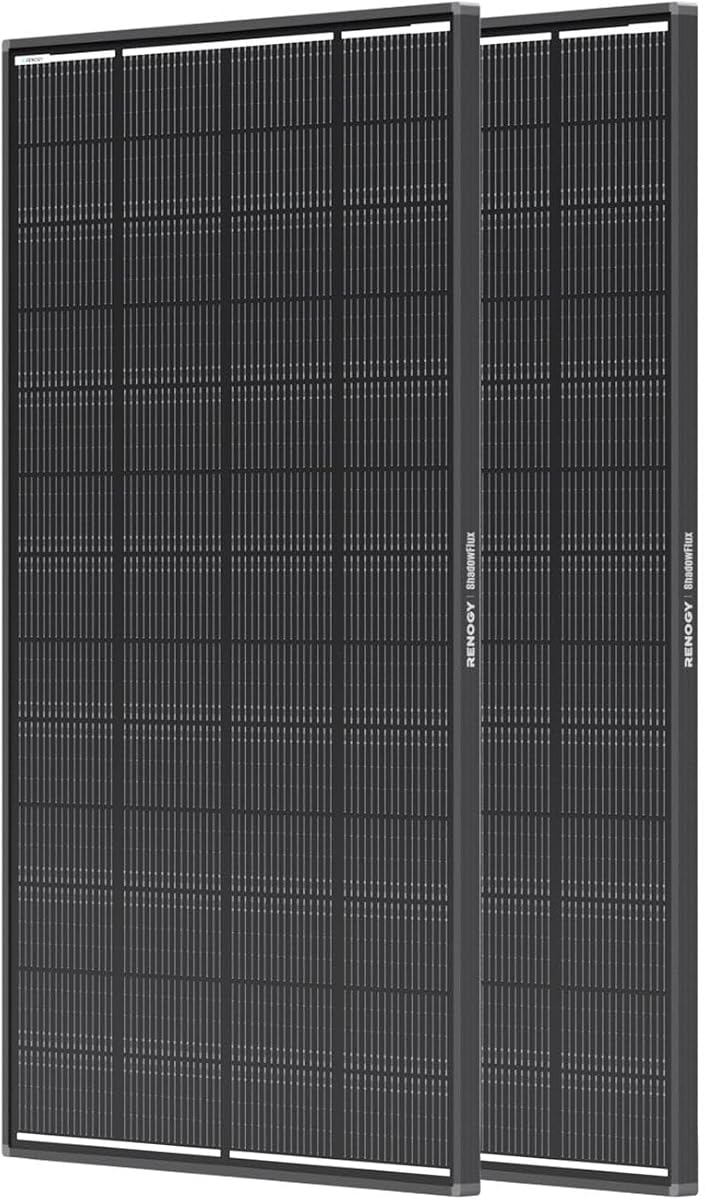
The Renogy ShadowFlux 200W panel combines premium efficiency with innovative anti-shading technology ideal for complex marine installations. Its N-type cells deliver 25% efficiency reducing hot spots and ensuring stable output even under partial shade. This makes it a top choice for sailboats or powerboats where rigging or structures might cast shadows on the roof.
We may earn a commission when you buy through this link, at no additional cost to you.
Designed to be compact and lightweight this panel takes up less space than traditional PERC models without sacrificing power output. The IP67 rating and advanced encapsulation protect against moisture and environmental exposure ensuring longevity in saltwater conditions. Renogy backs it with strong warranty terms providing confidence for long-term marine deployments.
The price point is higher than basic options reflecting its advanced technology and durability features. While it requires compatible inverters or charge controllers to maximize performance the energy gains justify the investment for serious boaters. Those prioritizing space efficiency and reliability will find this panel a worthwhile addition to their solar array.
Boaters seeking high performance in challenging lighting conditions should consider this panel for its superior anti-shading capabilities. It is particularly well-suited for vessels with limited roof space that still demand significant power for electronics and systems. The balance of innovation and durability sets it apart in the premium marine solar category.
Anti-shading tech prevents energy loss and potential damage when part of the panel is covered by masts or antennas.
More compact than standard panels allows fitting high wattage on smaller decks without compromising structural clearance.
We may earn a commission when you buy through this link, at no additional cost to you.
The Renogy 100W N-Type panel offers impressive efficiency for a mid-sized marine solar option. With Grade A+ cells and 16BB technology it provides 20W more power than standard PERC panels of the same size. This makes it an excellent choice for smaller vessels or as an addition to expand existing solar systems.
We may earn a commission when you buy through this link, at no additional cost to you.
Its low temperature coefficient ensures better performance during hot summer days when other panels might lose significant power. The IP67 protection and robust aluminum frame withstand rain snow and wind making it reliable for year-round outdoor use. Long-term reliability is supported by a 10-year material and workmanship warranty.
While it may not power large house banks alone it is perfect for topping off batteries or running essential navigation equipment. The 100W capacity strikes a balance between portability and output suitable for many cruising scenarios. Installation is straightforward with pre-drilled holes for standard marine mounts.
Mariners looking for a reliable and efficient panel without oversizing their array will find this unit highly suitable. It serves well as a standalone solution for small boats or a complementary module for larger setups. Renogy's reputation for durability further supports its selection for demanding marine environments.
Low temp coefficient minimizes power loss in heat ensuring stable output when the sun is strongest.
IP67 rating and tested wind loads protect against harsh storms ensuring consistent operation in tough conditions.
We may earn a commission when you buy through this link, at no additional cost to you.
Renogy flexible panel shines where rigid panels cannot fit offering bendability up to 240 degrees for curved boat surfaces. Its lightweight design makes it easier to handle and install on non-flat areas like radar arches or cabin tops. The half-cut PERC cell technology enhances light capture improving output efficiency despite flexibility.
We may earn a commission when you buy through this link, at no additional cost to you.
With an IP67 rated junction box and connectors it resists water and dust ingress effectively. The all-black appearance reduces glare maintaining a sleek look on modern boats. Pre-drilled mounting holes simplify installation using adhesive or mechanical fasteners as needed for marine use.
Flexibility comes with trade-offs in durability and potential for microcracks over time if bent repeatedly. It is best suited for temporary installations or surfaces where rigid panels would not conform. Careful handling during installation ensures longevity and peak performance for marine applications.
Boaters with curved or irregular deck space will find this flexible panel the practical solution for maximizing solar real estate. It combines aesthetic appeal with functional versatility ideal for small to medium vessels seeking efficient power without structural compromises.
Ultra-flex design adapts to curved hulls or tops allowing installation where standard panels would fail.
All-black finish minimizes sun reflection improving onboard comfort and visibility during sunny days.
We may earn a commission when you buy through this link, at no additional cost to you.
The 120W ShadowFlux model provides a balanced blend of power and compactness ideal for boats with limited roof space. Its 25% efficiency ensures strong performance while the compact footprint allows flexible mounting options. The anti-shading technology helps maintain output even when partially obstructed by boat equipment.
We may earn a commission when you buy through this link, at no additional cost to you.
Built with N-Type cells it reduces hot spots and microcrack risks for improved longevity. The IP67 rating protects against harsh weather conditions ensuring reliable operation year-round. Renogy's warranty terms offer additional peace of mind for marine solar investments.
This panel may cost slightly more than non-advanced models but the efficiency gains justify it for many users. It is especially useful where every square foot of roof space is at a premium. Proper installation can maximize its power generation potential significantly.
Mariners needing a moderate power boost in tight spaces will appreciate this panel's efficiency and durability. It serves well as a primary source for smaller vessels or as an addition to larger arrays. Renogy's commitment to quality further supports its selection for marine use.
Compact design allows fitting higher wattage panels on smaller surfaces without sacrificing output quality.
Anti-shade tech ensures stable power even when shadows fall on parts of the panel surface.
We may earn a commission when you buy through this link, at no additional cost to you.
The Renogy 400W ShadowFlux panel delivers substantial power ideal for large boats or systems needing high energy capacity. It combines two 200W panels into one unit maximizing space efficiency while maintaining high 25% efficiency. This setup helps minimize micro-crack risks and ensures reliable performance in demanding marine environments.
We may earn a commission when you buy through this link, at no additional cost to you.
Its compact design allows fitting more power on limited roof areas compared to traditional panels. The anti-shading tech maintains consistent output even with partial obstructions common on boats. Built to withstand rain snow and dust it ensures durability over many sailing seasons.
Installation requires careful planning to secure such a large panel properly to prevent wind stress. While costly it pays off in energy independence for extended cruises or off-grid living. The strong warranty support adds confidence for long-term investment.
Serious boaters needing maximum power generation will find this panel a top-tier solution for their electrical needs. It suits larger vessels aiming for full solar dependency or those upgrading to meet higher energy demands. Renogy's engineering excellence shines through its robust build and advanced cell technology.
400W output supports extensive marine electronics and appliances for extended periods away from shore power.
Compact footprint lets you fit more wattage in limited space maximizing available solar real estate.
We may earn a commission when you buy through this link, at no additional cost to you.
This SUNER POWER kit is designed for efficient battery maintenance with built-in MPPT technology maximizing energy conversion. It supports multiple battery types including AGM and lithium offering versatility for various marine setups. Visual indicators let you monitor charging status easily ensuring confidence in power levels.
We may earn a commission when you buy through this link, at no additional cost to you.
The three-stage charging algorithm safely recharges batteries while preventing overcharging and extending lifespan. Automatic resume when battery drains adds convenience for long-term storage maintenance. Multiple safety protections guard against short circuits and overvoltage providing robust system security.
Though limited to 20W output it is perfect for keeping auxiliary batteries topped off without complex wiring. For main house banks this kit alone would not suffice but combined with other panels it helps maintain balance. Its waterproof design suits harsh marine environments well.
Boaters prioritizing smart charging features and battery health will find this kit a valuable addition. It simplifies maintenance tasks ensuring readiness for every voyage. The combination of technology and safety makes it a reliable choice for marine battery care.
MPPT tech delivers 99% tracking efficiency extracting more power from sunlight than standard PWM controllers.
LED indicators show charge progress clearly so you know battery state at a glance.
We may earn a commission when you buy through this link, at no additional cost to you.
Upgraded to 50W this SUNER POWER kit provides stronger trickle charging for moderately sized marine batteries. The UltraSmart MPPT technology ensures efficient energy conversion reducing waste and maximizing charge times. Visual indicators and multiple battery modes allow precise control over charging process and battery health.
We may earn a commission when you buy through this link, at no additional cost to you.
Three-stage charging maintains safe levels for various battery types preventing overcharges and prolonging lifespan. Waterproof build ensures reliable performance in wet marine environments. Automatic resume features keep batteries maintained without manual intervention saving time for boaters.
While not enough for full energy needs alone it is ideal for auxiliary power or supplementing larger arrays. The added wattage makes it more versatile than smaller 20W kits for medium capacity batteries. Safety protections guard system components ensuring worry-free operation.
Boaters seeking a balanced maintenance solution with smart features will value this kit's performance and reliability. It simplifies battery management ensuring power is always available when needed. Its robust design and intelligent charging make it a trusted companion for marine use.
50W capacity provides faster recharge rates than lower wattage kits reducing maintenance time.
Multi-mode support ensures optimal charging for different battery chemistries preserving longevity and performance.
We may earn a commission when you buy through this link, at no additional cost to you.
The POWOXI 7.5W kit offers a basic yet effective solution for preventing battery drain on boats stored out of use. Its lightweight and simple plug-in design makes it easy to install anywhere on deck with minimal setup. LED indicators confirm charging status so you can verify operation without tools.
We may earn a commission when you buy through this link, at no additional cost to you.
ABS+PC frame provides durability without heavy metal components that might damage surfaces. Smart protection prevents overvoltage and short circuits ensuring safe trickle charge. The transparent glass allows efficient light conversion despite small wattage.
While limited to very low output it is suitable for tiny auxiliary batteries or as a supplement during long storage periods. It is not capable of powering marine loads but excels at keeping starter batteries charged. Its affordability makes it accessible for many small boat owners.
Mariners needing an economical and straightforward battery maintenance tool will find this kit reliable. It is ideal for seasonal storage or keeping small onboard electronics powered. The robust build and simple operation make it a practical entry-level choice.
No complex wiring required just plug into outlet or connect to battery for instant trickle charging.
Strong ABS+PC frame resists impact and protects solar cells from damage during rough handling.
We may earn a commission when you buy through this link, at no additional cost to you.
Choosing the right marine solar panels requires understanding your boat's power needs and installation environment. This section outlines key factors to consider for selecting a reliable and efficient solar system.
Calculate total power consumption of your marine electronics and appliances to determine required wattage. Small boats may only need 100W to 200W for basic needs while larger vessels often require multiple panels totaling 400W or more. Accurate calculations prevent under-sizing which leads to unreliable power or over-sizing which wastes money and space.
Focus on matching panel capacity with your battery bank size and daily power usage patterns. Always plan for future expansion to avoid replacing entire systems as energy demands grow over time.
Higher efficiency panels produce more power from less surface area which is crucial for boats with limited roof space. Look for panels with efficiency ratings above 20 percent to maximize energy harvest per square foot. N-type and bifacial technologies often deliver superior efficiency compared to traditional PERC panels.
Efficient panels reduce the number needed to meet power goals saving installation time and weight. Prioritize models that balance efficiency with durability to ensure long-term performance.
Marine environments expose panels to salt water UV rays and extreme weather so durability is paramount. Choose panels with corrosion-resistant frames and high IP ratings such as IP67 or IP68 for junction boxes. Tempered glass and advanced encapsulation materials protect cells from humidity and physical impacts.
Check wind and snow load ratings to ensure panels withstand harsh sea conditions without damage. Robust construction guarantees consistent performance and longevity in challenging marine climates.
Flexible panels suit curved surfaces while rigid panels work best for flat stable mounting areas. Consider the shape of your boat roof and whether permanent or temporary installation is preferred. Proper mounting secures panels against vibration and wind while allowing optimal sun angle.
Evaluate pre-drilled holes or included brackets to simplify installation and reduce hardware costs. Secure mounting protects both the panel and boat structure from potential damage during storms.
MPPT controllers are more efficient than PWM and better for larger arrays or high voltage panels. Ensure compatibility between panel voltage and controller specs to avoid losses or damage. Controllers with multiple battery modes support diverse marine battery chemistries safely.
Look for built-in protection features and visual indicators to monitor system health easily. Investing in a quality controller maximizes energy harvested from your solar investment.
Long warranties indicate manufacturer confidence in product durability and performance. Seek panels with at least 10 years of workmanship coverage and 25 years power output guarantees. Reliable technical support ensures help if installation or performance issues arise.
Review warranty terms closely to understand what is covered and conditions for claims. Strong warranties protect your investment and provide peace of mind for critical marine systems.
Start by installing panels in a location with maximum sun exposure and minimal shading from rigging or structures. Secure them tightly using marine-grade hardware to prevent loosening from vibration or wind. Connect to compatible charge controllers and batteries following the manufacturer wiring diagrams carefully.
Clean panels regularly with fresh water and soft cloth to remove salt and dirt that reduce efficiency. Avoid abrasive cleaners or high pressure washers that might damage the surface or seals. Check connections and junction boxes periodically for corrosion or wear to maintain safe operation.
Monitor battery charge levels and panel output with your controller to ensure optimal performance. During long storage periods consider disconnecting panels or storing batteries indoors to prevent degradation. Regular maintenance extends panel life and keeps your marine power system reliable year-round.
Rigid panels generally offer better efficiency and longevity while flexible ones provide installation versatility on curved surfaces. Choose rigid for flat roofs and permanent setups while flexible panels work well for temporary or uneven installations. Your boat's structure and power needs dictate which type is optimal for your situation.
Calculate your daily power consumption and battery capacity to determine the right panel wattage. Small boats often require 100W to 200W while larger vessels may need 400W or more. Ensure your charge controller and battery bank match the panel size for safe and efficient charging.
Yes a charge controller regulates power flow from panels to batteries preventing overcharging and damage. MPPT controllers are recommended for higher efficiency especially with larger panel arrays. Most quality panels include or recommend compatible controllers for reliable operation.
High-quality marine solar panels feature corrosion-resistant aluminum frames and protective coatings designed for saltwater exposure. Look for IP67 or IP68 rated junction boxes to ensure electronic parts stay dry. Regular cleaning and inspection further protect panels from environmental degradation.
Clean panels regularly with fresh water and mild soap to remove salt and debris. Inspect wiring and connections for corrosion and secure loose hardware. Monitor performance via your charge controller to detect any drops in output early.
Most marine solar panels have a lifespan exceeding 25 years with proper care. Quality panels degrade slowly maintaining high output throughout their life. Warranty coverage typically ensures performance guarantees to help plan long-term investments.
Yes many marine solar kits are designed for DIY installation with included mounting hardware and clear instructions. Ensure you follow electrical safety guidelines and consult a professional for complex wiring. Basic skills and tools are usually sufficient for most small to medium boat setups.
Yes panels generate power in indirect light but output drops significantly compared to direct sunlight. MPPT controllers help maximize energy capture during suboptimal weather conditions. Plan for enough panel capacity to cover days with poor sun exposure for consistent power.
Our top picks highlight the Callsun Bifacial panel for overall performance the SOLPERK kit for budget buyers and the Renogy ShadowFlux for premium durability. Each offers distinct advantages suited to different marine power needs and installation environments.
Prioritize efficiency durability and proper controller matching when selecting panels to ensure reliable energy on your boat. Consider future power needs to allow system expansion without replacing existing gear unnecessarily.
Always verify current pricing and availability before purchasing since costs can change regularly. This guide equips you with detailed insights to make an informed decision for your marine solar system.