
SURAIELEC Light Sensor Socket, 360° Sensor Rotation, 2 Pack, UL Listed
4.0Editor score
360° rotation for precise light direction
Spring-loaded contact design for stable power
Works with E26/E27 bulbs up to 150W
This guide compares the top 10 Light Sensor Socket models for automatic dusk to dawn control, featuring key specs, ratings, and installation details to help
Light sensor sockets provide a simple way to automate your outdoor and indoor lighting without complex wiring. These devices screw into standard fixtures and detect ambient light levels to turn bulbs on and off automatically. They are ideal for porches, garages, and entryways where consistent illumination matters for safety and convenience. When choosing a model, look for reliable photocell sensors, adjustable rotation, and compatibility with your existing bulb types to ensure smooth operation.
We evaluated ten top-rated light sensor sockets based on their build quality, sensor accuracy, and ease of installation. Our analysis focused on how well each product handles variable lighting conditions, prevents false triggers from nearby streetlights, and maintains durability over time. We also considered user feedback regarding sensor responsiveness and the effectiveness of off-delay functions that stop flickering during twilight hours.
Each pick below highlights a specific strength, from budget-friendly options to advanced dual-sensor designs. You will find detailed breakdowns of features like rotation angles, timer functions, and bulb wattage limits. Remember that product prices and availability can change quickly, so check the current listings before making your final purchase decision to secure the best value for your needs.
4.0Editor score

4.8Editor score

4.6Editor score
The following comparison table breaks down the key specifications of all ten products we reviewed. It highlights differences in sensor types, rotation capabilities, wattage limits, and additional features like timers or dual sensors to help you make a quick side-by-side evaluation.


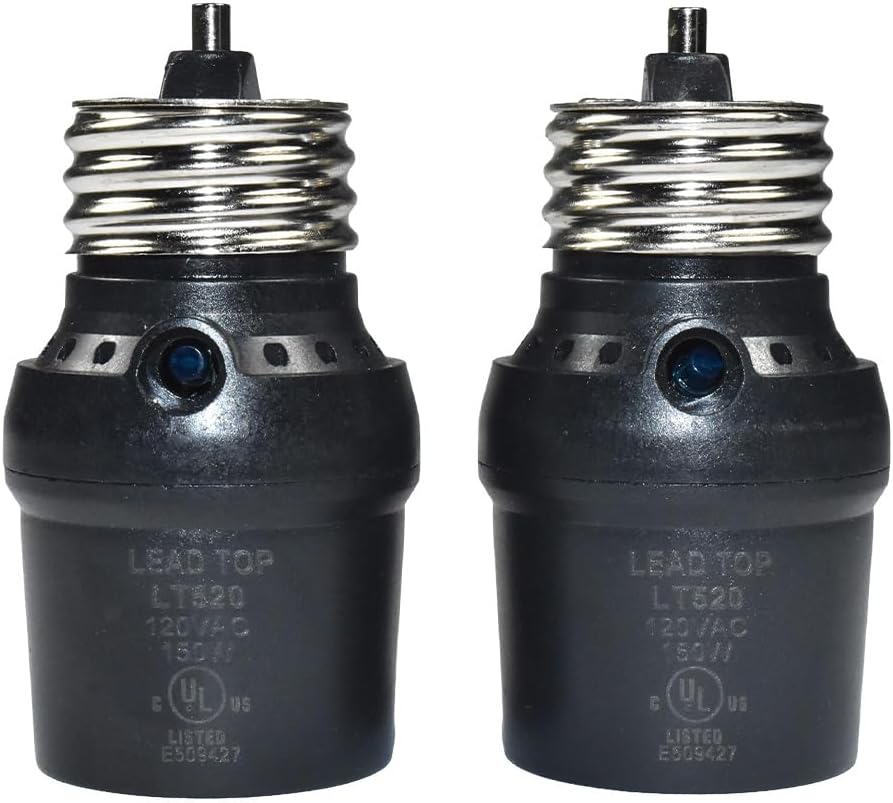
This light sensor socket stands out as the top choice for automating your outdoor lighting with precision. It earned a high rating from users who praise its reliability in turning lights on and off at the correct times. The built-in photocell sensor detects ambient light levels accurately, ensuring your porch or garage lights activate exactly when needed.
We may earn a commission when you buy through this link, at no additional cost to you.
The standout feature is the added 12-hour timer-off function which provides extra security against false triggers. On cloudy days or when sensor interference occurs, the timer ensures your light shuts off after a set period so you do not waste energy. The 300-degree rotatable sensor allows you to customize the sensing angle, reducing interference from streetlights or shadows that might otherwise confuse a standard fixed sensor.
While it performs exceptionally well, there are minor trade-offs to consider during installation. The compact size blends well into most fixtures, but it may not fit perfectly inside very deep or enclosed lampshades. Some users noted the instructions could be more detailed regarding the optimal sensor orientation for different environments, though the physical design makes trial and error straightforward.
Anyone looking to upgrade existing outdoor lighting to automatic dusk-to-dawn control without rewiring will find this product ideal. It is perfect for home owners who want to deter intruders and guide family members safely after dark. The combination of timer functionality and adjustable sensing makes it the best all-around choice for reliability and convenience.
The 12-hour timer-off feature ensures your lights do not stay on indefinitely during cloudy days or sensor malfunctions, saving energy and reducing wear on your bulbs.
With 300 degrees of rotation, you can angle the sensor away from nearby streetlights or porch lights to prevent accidental triggering and false on-off cycles.
We may earn a commission when you buy through this link, at no additional cost to you.
The SURAIELEC light sensor socket offers an accessible entry point for homeowners wanting to automate their exterior lighting. It maintains a solid rating among users who value simplicity and low cost. The socket converts standard lanterns into automatic night lights effectively, ensuring your porch or garage lights activate at dusk without manual intervention.
We may earn a commission when you buy through this link, at no additional cost to you.
Its key strength lies in the smart spring-loaded contact design that allows for a full 360-degree rotation. This feature ensures the photo eye can aim outwards while maintaining contact with the power source, giving you ultimate flexibility in positioning. The compact size adds minimal height to your fixture, preserving the aesthetic appearance of your porch light while delivering reliable functionality.
However, this budget-friendly model lacks the advanced timer features found in premium options. It relies solely on the photocell sensor which might be slightly less responsive to rapid light changes or tricky lighting conditions. Some users may find the sensor sensitivity too basic for locations with significant ambient light interference from nearby windows or streetlights.
If you need a simple, no-fuss solution for a few outdoor fixtures without breaking the bank, this is an excellent choice. It is ideal for renters or home owners who want to test automated lighting before investing in more complex systems. The UL listing ensures basic safety standards are met for secure operation in various weather conditions.
The 360-degree rotation capability lets you orient the sensor exactly where it is needed, ensuring accurate light detection regardless of fixture orientation.
Adding only 1.61 inches in height, this socket blends seamlessly into existing fixtures without looking bulky or out of place.
We may earn a commission when you buy through this link, at no additional cost to you.
This DEWENWILS light sensor socket delivers a premium experience through its innovative dual photocell sensor design. It received high marks from users who appreciate its ability to prevent sensor obstruction and maintain consistent operation. The two symmetrical sensors ensure that at least one is always facing natural light, significantly reducing the risk of false triggers or failure to turn on.
We may earn a commission when you buy through this link, at no additional cost to you.
The most notable feature is the off-delay function which prevents bulbs from flickering due to sudden light sources like car headlights or passing shadows. The sensor only turns off the bulb after detecting continuous light movement for five minutes or more, providing a stable and reassuring lighting experience. Constructed from durable PET material, this socket is heat-resistant and built to withstand long-term use in various temperatures.
While it offers superior reliability, it requires a clear lampshade for optimal performance and comes at a higher price point than simpler models. Using it with opaque or frosted glass fixtures can block the sensors and compromise functionality. The dual sensor setup is sophisticated and may be overkill for very basic lighting needs where a single sensor would suffice.
Ideal for high-traffic areas or locations where sensor reliability is paramount, this socket is worth the investment. It suits home owners who want peace of mind knowing their security lighting will function correctly even in challenging lighting environments. The durability and thoughtful design make it a top-tier choice for long-term satisfaction.
Two symmetrical sensors ensure one is always oriented correctly to detect ambient light, eliminating issues caused by fixture positioning or obstructions.
The five-minute off-delay prevents annoying flickering caused by transient light sources, ensuring your porch light stays steady through twilight.
We may earn a commission when you buy through this link, at no additional cost to you.
DEWENWILS provides a solid standard option for those wanting reliable dusk to dawn control without extra complexity. This model maintains a good rating due to its straightforward performance and robust build quality. It effectively turns standard fixtures into automatic lights, making it a popular choice for front doors and garage entry points where simple automation is preferred.
We may earn a commission when you buy through this link, at no additional cost to you.
Key strengths include the off-delay function that prevents bulbs from flickering repeatedly due to sudden light sources. Users appreciate the ETL Listed certification which guarantees safety standards are met for residential use. The product is designed to work seamlessly with standard E26/E27 bases, supporting a variety of bulb types including LED and incandescent options without requiring special adapters.
The wattage limits might be a consideration for high-output setups since incandescent bulbs are limited to 100 watts. Users should ensure their bulbs do not exceed these ratings to avoid overheating or damage. While the sensor is effective, it lacks the advanced rotation or timer features found in newer models, limiting flexibility in complex lighting environments.
If you need a trusted brand with proven performance for standard outdoor fixtures, this is a great starting point. It works well for homeowners who prioritize safety certifications and ease of installation over advanced customization. The two-pack value makes it an affordable solution for updating multiple entry lights simultaneously.
The ETL Listing ensures the product meets rigorous safety standards, providing peace of mind for outdoor electrical use.
With no wiring or programming needed, you can automate your lights instantly by screwing the socket into the fixture.
We may earn a commission when you buy through this link, at no additional cost to you.
The HQRP light sensor socket boasts an impressive perfect rating from users who praise its durability and weather resistance. It is designed to operate in extreme temperatures ranging from freezing winters to scorching summers, ensuring consistent performance year-round. The 360-degree rotating sensor allows for precise alignment, making it easy to find the optimal angle for light detection.
We may earn a commission when you buy through this link, at no additional cost to you.
Its standout quality is the durable, weather-resistant design that withstands humidity and temperature swings without degrading. This makes it ideal for exposed outdoor fixtures where standard sensors might fail. UL listing ensures it meets safety standards for residential use, providing a secure solution for outdoor lighting automation without compromising on reliability.
However, detailed documentation may be less comprehensive than other brands, requiring users to figure out the best settings through experimentation. It also lacks advanced features like timers or double sensors, focusing instead on basic reliable operation. Users looking for complex customization might find it too simple for their needs.
If you need a weather-beat proof socket for harsh climates, this model is an excellent choice. It suits homeowners who value robust construction and simple performance over fancy features. The two-pack offers good value for covering multiple outdoor locations with a trusted and durable solution.
Rated for temperatures between -40°C and +70°C, this socket ensures your lights turn on and off reliably regardless of the season.
With low power consumption of less than 0.7 watts, it helps reduce energy costs while keeping your outdoor spaces well-lit.
We may earn a commission when you buy through this link, at no additional cost to you.
This DEWENWILS socket offers flexible sensor rotation to adapt to various fixture orientations easily. Users rate it highly for its retractable spring contact design which ensures a stable connection even after tightening. The 360-degree adjustability lets you align the sensor perfectly to detect sunlight while avoiding interference from artificial lights.
We may earn a commission when you buy through this link, at no additional cost to you.
It features a 60-second off-delay function that prevents repeated flickering during sudden light changes. This is particularly useful for twilight hours when natural light fluctuates. The socket is made from heat-resistant PET material and is ETL Listed for safety, ensuring long-term durability and reliable performance in standard home fixtures.
Like many single-sensor models, it requires clear lampshades for optimal operation. Frosted or opaque shades can block light detection and cause malfunctions. It is a straightforward solution that may not meet the needs of users requiring multi-point detection or complex timing schedules.
Homeowners who want a versatile and sturdy socket for standard outdoor lights will find it a strong contender. It balances flexibility with simplicity effectively. The two-pack provides good coverage for updating entryways and porches with automated lighting control easily.
The telescopic spring contact ensures a secure electrical connection even after repeated installation or temperature changes.
A 60-second delay stops the light from cycling on and off due to brief changes in ambient light levels.
We may earn a commission when you buy through this link, at no additional cost to you.
This four-pack offers excellent value for those needing to automate multiple outdoor fixtures at once. It uses the same dual photocell sensor technology as the standard two-pack but provides more units for the price. Users appreciate the bulk option for upgrading entire homes rather than single entry points individually.
We may earn a commission when you buy through this link, at no additional cost to you.
The dual sensors ensure consistent detection even if one angle is blocked, and the five-minute off-delay prevents annoying flickering. Constructed from heat-resistant PET material, these sockets are built to last through seasonal temperature changes. ETL Listing adds confidence in safety and quality control for residential electrical use.
The main trade-off is that you need clear lampshades for all four units. If your fixtures use frosted glass, these will not work effectively. Additionally, the upfront cost is higher than buying individual units, which may not suit casual buyers with only one or two lights.
For homeowners planning a whole-house lighting upgrade, this pack is an efficient solution. It ensures consistent automation across multiple zones. The combination of dual sensors and multi-pack pricing makes it ideal for large properties with multiple entry points and garages.
A four-pack bundle reduces the per-unit cost, making it economical for upgrading entire properties with automated lighting.
Dual sensors ensure consistent operation even if the fixture orientation limits one sensor's field of view.
We may earn a commission when you buy through this link, at no additional cost to you.
The E26 light sensor socket is a compact option designed to fit into tight or standard outdoor fixtures easily. Users value its small footprint which blends into most fixtures without altering their look. The 300-degree rotation allows for flexible positioning to avoid interference from nearby lights or shadows.
We may earn a commission when you buy through this link, at no additional cost to you.
It stays on for at least 30 seconds after dusk to avoid false triggers from sudden light changes. This prevents rapid flickering when ambient light fluctuates. Compatible with standard E26/E27 bulbs up to 150 watts, it supports a wide range of bulb types including LED and incandescent options for versatile use.
While it is straightforward and affordable, it lacks timers or dual sensors for advanced reliability. Users should ensure fixtures have clear shades for optimal performance. It is a solid basic choice but may not suit complex lighting environments requiring higher precision.
Ideal for entryways or garages needing simple automation without bulky hardware. The affordable price point makes it accessible for quick upgrades. If you need a compact solution for standard sockets, this is a practical and reliable pick.
The small size ensures the socket blends seamlessly into your fixture without sticking out or looking cluttered.
A 30-second delay ensures the light stays on briefly after dusk to prevent premature or false triggers.
We may earn a commission when you buy through this link, at no additional cost to you.
This motion sensor socket uses PIR technology to detect human movement and turn lights on automatically. Users rate it well for indoor applications like basements or storage rooms where constant illumination is unnecessary. It converts ordinary bulbs into infrared sensor lights, providing convenience without complex wiring or programming steps.
We may earn a commission when you buy through this link, at no additional cost to you.
Adjustable controls allow you to set the duration the light stays on and the ambient light level required for activation. This flexibility makes it suitable for closets or corridors where you want lights to turn on only when someone enters. The maximum power limit is 60 watts, which is sufficient for most indoor LED bulbs.
The major limitation is that it is designed for indoor use only. It lacks weather resistance for outdoor exposure. Additionally, users must ensure the bulb wattage does not exceed the 60-watt limit to avoid overheating. The adjustment buttons can be small and require careful handling.
For indoor utility spaces where energy savings and convenience are priorities, this socket is ideal. It works well in areas like garages or pantries where lights are used intermittently. If you need motion control for indoor lighting, this is a practical and straightforward solution.
The PIR sensor detects human presence to activate lights instantly, improving convenience and safety in dark indoor areas.
Set the duration with the Time Button to control how long the light stays on after motion stops.
We may earn a commission when you buy through this link, at no additional cost to you.
This motion-activated socket offers a highly adjustable sensor head for precise motion detection indoors. Users find it effective for laundry rooms or attics where hands-free lighting is essential. The 160-degree adjustability left, right, front, and back lets you position the sensor exactly where you need it for maximum coverage.
We may earn a commission when you buy through this link, at no additional cost to you.
Three adjustment buttons allow you to control duration, sensitivity, and light level. Turning the LUX knob to Moon position ensures it works only at night, while SUN allows daylight operation. This flexibility helps save energy by preventing lights from turning on during the day. It supports bulbs up to 100 watts for brighter indoor spaces.
While excellent indoors, it is not suitable for outdoor use due to limited weather resistance. Users should avoid installing it in exposed porch lights without proper shelter. The settings might be confusing initially but offer valuable customization once configured correctly for your needs.
For indoor utility areas or storage rooms requiring motion-activated convenience, this socket stands out. Its wide adjustability ensures reliable coverage even in awkward spaces. If you need a versatile indoor light solution, this is a robust choice worth considering for your home.
The sensor head adjusts 160 degrees both horizontally and vertically to cover corners and specific areas effectively.
Adjust the LUX setting to ensure the light only activates when ambient light levels are low enough.
We may earn a commission when you buy through this link, at no additional cost to you.
Choosing the right light sensor socket depends on understanding your specific lighting needs, fixture types, and environmental conditions. This guide walks you through the critical factors to consider before making your purchase to ensure seamless operation and durability.
Sensor type determines how accurately the socket detects light changes. Photocell sensors are standard for dusk to dawn control, while motion sensors activate on movement. Look for models with adjustable sensitivity or rotation to avoid false triggers from nearby streetlights or passing cars.
Choose a sensor that matches your environment to ensure reliability.
A rotatable sensor lets you position the photocell to face natural light sources directly. Models offering 360 degrees of rotation provide maximum flexibility compared to fixed ones. This is essential if your fixture is enclosed or faces a direction where the sun might be blocked.
Look for sockets with full rotation capabilities to maximize detection accuracy.
Ensure the socket supports your bulb types including LED, CFL, and incandescent. Most sockets use E26/E27 bases but wattage limits vary from 60 watts to 150 watts. High wattage bulbs can overheat the socket if limits are exceeded, posing safety risks.
Check bulb wattage limits to ensure safe and reliable operation.
Timers and off-delay features prevent lights from turning off prematurely during cloudy days or twilight. A 30-second delay or 12-hour timer keeps lights stable against sudden light changes. These features enhance convenience by reducing unwanted on-off cycles.
Consider models with timers or off-delay functions for smoother lighting control.
Outdoor sockets must withstand humidity, heat, and temperature swings. Look for materials like heat-resistant PET and certifications like ETL or UL for safety. Weather-resistant designs ensure the socket lasts years without degrading in harsh climates.
Prioritize weather-resistant materials and safety certifications for longevity.
The best sockets should install without wiring or electricians. Simply screwing into the existing socket saves time and money. Clear instructions and compact sizes that do not interfere with existing fixtures make installation effortless for most homeowners.
Choose sockets designed for screw-in installation for quick setup.
Prices vary based on features and pack sizes. Two or four packs can offer better value than single units if you need multiple units. Higher prices often reflect advanced dual sensors or timers but basic models may suffice for simple needs.
Compare features against price to find the best value for your needs.
Most sensors require clear lampshades to detect light properly. Opaque or frosted glass can block sensor visibility and cause malfunction. Ensure your fixture allows adequate light to reach the sensor before purchasing.
Verify fixture shade compatibility before buying to avoid functional issues.
To install, turn off the power at the switch or circuit breaker, remove the existing bulb and socket, then screw the sensor socket into the fixture. Ensure the sensor faces outward toward natural light without obstructions like overhangs or walls.
After installation, turn the power back on and test the socket. It may take a few minutes to detect dark levels. Adjust the sensor angle or rotation settings if lights do not activate at dusk or trigger too early.
To maintain performance, clean the sensor surface occasionally to remove dust or debris. Check for wear or discoloration in extreme weather. Replace if the socket stops responding to light changes or fails to turn bulbs on automatically.
To install a light sensor socket, turn off the power to your fixture at the circuit breaker. Remove the existing light bulb and unscrew the old socket from the fixture. Screw the sensor socket into the fixture base firmly, ensuring it is secure. Then, screw your standard light bulb into the new sensor socket. Once installed, turn the power back on and allow the sensor a few minutes to calibrate to ambient light levels.
Yes, most light sensor sockets are compatible with LED, CFL, and incandescent bulbs. However, you should check the wattage limits specified by the manufacturer. LEDs generally use less power so they fit within lower wattage limits easily. Ensure your bulbs match the E26/E27 base size to ensure proper fit and reliable operation.
Flickering usually occurs when ambient light levels fluctuate rapidly during twilight. Sensors may detect passing car headlights or shifting shadows as sufficient light to turn the bulb off. Look for models with off-delay functions that prevent immediate switching. These functions ensure the light stays on for a set period before turning off, reducing false triggers.
Yes, light sensor sockets can be used indoors but most are designed for outdoor dusk-to-dawn control. Indoor use works well in spaces like garages or storage rooms with access to natural light. Be aware that indoor windows may not provide the same light variations as outdoor environments. Always ensure indoor use aligns with the socket's safety certifications.
If the socket does not turn on, check that the fixture shade is clear. Opaque or frosted glass can block the sensor from detecting natural darkness. Ensure the sensor faces an unobstructed view of the sky or outdoor light source. Adjust the sensor angle or rotation to optimize detection of ambient light levels accurately.
No, you do not need an electrician as most light sensor sockets are designed for DIY installation. They require no additional wiring and simply screw into existing sockets like standard bulbs. Always turn off the power before starting installation for safety. If you are unsure, consult a professional electrician for assistance.
Quality light sensor sockets can last several years with proper care. Durable materials like heat-resistant PET withstand temperature changes and exposure. Regular cleaning of the sensor surface helps maintain performance. Most manufacturers design them for long-term residential use with thousands of on-off cycles.
We found that the top light sensor sockets balance ease of use with reliable automation. Models with timers and rotatable sensors offer the most flexibility for preventing false triggers. Our top picks cover a range of budgets while maintaining high performance and safety standards.
Prioritize a model that matches your specific lighting needs and environmental conditions. If you need maximum reliability, consider sockets with dual sensors or off-delay functions. For basic needs, compact single-sensor models often provide sufficient performance without unnecessary cost or complexity.
Before purchasing, verify bulb compatibility and fixture requirements like clear lampshades. Prices and availability change frequently so check current listings for the best deals. With the right light sensor socket, you can automate your lighting efficiently for enhanced security and convenience year round.