
VEVOR Greenhouse Heater
4.4Editor score
1500W PTC fast heating
3-speed adjustable settings
Lightweight portable design
Low noise operation
Compare the 10 best Greenhouse Heater units for 2026 based on heating power, thermostat precision, safety features, and suitability for grow tents or greenhouse
Keeping your plants alive during cold snaps requires reliable warmth. A good Greenhouse Heater maintains stable temperatures to prevent frost damage and promote healthy growth even in unheated spaces.
We evaluated ten top-rated models focusing on heating efficiency, thermostat accuracy, safety certifications, and durability. Each unit was assessed for its ability to circulate air and resist moisture in humid environments.
Each pick highlights key specs, pros, and cons to help you choose. Prices fluctuate frequently so check current listings before buying to ensure you get the best deal available today.
4.4Editor score

4.0Editor score

4.9Editor score
This side-by-side comparison highlights key specifications and performance metrics across all ten selected models to help you identify the right heater for your specific greenhouse size and plant needs.


This BioGreen heater combines robust construction with precise temperature control. Its standout feature is the high volume air circulation that prevents stagnant air pockets common in greenhouses.
We may earn a commission when you buy through this link, at no additional cost to you.
The digital thermostat allows you to set exact temperatures ensuring your plants stay within their optimal range. The stainless steel casing provides durability against moisture and accidental bumps.
While the unit is priced higher than budget models the build quality justifies the cost. The fan can be slightly loud but this helps spread heat effectively across larger areas.
Ideal for serious growers who need consistent climate control. If you value air movement and durability this heater is a strong investment for your greenhouse setup.
Moving 5800 cubic feet of air per hour ensures even heat distribution reducing cold spots where frost could damage delicate seedlings.
Stainless steel housing and IPX4 splash proofing make it reliable for humid greenhouse environments without risking corrosion or electrical hazards.
We may earn a commission when you buy through this link, at no additional cost to you.
This Pasapair model stands out for its smart capabilities allowing you to adjust heating remotely via a smartphone app. The included external probe measures temperature where your plants are.
We may earn a commission when you buy through this link, at no additional cost to you.
You can set weekly schedules to match natural light cycles or automate heating based on temperature drops. This feature reduces manual checks and ensures consistent climate for sensitive crops.
The app requires a stable connection which might be tricky in remote greenhouses. However once set up the convenience of managing your heating from anywhere is invaluable for busy growers.
Perfect for tech-savvy gardeners seeking precise automation. If you want control from your couch or office this heater offers unmatched flexibility and peace of mind.
Program 7-day heating routines to mimic natural temperature drops at night helping plants rest while saving energy costs.
The wired probe ensures you monitor actual plant temperature rather than air near the heater for safer climate management.
We may earn a commission when you buy through this link, at no additional cost to you.
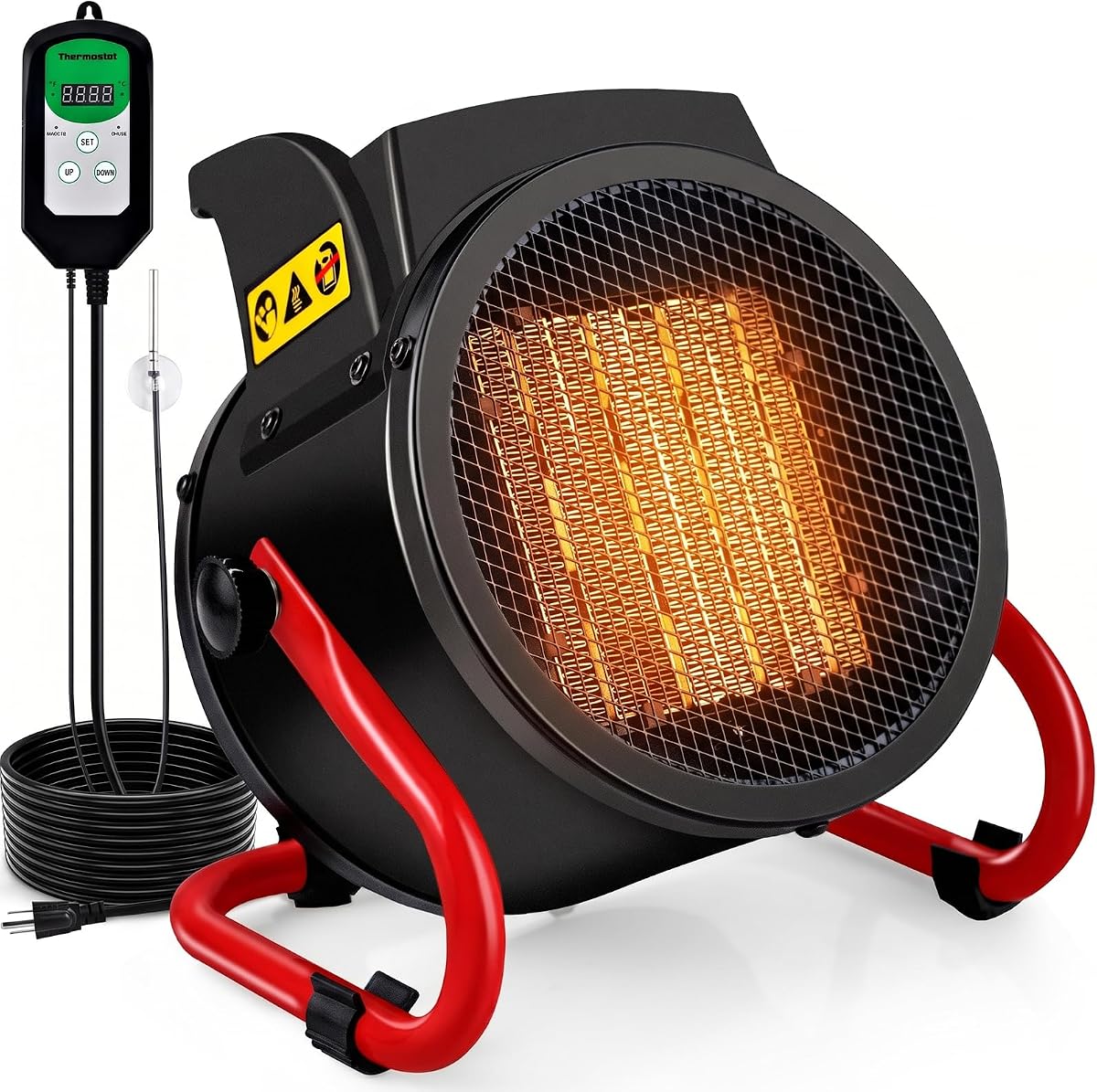
This VEVOR heater offers essential heating functions at a price point that fits tight budgets. It heats up quickly thanks to PTC ceramic technology and handles small spaces well.
We may earn a commission when you buy through this link, at no additional cost to you.
The unit is incredibly light making it easy to move between different areas of your garden or greenhouse. Three-speed settings give you flexibility for moderate warming needs.
It lacks advanced features like WiFi or precise thermostats. But for basic frost protection on a budget this unit delivers reliable warmth without breaking the bank.
Ideal for beginners or small setups. If you need a simple dependable heater for temporary use or small tents this budget-friendly option is a great start.
PTC technology heats up in seconds providing almost instant warmth to prevent sudden temperature dips that could shock your plants.
Weighing under five pounds with a handle lets you relocate the heater easily to target specific cold spots in your grow area.
We may earn a commission when you buy through this link, at no additional cost to you.
This heater distinguishes itself with an independent thermostat that monitors soil temperature. This is crucial for seedling trays where root warmth matters more than air heat.
We may earn a commission when you buy through this link, at no additional cost to you.
The alloy steel housing offers durability against minor impacts and humidity. Safety certifications ensure overheat protection giving you peace of mind during overnight heating.
The IP20 rating limits it to indoor use without water exposure. While robust the thermostat is separate which might require extra setup time compared to integrated units.
Best for growers focusing on seed propagation. If soil warmth is your priority this model provides targeted heat where it counts most for healthy germination.
Real-time soil temperature tracking ensures roots get consistent warmth preventing shock during early growth stages in cold environments.
ETL certification and overheat protection prevent electrical fires making this a safer choice for long-term operation.
We may earn a commission when you buy through this link, at no additional cost to you.
Beyond heating this model helps lower excess dampness in covered areas which is vital for preventing mold on plants. It cycles automatically to maintain steady warmth efficiently.
We may earn a commission when you buy through this link, at no additional cost to you.
A high customer rating reflects reliability and ease of use. The flame-resistant body adds a layer of safety for enclosed spaces like grow tents or sheds.
It covers up to 160 square feet which fits most home greenhouses. However the plastic casing may feel less premium than metal options in wet environments.
Great for humid setups needing both heat and air quality. If mold prevention is a concern this heater balances warmth and dryness effectively.
Lowering humidity levels alongside heating reduces the risk of fungal issues common in cold humid greenhouse environments.
Built-in thermostat cycles on and off to maintain temperature without constant manual adjustment saving effort.
We may earn a commission when you buy through this link, at no additional cost to you.
This model features a 25-degree adjustable angle allowing you to direct heat toward specific plants or areas. The heating tube element provides steady warmth for small spaces.
We may earn a commission when you buy through this link, at no additional cost to you.
Flame retardant housing ensures safety in dry areas. A portable handle makes it easy to reposition as your grow needs change throughout the seasons.
The lower rating suggests potential consistency issues but the angle feature is unique. Not the most powerful but useful for targeted heating needs in tight spots.
Suitable for small grow tents. If you need to direct heat carefully rather than warm an entire room this angle adjustability adds value.
Adjustable angle lets you focus warmth on sensitive plants preventing wastage of energy heating empty space.
Stable base with grip ensures the unit stays secure on uneven surfaces common in greenhouse settings.
We may earn a commission when you buy through this link, at no additional cost to you.
Using PTC ceramic technology this heater consumes oxygen safely without producing combustion gases. It is ideal for enclosed greenhouses where air quality is important.
We may earn a commission when you buy through this link, at no additional cost to you.
Three power modes allow you to save energy during milder days. The standby fan mode provides air circulation even when heating is not required.
The range covers up to 160 square feet with water resistance for damp conditions. It balances efficiency and safety well for general use.
Recommended for enclosed spaces requiring clean air. If you grow indoors or in sealed tents this ceramic heater avoids fumes and maintains air purity.
Zero combustion gases ensure plants receive pure heated air without risk of gas toxicity in tight spaces.
Variable power settings help reduce electricity usage by matching output to current weather demands.
We may earn a commission when you buy through this link, at no additional cost to you.
With an IPX5 waterproof rating this heater can withstand stronger water jets than standard models. It is highly resistant to humidity and accidental splashes from irrigation.
We may earn a commission when you buy through this link, at no additional cost to you.
The independent thermostat offers precise control for seed sprouting and flower maintenance. Rapid heating ensures the temperature rises quickly when cold fronts hit.
Flame retardant materials reduce fire risk making it safe for workshops or garages. It lacks modern connectivity but focuses on core durability.
Best for wet humid environments. If your greenhouse gets wet or you hose it down this higher waterproof rating offers essential protection.
IPX5 certification ensures the unit withstands heavy moisture without short circuits or electrical hazards.
A separate digital thermostat allows fine-tuned adjustments independent of the main unit for better accuracy.
We may earn a commission when you buy through this link, at no additional cost to you.
This model holds a perfect rating for its reliability and build quality. The stainless steel shell protects against harsh outdoor elements effectively.
We may earn a commission when you buy through this link, at no additional cost to you.
The waterproof temperature probe connects to the digital thermostat to sense actual air temperature precisely. This ensures accurate heating cycles even in variable weather.
The cord is long enough for most setups. While fan mode is limited the heating performance is strong for larger areas.
Ideal for outdoor or semi-covered patios. If you need durable heating that can withstand weather this build quality is worth the extra cost.
Stainless steel resists rust and corrosion ensuring the heater lasts for years even in humid or wet climates.
A waterproof probe measures real ambient temperature allowing the thermostat to maintain exact settings accurately.
We may earn a commission when you buy through this link, at no additional cost to you.
Safety is prioritized with independent overheat protection that cuts power automatically if internal temperature gets too high. It features fireproof materials for reliable operation in enclosed spaces.
We may earn a commission when you buy through this link, at no additional cost to you.
It warms up in just three seconds ensuring quick climate adjustment. The 15A thermostat controller handles high-power devices safely without tripping.
Energy saving modes reduce electricity costs while maintaining heat. While it lacks smart features it focuses on safety and basic performance.
Great for priority-focused growers. If safety and reliability matter most this heater provides robust protection against overheating and fire risks.
Automatic power cut-off ensures the heater shuts down safely before damage occurs during a malfunction.
Heating elements activate within seconds to prevent sudden temperature drops that could harm delicate plants.
We may earn a commission when you buy through this link, at no additional cost to you.
Selecting the right greenhouse heater depends on your space size, budget, and specific plant needs. This guide breaks down the most critical factors to consider before buying.
The heating capacity is usually measured in watts or BTUs. A higher wattage means the heater can warm larger spaces effectively. For small grow tents, 1500 watts is often sufficient, but larger greenhouses may require multiple units or higher outputs.
Always choose a heater that matches your square footage to ensure efficiency.
A good thermostat maintains stable temperatures without large fluctuations. Digital thermostats offer better accuracy than analog dials. Look for independent probes if you need soil temperature monitoring for seedlings.
Precise control prevents cold snaps and reduces energy waste from constant cycling.
Greenhouses are humid environments so water resistance is vital. Look for IPX4 or higher ratings to ensure the heater can handle moisture without short circuits. Splash proof designs allow safer operation near irrigation.
Higher ratings like IPX5 or IPX7 provide extra protection against accidental water exposure.
Safety mechanisms like overheat protection are non-negotiable for indoor plants. Fire retardant materials and automatic shutoffs prevent hazards. Certification labels like ETL or UL indicate tested safety standards.
Always verify that the unit has independent overheat shutoffs to minimize fire risks.
Move the heater as needed to avoid localized hot spots. Lightweight units with handles make repositioning easier. Some models feature adjustable angles to direct airflow precisely where it is needed.
Compact designs are ideal if you use multiple heaters in different zones.
Modern heaters may offer WiFi controls allowing remote management via apps. Scheduling features help automate heating cycles to match day and night. This is useful if you cannot visit your greenhouse daily.
Smart features add convenience but usually increase the price.
Heaters can be costly to run so energy efficiency matters. Look for models with multiple power settings to lower output during milder weather. ECO modes adjust temperature to save electricity without sacrificing plant health.
Variable power settings help balance cost with climate stability.
Materials like stainless steel resist rust better than plastic. Greenhouses can be harsh on equipment so a durable shell extends the heater's life. Check warranty terms for added protection.
Quality construction ensures the heater lasts through multiple growing seasons.
Place the heater on a level surface away from flammable materials. Ensure there is at least two feet of clearance from plants or curtains to prevent fire hazards.
Set the thermostat to the lowest temperature your plants can tolerate. Avoid setting it too high to save energy and prevent overheating the air.
Regularly clean dust from vents to maintain airflow. Check the power cord for damage and ensure connections are dry before plugging in.
For small tents up to 100 sq ft, a 1500 watt unit is usually enough. Larger greenhouses require either multiple units or higher BTU outputs. Always check the manufacturer's recommended square footage for optimal performance.
Yes if they have overheat protection and safety certifications. Keep the area clear of flammable items. Monitor the first few nights to ensure the unit operates correctly before leaving it unattended.
Regularly clean dust from the intake vents to ensure efficient heating. Check the power cord for cracks and ensure all connections remain dry. This helps prolong the lifespan of the unit.
Standard heaters often lack water resistance. For greenhouses use units with IP ratings designed for humidity to prevent electrical hazards. Specialized models ensure safer operation in wet environments.
Heating warm air can lower relative humidity by encouraging evaporation. While not a dehumidifier, it helps keep the air dry which can prevent mold growth on leaves.
Most seedlings thrive between 65°F and 75°F. Use the heater to maintain this range without exceeding it which could dry out the soil too quickly.
Integrated thermostats are convenient, but independent probes measure soil temperature better for seedlings. If precision is key a separate unit offers more control over root warmth.
Most heaters last several years if maintained well. Replace them if the casing cracks or the thermostat fails to maintain consistent temperatures.
The BioGreen Electric model leads with air circulation, while the Pasapair offers top smart controls. For budget shoppers, the VEVOR units provide solid warmth without the extra cost.
Prioritize safety and water resistance in your selection. The best heater matches your space size and plant needs precisely to ensure healthy growth year-round.
Always check current listings before buying to confirm pricing. Prices fluctuate frequently so verifying the latest deal helps you save on your final purchase.