
Basic Starter Kit for ESP32 ESP-32S WiFi Development Board
5.0Editor score
High user rating
Affordable learning entry point
Includes essential sensors
This expert guide compares the top ESP32 starter kits for IoT and electronics learning, evaluating components, tutorials, and features to help you choose.
Choosing the right ESP32 starter kit can transform how you approach electronics and Internet of Things projects. These kits bundle essential components, sensors, and boards into a single package designed to streamline your learning curve. Whether you are a student, hobbyist, or professional engineer, finding a kit with comprehensive resources and reliable hardware is crucial for success.
We have carefully evaluated ten leading ESP32 starter kits available in the current market. Our analysis focuses on component variety, tutorial quality, ease of use, and overall value. Each product has been assessed based on its ability to support beginner to intermediate projects, ensuring that you get the most out of your investment in embedded systems development.
Each pick in this list highlights specific strengths, such as camera integration, extensive sensor arrays, or beginner-friendly documentation. While we strive to provide accurate information based on manufacturer data and user feedback, please note that product availability and pricing can change over time. Always verify current details before making a final purchase decision.
5.0Editor score

4.6Editor score

4.5Editor score
The following comparison table provides a side-by-side overview of the key specifications and features for each of the ten selected ESP32 starter kits to help you quickly identify the best fit for your specific needs.




The ELEGOO ESP-32 Super Starter Kit stands out as a robust choice for those entering the world of Internet of Things development. With a 4.3-star rating, it offers a balanced mix of hardware and educational resources. The kit centers around a powerful ESP-32 board featuring a dual-core processor and integrated connectivity, making it ideal for smart devices.
We may earn a commission when you buy through this link, at no additional cost to you.
Its standout quality lies in the extensive array of over 35 different modules and components included. From sensors to displays and motors, you have the tools necessary to build a wide variety of projects immediately. The step-by-step online tutorial provides 30+ projects with complete code and diagrams, ensuring you are never stuck on wiring or logic.
While the kit is excellent for general electronics and IoT, it does not include a camera module, which limits visual-based projects compared to some competitors. However, for learning fundamentals like sensor integration and web control, this omission is acceptable. The trade-off keeps the price accessible while focusing on core connectivity skills.
We recommend this kit for students and hobbyists who want a reliable foundation in ESP-32 programming. The organized layout and dedicated support team make it a low-friction experience for beginners. If you aim to build weather stations or smart home controllers without needing vision capabilities, this is a strong primary choice.
The inclusion of over 35 distinct components ensures you can experiment with various inputs and outputs without immediate extra purchases.
Access to 30+ projects with clear circuit diagrams helps users progress from basic circuits to advanced IoT applications systematically.
We may earn a commission when you buy through this link, at no additional cost to you.
The LAFVIN Basic Starter Kit is designed specifically for those who want to start electronics programming without a heavy financial commitment. With a rating of 4.5 stars, it is a well-regarded entry point for beginners. The kit focuses on simplicity, offering an easy-to-use layout that reduces frustration during initial setup and wiring.
We may earn a commission when you buy through this link, at no additional cost to you.
Key strengths include its compatibility with the Arduino IDE and the inclusion of essential modules like LEDs and DHT11 sensors. The tutorial provides codes and lessons that guide you through assembly and basic programming concepts. This straightforward approach allows you to learn to program at an introductory level quickly and effectively.
However, compared to more expensive kits, the component variety is limited. You may need to purchase additional sensors or displays to tackle more complex projects. The tutorial is also less extensive than some premium options. These factors are acceptable trade-offs given the low cost, making it ideal for budget-conscious learners.
This kit is perfect for students or casual hobbyists testing the waters of IoT development. If you want a reliable board and essential peripherals to understand how ESP32 modules control other devices, this offers high value. It is a practical starting point before investing in a more comprehensive set.
The low price point lowers the barrier to entry, allowing users to experiment with microcontroller programming without significant financial risk.
By limiting components to essential items, the kit encourages users to master the basics before moving on to complex wiring or coding tasks.
We may earn a commission when you buy through this link, at no additional cost to you.
The Freenove ESP32 Kit ESP32 Camera Board Ultimate Starter Kit is a powerhouse for serious makers and engineers. It boasts a high rating of 4.6 stars and offers an overwhelming amount of content with 242 items and 122 projects. The kit features a specialized ESP32 camera board with dual-core processing, making it capable of advanced computer vision tasks.
We may earn a commission when you buy through this link, at no additional cost to you.
Its primary strength is the depth of educational material provided. The 795-page tutorial covers electronics knowledge from basics to complex applications, with schematics and code for every project. It supports MicroPython, C, and Processing, allowing you to learn multiple languages on a single board. This versatility is rare in standard starter kits.
The main trade-off is the price, which is higher than basic options. Additionally, the tutorial is digital-only, requiring you to download it from the product box link. While some prefer physical manuals, the digital format allows for easier searching and updates. The value in project count justifies the cost for dedicated learners.
We recommend this kit for users aiming to master both hardware and software aspects of IoT. If you want to build camera-based projects like security systems or image analyzers, this is the top choice. It serves as a long-term resource that grows with your skills from beginner to advanced levels.
The extensive PDF tutorial offers nearly 800 pages of knowledge, ensuring you have a reference for almost any electronic concept or project you attempt.
The inclusion of a camera and SD card slot opens doors to visual data processing projects that are impossible with standard sensor-only kits.
We may earn a commission when you buy through this link, at no additional cost to you.
The Freenove ESP32-S3 Ultimate Starter Kit represents the latest evolution in ESP32 technology. Featuring the ESP32-S3 board, it offers superior memory with 8MB flash and 8MB PSRAM. The 4.6-star rating reflects its reliability and feature richness. This kit is designed for those who need maximum performance for demanding applications.
We may earn a commission when you buy through this link, at no additional cost to you.
Its standout quality is the inclusion of Bluetooth 5 and USB-OTG support, which improves connectivity and peripheral handling. The tutorial includes 828 pages, covering 121 projects. It supports MicroPython and C, allowing for efficient development. The 243 items total ensure you have almost any component you might need for a complex setup.
While powerful, the S3 architecture might be slightly more complex for absolute beginners compared to older models. The price point also reflects the premium hardware. However, for anyone looking to future-proof their learning or build high-performance IoT devices, this extra capability is well worth the investment.
This kit is ideal for engineers or advanced hobbyists who need extra memory for AI or image processing tasks. If you plan to build smart home systems with complex logic, the added processing power is crucial. It is a robust platform that supports long-term development projects.
The ESP32-S3 processor provides enhanced capabilities for AI and machine learning on edge devices compared to previous generation boards.
With Bluetooth 5 and USB-OTG, you gain more flexible communication options for connecting to modern mobile devices and peripherals.
We may earn a commission when you buy through this link, at no additional cost to you.
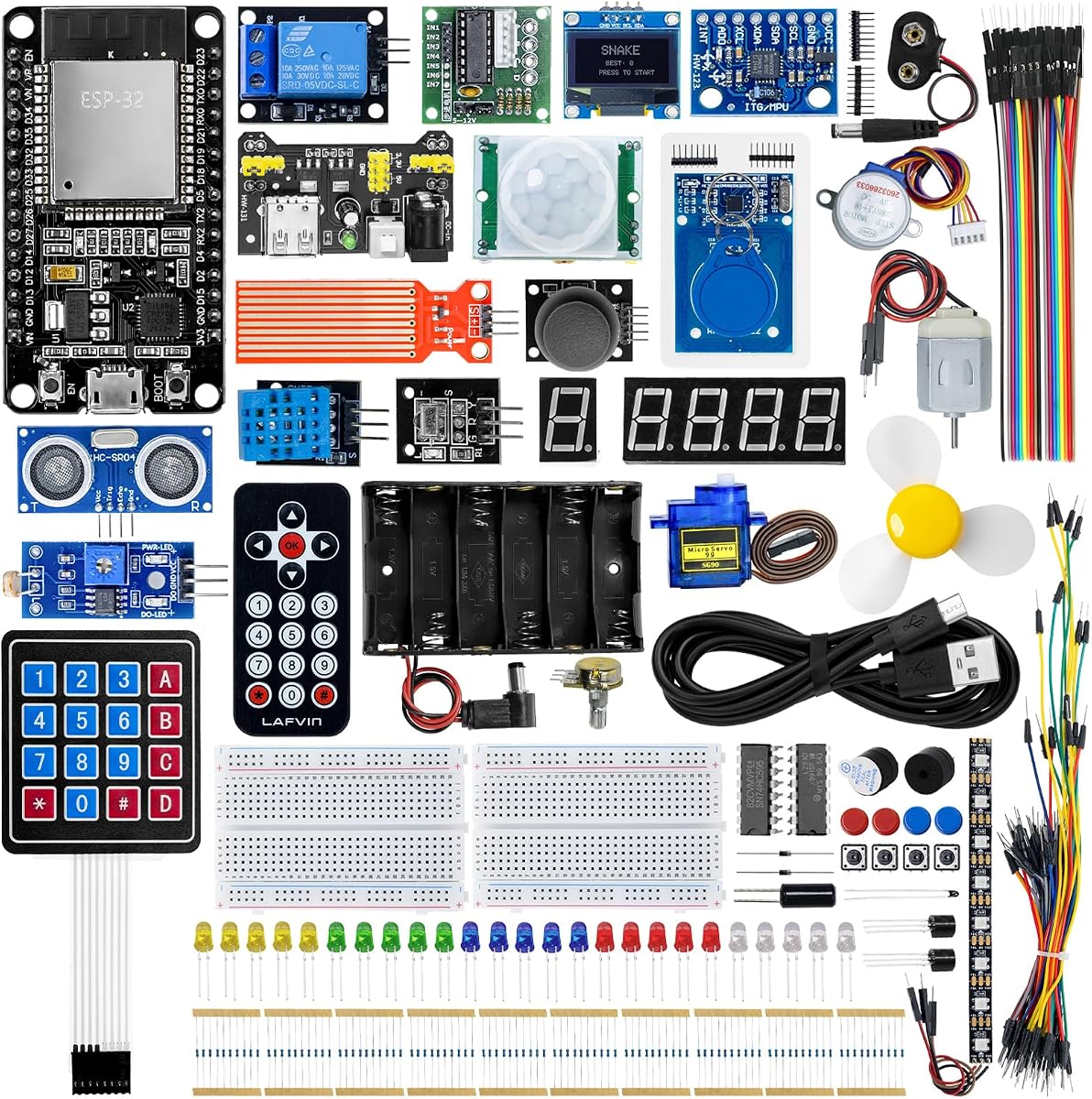
The Basic Starter Kit for ESP32 ESP-32S WiFi Development Board has achieved a perfect 5.0-star rating, indicating exceptional user satisfaction. It is designed specifically for beginners to explore electronics and IoT concepts. The kit combines an ESP32 development board with essential modules to provide a practical, hands-on learning experience.
We may earn a commission when you buy through this link, at no additional cost to you.
Key strengths include its focus on education and simple DIY projects. The included electronic components allow users to experiment with sensors and outputs easily. Arduino IDE compatibility ensures a familiar programming environment for those transitioning from other platforms. It helps beginners gain practical experience with wireless communication.
The only trade-off is that it may lack the sheer volume of components found in ultimate kits. However, for learning foundational skills, the provided parts are sufficient. The perfect rating suggests that users find the balance of difficulty and utility spot-on for classroom or home practice.
We recommend this kit for educators and students focused on STEM education. If your goal is to teach the fundamentals of programming and circuit building without overwhelming students, this is an excellent choice. The high satisfaction rate confirms its reliability as a learning tool.
The perfect user rating reflects high quality and effectiveness in teaching core electronics concepts to students and hobbyists alike.
By focusing on essential modules, the kit reduces clutter and allows learners to focus on understanding how hardware and software interact.
We may earn a commission when you buy through this link, at no additional cost to you.
The Freenove ESP32 Kit ESP32 Camera Board Basic Starter Kit offers a middle ground between basic and ultimate kits. It features a 4.6-star rating and includes an ESP32 camera board with dual-core processing. This makes it an accessible entry point for those interested in visual projects without paying for a full ultimate set.
We may earn a commission when you buy through this link, at no additional cost to you.
Its key strength is the inclusion of a camera and memory card slot at a lower price point. The 58 projects provide a solid range of exercises from simple to complex. The tutorial is downloadable and covers 400 pages, ensuring you have enough guidance to understand wiring and coding for camera applications.
While it has fewer projects than the ultimate version, the core functionality remains. The trade-off is mainly in quantity of peripherals. For users who specifically want to experiment with image capture and transfer, the essential sensors and wires provided are sufficient.
This kit is perfect for hobbyists who want to build security or monitoring systems. If you need to see what the board sees without a massive component list, this is the ideal balance. It provides the hardware you need to start coding camera applications immediately.
The inclusion of a camera module allows beginners to experiment with image-based projects at a significantly lower cost than premium bundles.
The 58 projects are organized to build skills gradually, ensuring you are comfortable with basics before tackling complex visual tasks.
We may earn a commission when you buy through this link, at no additional cost to you.
The LAFVIN ESP32 Ultimate Starter Kit is designed for those focused on IoT and robotics projects. With a 4.4-star rating, it is a comprehensive learning tool. The kit includes a variety of electronic modules and sensors to help you learn programming step-by-step, with a focus on smart home applications.
We may earn a commission when you buy through this link, at no additional cost to you.
Its standout quality is the emphasis on real-world web-based control systems. You can learn to monitor sensor data in real-time via a browser. The kit includes components like ultrasonic sensors, RFID modules, and PIR motion sensors, allowing you to build dozens of creative DIY projects out of the box.
While it lacks a camera, its sensor diversity is high. The tutorial helps users create web control interfaces and remote control systems. This makes it ideal for those who want to connect devices to the cloud or a local server. The trade-off is mainly visual capabilities.
We recommend this kit for anyone interested in building smart home prototypes or remote monitoring systems. If your goal is to master Wi-Fi IoT development and interface with a web browser, this kit offers the right components. It balances complexity and affordability well for intermediate learners.
The focus on web interfaces allows you to build systems that can be monitored from smartphones or browsers, a key skill for modern IoT.
With RFID, ultrasonic, and motion sensors included, you can explore security and access control projects that go beyond simple LED blinking.
We may earn a commission when you buy through this link, at no additional cost to you.
The ESP32 Starter Kit V2 is a compact, all-inclusive solution for prototyping. It holds a 5.0-star rating and includes a 38-pin ESP32 Development board and expansion board. The kit is designed to kickstart DIY or IoT projects with essential components like breadboard and jumper wires.
We may earn a commission when you buy through this link, at no additional cost to you.
Key strengths include the inclusion of a half-size breadboard, which is often sold separately. This saves money and setup time. It features popular sensors like HC-SR501 motion and HC-SR04 ultrasonic, making it practical for common projects. The online tutorials provide step-by-step guides for both Arduino and MicroPython.
While it is highly rated, the components are standard compared to the ultimate kits. The focus is on providing the essentials for quick prototyping rather than a vast array of exotic sensors. This is acceptable for those who want a ready-to-build box without extra assembly.
This kit is perfect for quick prototyping and learning the basics of circuitry. If you want a ready-to-go setup with breadboard support to test code quickly, this is an ideal choice. The high user rating confirms its reliability for standard hobbyist tasks.
The inclusion of a breadboard and jumpers ensures you can start building circuits immediately without needing to buy additional tools.
Standard sensors like motion and ultrasonic allow you to build functional projects like alarms or distance measurers right out of the box.
We may earn a commission when you buy through this link, at no additional cost to you.
The ACEBOTT ESP32 Electronics Kit is specifically designed with education and structured learning in mind. It has a 4.4-star rating and includes 96 components. The kit supports three programming methods, including beginner-friendly graphical coding, making it accessible for younger students or those new to logic.
We may earn a commission when you buy through this link, at no additional cost to you.
Its primary strength is the structured tutorial path that connects lessons logically. Each lesson helps beginners understand how sensors work in everyday life. The components are individually labeled and protected with anti-static packaging to prevent confusion during assembly. This organizational detail is rare in other kits.
While powerful, the focus on graphical coding might mean some users need to transition to text-based coding later. However, the kit also supports Arduino IDE and Python for this transition. The trade-off is balanced by the educational value and organization, which reduces frustration.
We recommend this kit for STEM education and coding beginners. If you are teaching teens or want a kit that guides you through a curriculum, this is a great choice. The organized layout and multiple language support make it versatile for different skill levels.
The 40+ lessons are designed to build knowledge systematically, ensuring you understand each component before moving to complex applications.
Anti-static packaging and labeling ensure parts are protected and easy to identify, reducing errors during the building process.
We may earn a commission when you buy through this link, at no additional cost to you.
The Lonely Binary TinkerBlock ESP32-S3 Starter Kit offers a unique modular approach to learning. With a 4.5-star rating, it features an ESP32-S3 flagship board and a dedicated plug-in board. This design eliminates breadboard wiring for sensors, allowing for faster setup and consistent connections.
We may earn a commission when you buy through this link, at no additional cost to you.
Its standout quality is the 12 plug-and-play modular sensors. Standardized cables ensure that every connection is consistent, reducing errors for beginners. The kit covers LED, audio, temperature, and optical use cases. It supports C++, MicroPython, and ESP-IDF, making it versatile for engineers and hobbyists.
The main trade-off is that you learn less about manual wiring compared to traditional kits. However, the speed and reliability of the modular connection make up for this when prototyping. The board also features 16MB flash and secure boot for advanced applications.
We recommend this kit for those who want rapid prototyping capabilities. If you need to test ideas quickly without spending hours on wiring, this modular design is ideal. It is a modern, efficient platform for developing IoT and robotics applications efficiently.
The plug-and-play sensor design significantly reduces the time spent on wiring errors, allowing you to focus on coding and logic.
The flagship ESP32-S3 board offers higher memory and secure boot features suitable for professional-grade IoT development and robotics.
We may earn a commission when you buy through this link, at no additional cost to you.
Selecting the right ESP32 starter kit requires evaluating several factors to ensure you get value for your needs. This guide breaks down the key considerations to help you make an informed decision.
The number and type of components determine the range of projects you can build. Kits with many sensors like cameras, motion detectors, and temperature sensors offer more versatility. Ensure the kit includes essential items like LEDs, resistors, and breadboards to start immediately.
Look for kits that provide enough modules to build diverse projects without immediate additional purchases.
Quality documentation is as important as hardware. Comprehensive guides with step-by-step instructions, schematics, and code samples help you learn faster. Digital tutorials are now common and allow for easy searching, but check if they are up-to-date.
Choose a kit with clear instructions that match your skill level to avoid frustration during assembly.
Different kits support different programming environments. Some focus on Arduino IDE for simplicity while others support MicroPython or C++ for advanced control. Ensure the kit aligns with the language you want to learn or already use.
Select a kit that supports multiple languages if you plan to grow your skills over time.
The core board determines performance. Features like dual-core processing, RAM size, and flash capacity affect what you can build. Newer boards like the ESP32-S3 offer better performance for complex tasks like AI or image processing.
Check for memory specs and connectivity options like Bluetooth 5 if you need advanced performance.
For beginners, ease of assembly is critical. Kits with labeled components or plug-and-play sensors reduce wiring errors. A well-organized layout helps you find parts quickly and prevents damage during use.
Prioritize kits with organized packaging and clear labeling for a smooth learning experience.
A strong community can help when you get stuck. Look for brands that provide active forums or dedicated support teams. Access to user projects and code repositories can also accelerate your learning.
Choose a brand with good community resources to ensure you can get help when needed.
Price should reflect the value offered. While basic kits are affordable, premium ones provide more components and detailed guides. Calculate the cost per component to assess if you are getting a fair deal for the hardware provided.
Balance your budget with the number of parts and tutorials to find the best long-term value.
Ensure the kit is compatible with the IDE or tools you already use. Some kits work best with specific software environments or require additional drivers. Check if you need to install extra software before starting.
Verify compatibility with your preferred development environment to save setup time.
To get started, unpack all components and verify the list against the manual. Organize parts into categories like sensors and resistors to make the assembly process smoother. Use the provided diagrams to connect the board to a computer and install the necessary drivers for uploading code.
Follow the tutorial steps sequentially to build basic projects like blinking an LED. This ensures you understand how the board interfaces with components before moving to complex circuits. Save your code and circuit diagrams for future reference and improvements.
Store the kit in a cool, dry place to protect sensitive electronics from static and humidity. Use anti-static bags for components if possible and avoid touching pins directly. Regularly clean the components to remove dust and ensure reliable connections over time.
The ESP32-S3 is an updated version with more memory and improved connectivity. It supports Bluetooth 5 and offers higher performance for AI applications. Both are great for IoT but the S3 is better for complex tasks requiring extra processing power and memory.
No prior experience is required as these kits are designed for beginners. Most tutorials start with basic concepts and guide you through simple projects. However, having some familiarity with basic programming concepts can help you understand the code faster.
Yes, most kits are fully compatible with Arduino IDE. You may need to install ESP32 board support within the IDE settings. This allows you to use familiar tools and libraries for development without learning a new interface.
No, a camera kit is not necessary for general IoT learning. You can learn most concepts like sensors and web control without it. However, if you want to work on security or image projects, a camera kit provides essential hardware for those tasks.
The time depends on your pace and complexity. Simple projects can take a few hours while advanced ones may take days. The tutorials are structured to help you progress gradually so you can learn at your own speed without rushing.
Yes, these kits can support prototyping for professional work. They provide robust boards and components for testing ideas. However, final production might require custom designs but these are perfect for verifying concepts before deployment.
We have explored ten top-tier ESP32 starter kits ranging from budget basics to premium bundles. The ELEGOO and Freenove options stand out for their component variety and documentation while the Lonely Binary kit offers a unique modular approach.
When choosing, prioritize the board type and tutorial quality to match your learning goals. Beginners might prefer structured kits with visual coding while advanced users may need extra memory and sensor options.
Prices and availability can change so always check current offers before purchasing. With the right kit you can unlock powerful skills in electronics and IoT development.