
Edifier MR3
4.5Editor score
Hi-Res Audio Certified
Bluetooth multi-point connection
3.5-inch mid-low drivers
MDF cabinet design
Finding the right Edm Studio Monitor is essential for any producer aiming for precise audio playback and reliable mixing results in their workspace.
We evaluated each model based on frequency response, build quality, connectivity options, and real-world performance to help you choose the best fit.
Each pick shows key strengths and trade-offs so you can decide quickly. Keep in mind that prices and availability may change over time.
4.5Editor score

4.8Editor score

4.8Editor score
As an Amazon Associate we earn from qualifying purchases.
This side-by-side comparison outlines key specifications and features across all ten models to help you find the right Edm Studio Monitor for your needs.



The PreSonus Eris E7 XT stands out as a top Edm Studio Monitor for its accurate sound reproduction and included production software. Its rating of 4.8 reflects consistent performance across diverse genres and mixing tasks.
We may earn a commission when you buy through this link, at no additional cost to you.
The 6.5-inch woven composite woofer delivers deep lows without distortion while the 1.25-inch silk dome tweeter ensures smooth highs. The EBM waveguide creates a wide sweet spot so your mix translates well.
Room tuning controls let you adjust frequency response to match your space. While single unit packaging may require buying a pair separately, the acoustic flexibility and software bundle justify the investment.
Producers needing reliable near-field monitors with room compensation should consider this model. It offers exceptional value for accuracy and includes Studio One Prime for immediate workflow support.
The woven composite woofer ensures tight bass that helps producers judge low-end balance without coloration or muddiness.
Acoustic tuning controls allow you to tailor output levels and equalization to match your studio environment precisely.
We may earn a commission when you buy through this link, at no additional cost to you.
The Edifier MR3 delivers reliable monitoring quality at an accessible price. Its Hi-Res Audio certification ensures a flat response from 52Hz to 40kHz for precise tracking and mixing decisions.
We may earn a commission when you buy through this link, at no additional cost to you.
Balanced TRS, RCA, and AUX inputs offer versatile connectivity while Bluetooth multi-point supports seamless wireless streaming. The MDF cabinet reduces distortion for clearer playback during critical listening sessions.
Power output is modest compared to higher-end monitors which may limit large room use. However, the app-based EQ customization lets you fine-tune sound to suit smaller home studio environments.
Beginners and hobbyists seeking accurate sound without breaking the bank will appreciate this model. It balances professional features with everyday usability for music creation and casual listening.
Certification guarantees a flat response that helps maintain mix integrity across all frequencies without artificial enhancement.
Multiple input options plus Bluetooth allow you to connect various devices without needing extra hardware or adapters.
We may earn a commission when you buy through this link, at no additional cost to you.
The YAMAHA Hs5 is a trusted choice for professional studios prioritizing sonic purity and consistency. With 4.8 ratings, it delivers a neutral response that reveals mix details accurately.
We may earn a commission when you buy through this link, at no additional cost to you.
The 5-inch cone woofer and 1-inch dome tweeter work within a 70W bi-amp system to provide clear dynamics from 54Hz to 30kHz. Balanced XLR and TRS inputs support professional audio interfaces.
Its lack of wireless features may inconvenience casual users but aligns with studio-focused design. The investment pays off through long-term reliability and translation accuracy across playback systems.
Serious producers and engineers needing reference-grade monitors should consider this pair. It remains a benchmark for neutral sound and proven durability in commercial production environments.
The Hs5 emphasizes original sound without coloring so your mixes translate reliably to consumer speakers and headphones.
Separate amplifiers for low and high frequencies ensure dynamic headroom and reduced distortion at high volumes.
We may earn a commission when you buy through this link, at no additional cost to you.
The PreSonus Eris E4.5 offers near-field monitoring in a space-saving package ideal for smaller studios. Its 4.5-inch woven composite woofer provides tight bass that helps identify low-frequency issues early.
We may earn a commission when you buy through this link, at no additional cost to you.
With 50W of Class AB amplification and silk dome tweeters, it delivers clear stereo imaging from wide angles. Front-panel headphone output and room tuning controls add convenience for private listening sessions.
Power limitations may restrict use in larger rooms but suit desktop setups well. The ability to add a subwoofer later extends low-frequency capabilities if needed for future workflow changes.
Home producers with limited desk space should find this pair practical. It balances accurate monitoring with essential connectivity options for affordable music production and multimedia tasks.
Its compact form factor fits comfortably on crowded desks without sacrificing sound quality or stereo imaging performance.
Compatibility with the Eris Sub 8BT allows you to add a subwoofer for extended bass response later.
We may earn a commission when you buy through this link, at no additional cost to you.
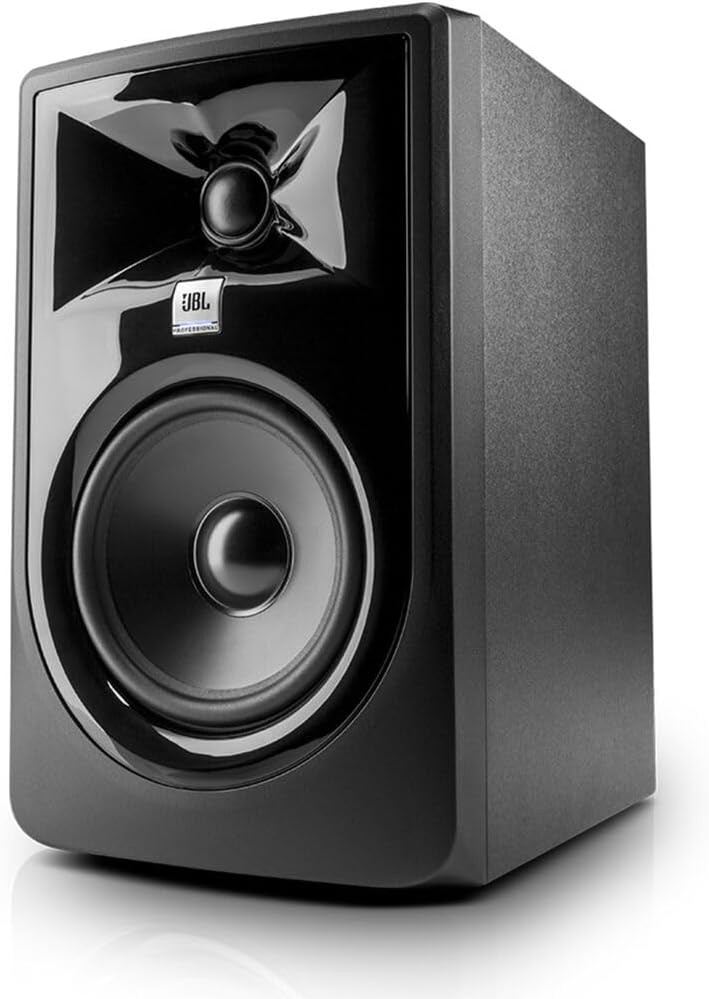
The JBL 305P MkII delivers immersive sound with its patented Image Control Waveguide for precise imaging. It achieves a 4.7 rating through consistent accuracy and robust construction suited for daily production use.
We may earn a commission when you buy through this link, at no additional cost to you.
Dual 41W Class-D amplifiers drive the 5-inch woofer with Slip Stream port for deep bass. Boundary EQ and HF Trim let you tailor low and high frequencies to fit your room acoustics.
Heavier construction may limit portability but ensures stability on stands or desks. The absence of Bluetooth aligns with its focus on wired professional audio interfaces and reliable studio performance.
Podcasters and music producers needing a wide sweet spot and room adaptation will benefit. It combines JBL heritage with modern features for versatile monitoring across creative workflows.
The waveguide provides precise soundstage positioning so you can judge pan and depth accurately during mixing.
Boundary EQ compensates for wall proximity so your mix maintains accuracy regardless of speaker placement.
We may earn a commission when you buy through this link, at no additional cost to you.
The Ortizan C7 blends professional monitoring features with modern wireless convenience. Its 4.6 rating reflects clear sound output and stable Bluetooth 5.3 connectivity for versatile usage scenarios.
We may earn a commission when you buy through this link, at no additional cost to you.
Built-in 24-bit DAC minimizes signal loss while carbon fiber speakers deliver clean mid-low frequencies. Balanced TRS inputs allow connection to mixing consoles for small music production setups.
Smaller drivers limit extreme low-end depth compared to larger monitors. The white finish adds style but may show wear over time in active studio environments.
Content creators needing quick wireless streaming alongside balanced inputs will appreciate this pair. It suits hybrid workflows mixing professional audio and casual playback seamlessly.
Bluetooth 5.3 ensures low-latency pairing with smartphones and tablets without compromising audio fidelity.
TRS balanced interface lets you connect mixers and interfaces for accurate monitoring during recording sessions.
We may earn a commission when you buy through this link, at no additional cost to you.
The KALI AUDIO LP-6 V2 provides robust performance with an 80W bi-amped system and flat DSP tuning. Its 4.5 rating highlights accuracy and low distortion for critical monitoring across genres.
We may earn a commission when you buy through this link, at no additional cost to you.
A 6.5-inch driver paired with a 1-inch tweeter delivers deep lows and smooth highs up to 21kHz. Boundary EQ adapts output whether placed on a stand against a wall or on a desk.
Sold individually may require purchasing a second unit for stereo setups. The high SPL capacity supports loud monitoring but requires careful gain staging to avoid listener fatigue.
Producers needing professional specs at a reasonable price will find this model compelling. It offers low-noise operation and strong dynamics for detailed production work and live mixing tasks.
The 115dB max SPL provides headroom for loud monitoring without distortion or compression in larger rooms.
Second-gen DSP ensures flat response so what you hear matches the source without coloration or boost.
We may earn a commission when you buy through this link, at no additional cost to you.
The Edifier MR5 features a 3-way active crossover system for detailed audio reproduction from 46Hz to 40kHz. With 4.5 ratings it supports Hi-Res Audio with LDAC for crystal-clear wireless streaming.
We may earn a commission when you buy through this link, at no additional cost to you.
Its 110W RMS Class D amplifier delivers 101dB peak SPL ideal for mid-sized rooms. Physical rear knobs and app-based EQ allow precise room compensation for balanced monitoring in varied spaces.
The three-way design adds complexity but improves midrange accuracy compared to 2-way systems. Larger size may require dedicated stand placement to avoid desk resonance during extended sessions.
Producers needing extended frequency response and wireless Hi-Res playback should consider this model. It balances power and precision for both studio work and high-fidelity listening.
Separate drivers for lows, mids, and highs reduce distortion and improve tonal balance across the spectrum.
The EDIFIER ConneX App enables detailed room compensation settings for accurate playback in any environment.
We may earn a commission when you buy through this link, at no additional cost to you.
The Mackie CR4.5BT combines studio-quality sound with tone control for flexible playback. Its 4.7 rating reflects versatility for music production, gaming, and casual listening without compromising accuracy.
We may earn a commission when you buy through this link, at no additional cost to you.
A tone knob lets you boost bass or add high-end sparkle while location switches optimize for near or far listening. Bluetooth pairing simplifies connecting smartphones and PCs without cables.
Consumer-oriented features may limit critical mixing but suit hybrid usage well. Bass extension is moderate so pairing with a subwoofer can enhance low-end for full-range monitoring.
Creators needing a single speaker system for work and entertainment will appreciate its flexibility. It offers clear audio with adaptable controls for varied content creation tasks.
The tone knob allows quick adjustments to suit gaming, parties, or focused production work without reconfiguring software.
Location switches optimize output for desktop or bookshelf placement so you get balanced sound wherever speakers sit.
We may earn a commission when you buy through this link, at no additional cost to you.
The Yamaha HS8 delivers full-range monitoring with an 8-inch woofer extending low frequencies to 38Hz. A 4.6 rating confirms its accuracy and reliability for professional studio use over years.
We may earn a commission when you buy through this link, at no additional cost to you.
A 120W bi-amp system provides ample headroom for detailed playback while Advanced Magnetic Circuit design ensures stable performance. Its response from 38Hz to 30kHz captures subtle details across genres.
Larger physical size demands dedicated placement away from walls. Higher cost reflects professional build quality but may exceed budgets for entry-level setups.
Studios needing accurate low-end translation should consider this pair. It remains a staple for mastering and mixing due to its neutrality and long-term durability.
The 8-inch woofer reaches 38Hz so you can hear and adjust sub-bass content without additional hardware.
Separate amplifiers optimize power distribution for dynamic range and clarity at any volume level.
We may earn a commission when you buy through this link, at no additional cost to you.
Selecting the right Edm Studio Monitor depends on room size, workflow needs, and budget. This guide covers key factors to evaluate before purchasing.
Larger woofers extend low-frequency response for better bass monitoring while smaller drivers suit compact desktop setups. Check the Hz to kHz range to ensure coverage of critical mix elements.
Choose driver size based on room dimensions and low-frequency needs.
Bi-amped monitors provide separate amplifiers for low and high frequencies reducing distortion and increasing headroom. Total wattage affects volume capacity and dynamic detail during playback.
Higher wattage supports louder monitoring but match it to room size.
Balanced TRS and XLR inputs minimize noise for professional audio interfaces. RCA and AUX inputs offer flexibility for consumer devices while Bluetooth adds wireless convenience.
Prioritize balanced inputs for accuracy and multiple inputs for versatility.
Adjustable EQ or boundary controls let you tailor output to match your space. Room compensation ensures accurate sound despite wall reflections or standing waves.
Look for acoustic tuning features if placement is limited.
MDF cabinets reduce resonance and distortion for clearer playback. Durable construction ensures longevity in active studio environments and consistent sound over time.
Invest in solid enclosures for stable acoustic performance.
Included software suites expand value for new producers while headphone outputs enable private monitoring. Compatibility with subwoofers or multi-speaker systems adds future scalability.
Consider ecosystem features that support your long-term workflow.
Position monitors symmetrically at ear level forming an equilateral triangle with your listening spot for balanced stereo imaging.
Allow amplifiers to warm up before critical sessions and avoid overloading inputs to preserve component longevity.
Keep cabinets dust-free and monitor gains regularly to maintain accurate frequency response over time.
Edm Studio Monitors prioritize flat frequency response and minimal coloration so mixes translate accurately across playback systems. They offer professional inputs and precise imaging unlike consumer speakers that emphasize specific frequencies.
A stereo pair is essential for accurate imaging and panning decisions. Monitors are designed to work together; single units limit spatial perception and mix balance.
Balanced TRS or XLR inputs reduce noise for audio interfaces while RCA and AUX connect consumer devices. Choose models matching your interface outputs for clean signal paths.
Room tuning controls adjust frequency response to compensate for wall proximity and acoustic reflections. This ensures your monitor sounds accurate regardless of placement in small spaces.
Yes many studio monitors deliver clear sound for movies and music but they lack bass enhancement and wireless features common in consumer speakers. Expect neutral playback instead of boosted lows.
With proper care and moderate usage studio monitors often last many years without significant degradation. Avoid overdriving amplifiers and protect them from dust and moisture for best longevity.
The PreSonus Eris E7 XT Edifier MR3 and YAMAHA Hs5 lead this roundup offering accuracy and value across different budgets.
Prioritize frequency response room tuning and connectivity that match your workspace and production needs.
Check current availability and compare specs before buying to ensure the right fit for your workflow.