
TP-Link 10GB PCIe Network Card
4.2Editor score
10Gbps throughput
Backwards compatible
CAT6A cable included
This comprehensive guide compares the top 10GbE Network Card options for 2026, analyzing performance, compatibility, and value for gamers, professionals, and
Upgrading your network infrastructure is essential for modern computing demands. A high-quality 10GbE Network Card transforms your system into a powerhouse capable of handling massive data transfers and low-latency applications with ease.
We have carefully evaluated ten leading adapters based on chipset performance, port types, operating system support, and overall build quality. Our analysis ensures you find a solution that matches your specific hardware and workload requirements.
Each selection highlights unique strengths ranging from budget-friendly copper options to professional fiber adapters. Please note that product availability and pricing fluctuate regularly, so verify current details before making your final purchase decision.
4.2Editor score

4.6Editor score

4.4Editor score
The following table provides a side-by-side technical comparison of all ten selected adapters to help you quickly identify key specifications and compatibility features.




The TP-Link TX401 is a top contender for budget-conscious users seeking genuine 10G speed. It delivers reliable performance with low latency and includes a necessary high-speed cable right in the box.
We may earn a commission when you buy through this link, at no additional cost to you.
Its versatility stands out with automatic negotiation across multiple speeds ensuring smooth integration with existing networks. The built-in QoS helps prioritize gaming traffic preventing lag during intense sessions.
While it lacks advanced server features the card is robust enough for most home and small office environments. Users note consistent speeds and stable connections under moderate load.
We recommend this adapter for anyone upgrading from Gigabit Ethernet on a budget. It provides a hassle-free path to faster local transfers without requiring complex configuration steps.
Includes a CAT6A Ethernet cable rated for 10Gbps so you can start immediately.
Quality of Service technology ensures your most important data gets priority on the network.
We may earn a commission when you buy through this link, at no additional cost to you.
This adapter is purpose-built to unlock the full potential of Synology NAS devices. It supports high-performance storage applications and provides dual ports for increased throughput or redundancy.
We may earn a commission when you buy through this link, at no additional cost to you.
Users praise its stability and effortless integration with DSM software. The five-year warranty reflects Synology commitment to quality and long-term reliability for data storage solutions.
The main limitation is its specific optimization for Synology systems which may reduce flexibility for general PC use. However for Synology owners it is arguably the safest choice available.
Ideal for home lab enthusiasts or professionals relying on Synology for critical storage. It ensures your network infrastructure can handle demanding workloads without bottlenecks.
Validated for full compatibility with Synology systems ensuring plug-and-play functionality.
Automatically negotiates between 10 Gbps and 1 Gbps to match your network environment.
We may earn a commission when you buy through this link, at no additional cost to you.
Featuring the trusted Intel 82599EN controller this card is a favorite for virtualization and server environments. It offers robust I/O virtualization capabilities essential for modern data centers.
We may earn a commission when you buy through this link, at no additional cost to you.
The single SFP+ port allows for flexible fiber or DAC connections suitable for high-speed uplinks. Users report excellent stability with Windows Server and Linux hosting multiple virtual machines.
Note that you must source your own optical module or DAC cable to utilize the port. This keeps the card price low but adds complexity to the purchasing process.
Recommend for IT administrators or home server builders needing reliable high-throughput connectivity. It balances professional performance with an accessible price point for enthusiasts.
High quality original Intel controller supports I/O virtualization for server stability.
Connect to 10 Gigabit SFP+ modules or DAC cables for data center environments.
We may earn a commission when you buy through this link, at no additional cost to you.
Powered by the Realtek RTL8127 chipset this adapter is designed for modern systems utilizing PCIe 4.0. It delivers reliable 10Gbps connectivity while maintaining low power consumption.
We may earn a commission when you buy through this link, at no additional cost to you.
Its multi-gig auto-negotiation feature ensures seamless connection with various routers and switches. This flexibility makes it ideal for home labs and workstations needing adaptive network speeds.
Driver installation may be required on some Linux systems but generally works smoothly on Windows 10 and 11. The included brackets fit both standard and compact cases effectively.
Great for users with recent hardware seeking an efficient upgrade path. It supports NAS and cloud storage tasks without taxing your system resources significantly.
Advanced controller engineered for lower power consumption and reduced heat output.
Supports Windows 10/11 and Linux with optional driver installation for full functionality.
We may earn a commission when you buy through this link, at no additional cost to you.
This adapter uses the Intel X550AT2 controller to provide two high-speed copper ports. It is engineered for server stability with features like load balancing and traffic management.
We may earn a commission when you buy through this link, at no additional cost to you.
Users can perform in-system firmware updates without needing a bootable drive which simplifies maintenance. The card supports a wide range of operating systems including Windows Server and Linux.
Some users report needing manual configuration for 2.5G or 5G speeds on certain networks. This is a minor quirk often resolved with simple settings adjustments.
Best for professional servers requiring redundant connections to avoid single points of failure. It offers enterprise-grade features at a competitive price point for small businesses.
Intel official NVM Update Utility enables in-system firmware refresh easily.
On-chip QoS and traffic management optimize data flow for critical applications.
We may earn a commission when you buy through this link, at no additional cost to you.
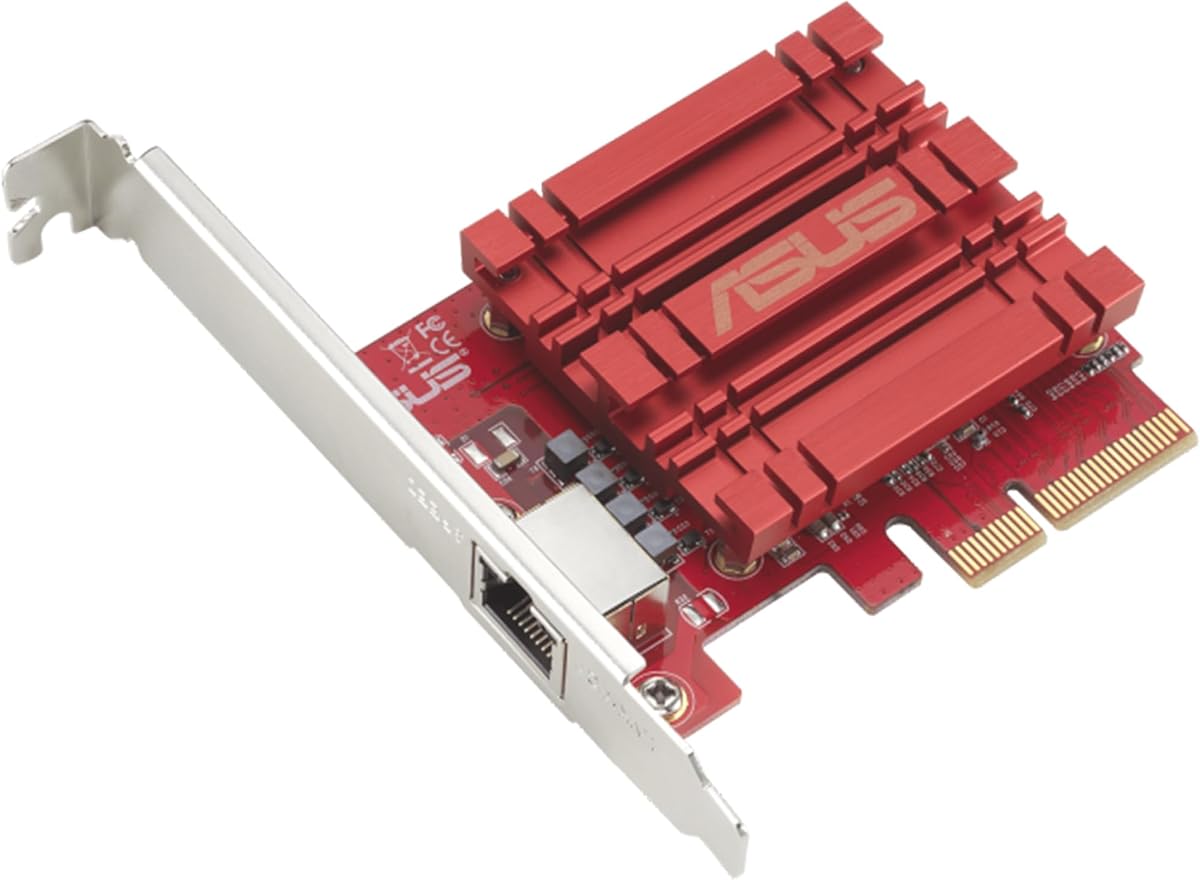
Asus offers a straightforward solution for desktop users needing a speed boost. This adapter supports a wide range of legacy standards ensuring compatibility with older routers.
We may earn a commission when you buy through this link, at no additional cost to you.
The built-in QoS technology helps prioritize bandwidth for gaming or video editing applications. It works well with Windows and Linux kernels making it versatile for different OS users.
While it lacks some advanced server features it performs reliably for typical home and office tasks. Installation is usually plug-and-play requiring minimal configuration.
Perfect for casual users upgrading a standard PC for better file transfer speeds. It balances performance and ease of use without overwhelming technical requirements.
Easily upgrades your desktop using standard copper network cables.
QoS technology allows prioritizing bandwidth for a smoother online experience.
We may earn a commission when you buy through this link, at no additional cost to you.
This single-port adapter delivers high performance specifically for Synology storage systems. It supports auto-negotiation to connect seamlessly with various network speeds automatically.
We may earn a commission when you buy through this link, at no additional cost to you.
Users appreciate its flawless integration with DSM software which minimizes setup time. The five-year warranty provides significant peace of mind for critical storage infrastructure.
Since it is a single port card redundancy must be handled by other means if required. However for basic high-speed access it is a top-tier choice.
Recommended for Synology NAS owners wanting an easy and reliable upgrade. It ensures your storage system can keep up with modern network demands effortlessly.
Validated for full compatibility and performance with Synology systems.
Supports auto-negotiation between multiple speeds to fit your network.
We may earn a commission when you buy through this link, at no additional cost to you.
This card features the genuine Intel 82599EN silicon without vendor restrictions on modules. You can use third-party DACs and optics saving money on cabling options.
We may earn a commission when you buy through this link, at no additional cost to you.
It works seamlessly with Proxmox and TrueNAS without extra driver steps which simplifies virtualization setups. The passive heatsink runs warm so ensure your case has adequate airflow.
Jumbo frames and checksum offloads run in hardware maintaining high efficiency even under heavy load. It is a favorite among DIY server builders for its flexibility.
Ideal for tech enthusiasts building cost-effective high-speed networks. It combines professional silicon with an open approach to hardware selection.
Third-party DAC twinax and optics link up without vendor rejection.
Jumbo frames and checksum offload run in hardware for efficiency.
We may earn a commission when you buy through this link, at no additional cost to you.
This adapter meets strict NDAA and TAA compliance standards required for government and regulated projects. It ensures you can plan installations that meet specific regulatory demands.
We may earn a commission when you buy through this link, at no additional cost to you.
The card supports 2.5G BASE-T allowing use of standard Cat5e cables for intermediate speeds. This flexibility is valuable for environments upgrading incrementally rather than replacing all cabling.
TRENDnet provides robust technical support with English speaking advisors available during business hours. The package includes both brackets for flexible physical installation.
Best for organizations needing compliance certifications for their network hardware. It delivers reliable 10G performance while adhering to strict procurement standards.
NDAA and TAA compliant adapters meet government customer demands.
2.5G BASE-T supports 2.5G and 5G over standard Cat5e cables.
We may earn a commission when you buy through this link, at no additional cost to you.
This card leverages the Intel X550-AT2 controller to ensure server stability and performance. It supports a wide range of speeds from 100M to 10G to fit various needs.
We may earn a commission when you buy through this link, at no additional cost to you.
Users find it compatible with many Server OS including VMware ESXi and FreeBSD which suits virtual environments. The single copper port simplifies cabling while maintaining high throughput.
Manual configuration might be needed for specific speeds like 2.5G or 5G on some switches. This occasional requirement is balanced by the card's robust build and support.
Recommended for small business servers needing reliable copper connectivity. It offers a cost-effective way to upgrade network speed without investing in fiber.
Equipped with original Intel X550-AT2 controller chip.
Compatible with Windows Server Linux and VMware environments.
We may earn a commission when you buy through this link, at no additional cost to you.
Selecting the right adapter requires understanding your hardware limits and network needs. This guide breaks down the critical factors to consider.
Most cards use RJ45 copper ports which work with standard Ethernet cables. Others use SFP+ optical ports which require transceivers and fiber or DAC cables but offer longer distance and lower latency.
Choose RJ45 for ease of use and SFP+ if you need fiber connectivity or have an existing optical switch.
Cards come in different lane sizes like x1 x4 or x8. Ensure your motherboard has a compatible slot and that other components do not block physical installation.
Prioritize x4 slots for 10G speeds to avoid bandwidth bottlenecks during heavy data transfers.
Check driver availability for your specific OS. Windows usually works well out of the box while Linux may require specific kernel modules.
Verify official vendor support pages before purchasing if you rely on niche operating systems.
Some cards use passive heatsinks that rely on case airflow. If your case is quiet or enclosed consider models with active cooling or add a small fan.
Overheating can cause throttling so ensure your build allows proper ventilation around the adapter.
Look for warranties ranging from one to five years. Better support means easier troubleshooting if issues arise during installation or operation.
Opt for brands with responsive technical support if you are not comfortable troubleshooting drivers yourself.
Many modern cards support 2.5G and 5G speeds. This ensures you can connect to intermediate switches without forcing a full 10G upgrade immediately.
Prioritize auto-negotiation features to maintain compatibility with your existing router infrastructure.
Install the adapter by powering down your PC and inserting it into a free PCIe slot. Use the included bracket to secure the card to your case back panel firmly.
Install drivers immediately after booting your system. Download the latest versions from the manufacturer website for optimal performance and bug fixes.
Test your connection using speed test tools and local file transfers. Monitor temperatures during stress tests to ensure the card stays within safe operating limits.
Yes. You should use at least Cat6A cables for 10Gbps speeds over RJ45 ports. While Cat6 works for short distances Cat6A ensures stable performance over longer runs without signal degradation.
Yes most cards auto-negotiate down to 1Gbps if your router does not support higher speeds. You will still benefit from faster local transfers between devices on your network.
Compatibility varies by card. Some Intel-based cards have macOS drivers but many third-party adapters only support Windows and Linux. Always check the vendor compatibility list before buying.
Common causes include using an old cable or a switch that lacks 10G support. Check your cable rating and network port settings to ensure both ends are configured for 10G.
Power usage typically ranges from 3 to 10 watts depending on the model. Active cards with onboard fans consume slightly more than passive ones relying on case airflow.
Laptops lack internal PCIe slots so you need an external Thunderbolt to 10G adapter instead. Ensure your laptop has Thunderbolt 3 or 4 support for the required bandwidth.
The TP-Link TX401 and Synology adapters lead our picks for value and NAS integration respectively. Your choice depends heavily on whether you need optical ports or copper flexibility.
Prioritize reliable chipsets and driver support to ensure long-term stability. Avoid cheap adapters with unknown controllers that may cause connection drops under load.
Verify current prices and availability as deals change frequently. Investing in the right card now ensures your system remains future-ready for years to come.