
Lightkiwi 16/2 Landscape Wire 50ft Pure Copper Direct Burial ETL Listed
4.7Editor score
Affordable price point
Pure copper material
Easy to strip
This guide compares the top 10 low voltage landscape wire options for durability, conductivity, and ease of installation to help you choose the right cable.
Choosing the right low voltage landscape wire is essential for a reliable outdoor lighting system. You need durable cable that handles moisture, sunlight, and temperature changes without failing over time.
We evaluated ten top-rated products based on conductor material, insulation quality, burial rating, and user feedback. Each option offers unique benefits for different project sizes and budget constraints.
Every pick highlights key features, pros, cons, and ideal use cases. Prices may change, so check current listings before purchasing to ensure you get the best value for your needs.
4.7Editor score

4.8Editor score

4.8Editor score
The following table provides a side-by-side comparison of all ten products to help you quickly identify which wire meets your specific project requirements and budget.
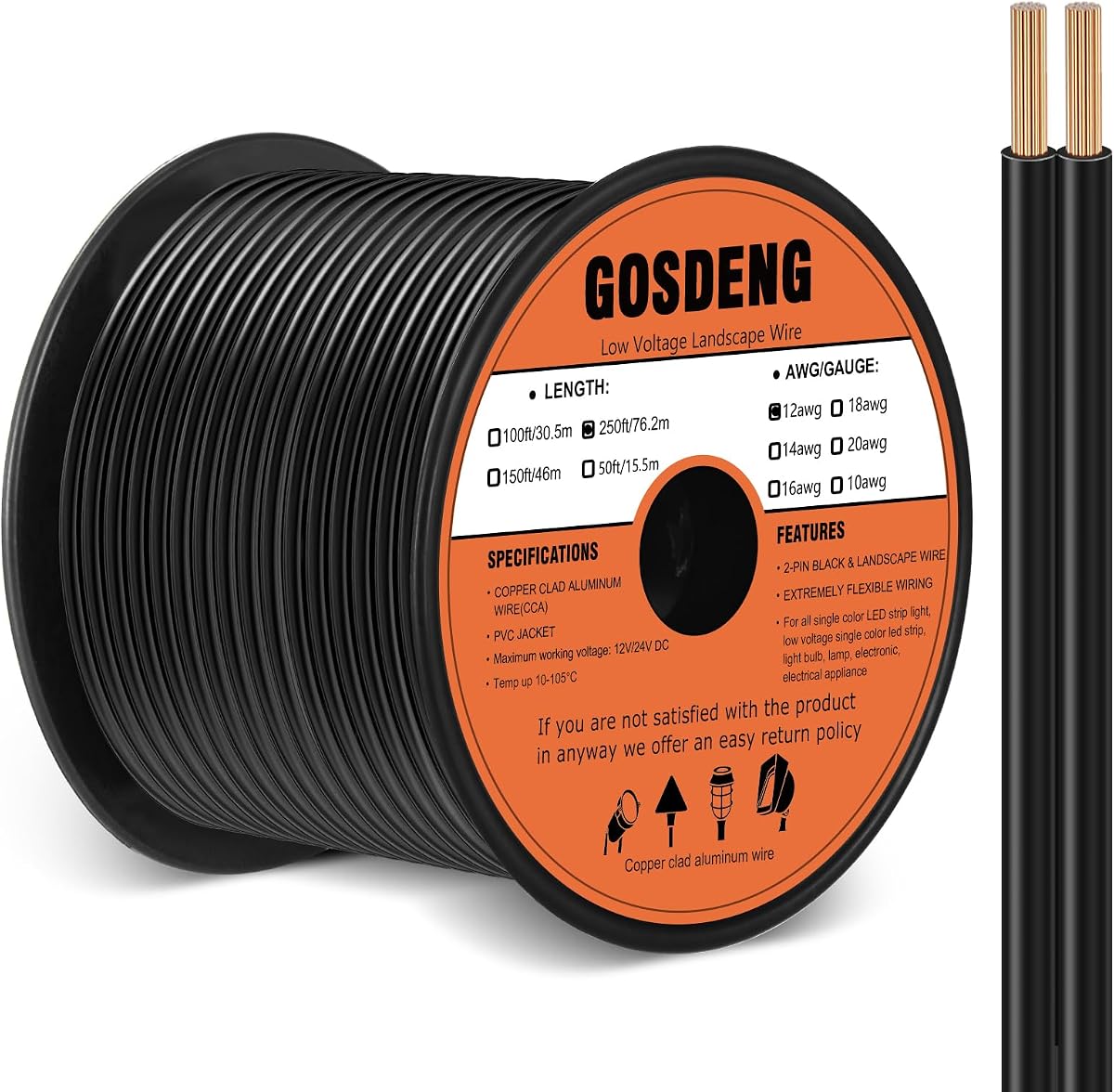


This cable offers a budget-friendly solution for large landscape projects requiring significant wire length. With 250 feet of 12 gauge wire, it supports extensive lighting layouts without frequent splicing.
We may earn a commission when you buy through this link, at no additional cost to you.
The PVC jacket resists moisture and abrasion, ensuring durability in outdoor conditions. Its flexibility makes routing around garden beds or under walkways straightforward for DIY installers.
While the CCA conductors are lighter and cheaper than pure copper, they may have higher resistance over long runs. For most residential applications, this trade-off remains acceptable given the price.
Choose this if you need maximum footage per dollar and plan to keep voltage drops low. It suits path lights or accent fixtures spread across wide yards where pure copper is cost-prohibitive.
The 250-foot length reduces the need for multiple orders, saving time and shipping costs on large installations.
High-quality PVC protects against environmental stress, ensuring safe operation in varied weather conditions.
We may earn a commission when you buy through this link, at no additional cost to you.
This pure copper wire stands out for its reliability and conductivity, making it ideal for high-performance lighting systems. The ETL listing ensures it meets strict safety standards for residential use.
We may earn a commission when you buy through this link, at no additional cost to you.
Its 250-foot length allows covering large properties with consistent brightness. The PVC insulation handles temperature extremes, staying flexible in both summer heat and winter cold without cracking.
While more expensive than alternatives, the investment pays off in longevity and reduced maintenance. Pure copper resists corrosion better, ensuring your lights stay bright for years without dimming issues.
Best for homeowners prioritizing quality and safety over initial cost. It excels in complex setups with multiple fixtures where voltage stability is critical to maintaining uniform illumination.
Pure copper ensures minimal energy loss, keeping your landscape lights bright even at the end of long wire runs.
ETL listing provides peace of mind that the wire meets recognized North American safety testing standards.
We may earn a commission when you buy through this link, at no additional cost to you.
This 14 gauge wire offers a solid balance between flexibility and power capacity for medium-sized lighting projects. The 100-foot length suits typical residential paths without excess bulk.
We may earn a commission when you buy through this link, at no additional cost to you.
Pure copper conductors deliver stable power, preventing dimming common with cheaper alternatives. The direct burial rating ensures long-term durability when placed underground in soil or gravel.
While the spool is smaller than others, it is easier to manage and store. For smaller gardens or specific zones, this reduces waste and simplifies the installation process significantly.
Choose this for projects needing reliable power without excessive gauge thickness. It fits well in tight corners or areas where flexibility matters more than raw current capacity.
The 100-foot length matches standard yard sizes, avoiding the hassle of managing oversized spools during installation.
14 AWG provides enough thickness for most low voltage fixtures while remaining flexible enough for easy routing.
We may earn a commission when you buy through this link, at no additional cost to you.
This wire is perfect for small lighting tasks like spotlighting a tree or a deck feature. The 50-foot length keeps things manageable for quick DIY fixes without excess material.
We may earn a commission when you buy through this link, at no additional cost to you.
UL listing guarantees rigorous safety testing, adding confidence for residential use. The UV-resistant jacket protects against sun damage even if segments remain exposed above ground temporarily.
The 16 gauge is thinner and more flexible than 12 or 14 options. While less suited for massive runs, it handles low-wattage fixtures with ease and costs less to buy initially.
Best for hobbyists or specific accent projects needing short runs. It ensures safety and quality for small-scale installations where bulkier cables are unnecessary or difficult to hide.
The 50-foot spool is easy to carry and store, reducing waste when only short distances need coverage.
Specialized jacket resists sun degradation, ensuring the wire holds up if exposed to direct light above ground.
We may earn a commission when you buy through this link, at no additional cost to you.
This wire combines solid copper construction with a lifetime warranty, offering strong long-term value. The 100-foot spool provides enough length for most standard pathway lighting setups.
We may earn a commission when you buy through this link, at no additional cost to you.
Its pure copper core ensures efficient power delivery, preventing voltage drop issues common with lower-quality materials. The jacket resists wear, making it durable for underground or above-ground use.
While the price is moderate, the warranty adds significant peace of mind. If the wire fails due to defects, the manufacturer supports replacement, protecting your investment against early wear.
Ideal for homeowners seeking reliable performance backed by manufacturer confidence. It suits general landscape lighting where durability and safety certifications are key decision factors.
Backed by a lifetime warranty, this wire offers reassurance that defects will be covered, extending product value.
Pure copper ensures stable current flow, keeping your lights bright and consistent across the entire landscape run.
We may earn a commission when you buy through this link, at no additional cost to you.
This 16 gauge wire excels in flexibility, making it easy to route through tight spaces or around complex garden shapes. The 100-foot length covers moderate distances without excessive slack.
We may earn a commission when you buy through this link, at no additional cost to you.
Pure copper conductors maintain signal strength, while the jacket resists abrasion during trenching. Its design prioritizes ease of installation, allowing simple cutting and stripping for connectors.
The thinner gauge is less suited for very long distances where power loss matters. However, for typical garden accents, it offers a manageable balance of weight and current capacity.
Choose this if installation ease is a priority over raw current capacity. It fits well in intricate layouts where bending around obstacles is more critical than maximum wire thickness.
The flexible jacket and 16 gauge make it simple to route wire around plants, rocks, or steps without damage.
The 100-foot size provides enough wire for typical yards while remaining easy to transport and store at home.
We may earn a commission when you buy through this link, at no additional cost to you.
This cable provides exceptional length and power for expansive properties requiring extensive lighting coverage. The 265-foot length reduces the need for splices across large yards.
We may earn a commission when you buy through this link, at no additional cost to you.
Its 12 gauge ensures minimal voltage drop even over long distances. The ETL listing confirms safety standards, giving confidence for permanent outdoor installations near living spaces.
The heavy-duty jacket withstands harsh weather and soil pressure, ensuring longevity. While pricier, the durability and length justify the investment for professional-quality results.
Best for large estates or commercial landscapes needing reliability and power. It handles complex systems with many fixtures, keeping brightness consistent from source to end.
The 265-foot length covers wide areas efficiently, reducing splices that could introduce weak points or resistance.
Heavy-duty jacket resists tearing, moisture, and UV, ensuring the wire lasts decades underground.
We may earn a commission when you buy through this link, at no additional cost to you.
This wire handles extreme temperatures well, making it suitable for varied climates. The rough surface on one side aids identification, simplifying wiring connections for beginners.
We may earn a commission when you buy through this link, at no additional cost to you.
ETL certification ensures safety compliance, while the 100-foot length fits standard residential layouts. Its flexibility prevents tangling, making layout planning smoother across the garden.
The 150V max rating is sufficient for low voltage systems but limits use in higher voltage projects. For most landscape lighting, this remains more than adequate for safe operation.
Choose this for regions with hot summers or cold winters. The temperature stability ensures the insulation doesn't crack or melt, preserving safety and function across seasons.
Rated for -40°F to 140°F, this wire remains reliable in extreme climates where standard insulation might fail.
A rough surface on one side of the cable helps distinguish wires quickly during connection tasks.
We may earn a commission when you buy through this link, at no additional cost to you.
This option offers a low-cost entry into pure copper wire for landscape lighting. The 50-foot length is perfect for small additions like accent lights or short path runs.
We may earn a commission when you buy through this link, at no additional cost to you.
Pure copper ensures better conductivity than alternatives, while ETL listing guarantees safety. The industrial-grade jacket withstands outdoor conditions, providing durability without premium pricing.
Though limited in length, it avoids waste for minimal projects. The balance of quality and price makes it an excellent choice for budget-conscious DIYers starting small.
Best for smaller tasks needing reliable material. It delivers safety and performance for short runs, making it accessible without compromising on core construction quality.
This model brings pure copper reliability to budget-friendly pricing, ensuring efficiency without high cost.
The 50-foot size is easy to manage for small jobs, reducing excess material waste in storage.
We may earn a commission when you buy through this link, at no additional cost to you.
This 500-foot cable is the longest on the list, ideal for massive properties or multiple lighting zones. The 16 gauge balances flexibility with power for typical low voltage fixtures.
We may earn a commission when you buy through this link, at no additional cost to you.
RoHS compliance ensures environmental safety, and ETL listing guarantees reliability. The PVC jacket handles temperature swings, staying pliable even in cold weather for easy trenching.
While the gauge is thinner, the length compensates for vast coverage. It eliminates splices across long runs, reducing failure points and simplifying the overall wiring topology.
Best for sprawling estates needing one continuous run. It simplifies installation by avoiding joins, ensuring signal integrity over massive distances without multiple connections.
The 500-foot length covers sprawling properties, minimizing joints and potential failure points in the network.
RoHS compliance ensures the materials are environmentally safe, meeting strict regulations for outdoor use.
We may earn a commission when you buy through this link, at no additional cost to you.
Selecting the right wire requires balancing conductivity, length, and durability for your specific landscape needs.
Pure copper is the gold standard for conductivity and corrosion resistance. It ensures minimal voltage drop and longevity in outdoor environments. Copper-clad aluminum (CCA) is cheaper and lighter but can degrade faster under stress or moisture, potentially causing dimming issues over time. For critical or permanent installations, always choose pure copper to ensure stable power delivery to your fixtures.
Choose pure copper for reliability and long-term performance to avoid maintenance issues later.
Wire gauge determines the wire's thickness and its ability to carry current without significant resistance. Lower numbers indicate thicker wire capable of handling more power over longer distances. 12 gauge is best for large systems or long runs, while 14 or 16 gauge works well for smaller setups. Matching the gauge to your project size prevents voltage drop and ensures bright, consistent lighting.
Select gauge based on run length: lower numbers for longer distances to maintain brightness.
The length of wire you purchase should cover your entire layout with a small buffer for connections. Buying too little forces splices, which can introduce resistance and weak points. Buying too much wastes money and creates storage issues. Calculate your total distance plus 10 percent extra for turns and slack before ordering.
Order enough length to cover your path plus ten percent extra for turns and slack.
The jacket protects the wire from moisture, abrasion, and UV exposure. Look for direct burial ratings to safely place wire underground without conduit. PVC insulation is common and flexible, but industrial-grade jackets resist tears and extreme weather better. Ensure the rating matches your installation environment to avoid premature failure.
Look for direct burial ratings and robust PVC jackets for outdoor underground safety.
Certifications like ETL or UL ensure the wire meets safety standards for electrical products. These labels indicate the cable has passed rigorous testing for fire resistance and durability. Using uncertified wire may void warranties or pose risks to your system. Always check for these marks before buying to ensure reliable operation.
Always check for ETL or UL marks to confirm safety and reliability standards.
If you live in an area with extreme heat or cold, ensure the wire insulation can handle those temperatures. Standard jackets may crack in freezing weather or soften in intense heat. Products rated for wide ranges guarantee flexibility and safety year-round. Review the specs to ensure compatibility with your local climate conditions.
Check temperature ratings to ensure the wire survives local climate extremes without cracking.
A warranty reflects the manufacturer's confidence in their product quality. Look for options with at least a one-year or lifetime warranty for peace of mind. This protects you against defects in material or construction that might appear early. A strong warranty reduces risk if the wire fails due to manufacturing errors.
Choose brands with clear warranties to protect against early defects and ensure satisfaction.
Small projects benefit from compact spools that are easy to handle and store. Large projects require longer runs to minimize joints. Assessing the scale helps you balance cost and convenience. Buying a massive spool for a small task wastes money, while a short one for a big yard forces extra splicing.
Match the spool size to your project scope to avoid waste or excess labor.
Start by mapping your lighting layout to determine the exact wire length needed. Measure distances from the transformer to each fixture and add extra for turns and loops. This ensures you purchase sufficient cable without excess slack lying around the yard.
When burying the wire, dig a shallow trench about three inches deep using a shovel or trenching tool. Lay the wire gently without stretching it, and cover it with soil. If passing under paths, use conduit to protect it from heavy foot traffic or vehicles.
Regularly inspect exposed sections for damage caused by lawn mowers or wildlife. If you notice cuts or fraying, cut the damaged section and splice it with waterproof connectors. Keeping the cable away from sharp tools and chemicals extends its lifespan significantly.
No, speaker wire lacks the durability and environmental ratings needed for outdoor use. Landscape wire features direct burial insulation that resists moisture, UV rays, and temperature extremes. Using speaker wire indoors or buried may lead to early failure or safety hazards.
For 12 gauge wire, you can run up to 200 feet effectively with minimal drop. Using thicker wire like 12 gauge for longer runs helps maintain brightness. Always calculate total wattage to ensure your transformer and wire support the load.
Burying wire protects it from accidental damage and keeps your yard tidy. Most landscape wire is rated for direct burial, meaning it can go straight into the ground without conduit. However, using conduit in high-traffic areas adds extra protection against heavy loads.
For path lights, 14 or 16 gauge wire is usually sufficient if the total distance from the transformer is under 100 feet. Thicker 12 gauge wire is better if your path extends further or includes higher-wattage fixtures to ensure consistent brightness.
Use waterproof push connectors or gel-filled wire nuts to join wire segments. These connectors protect the joint from moisture and prevent corrosion. Strip the ends of the wire, twist them together, and push into the connector to secure a tight, safe fit.
Yes, most low voltage landscape wire can power outdoor speakers. It supports the voltage requirements for audio systems and withstands outdoor conditions. Ensure the wire gauge matches the speaker power needs to avoid signal loss over distance.
We reviewed ten top options ranging from budget to premium, ensuring you find a fit for any project. Pure copper models like the SUNVIE 12/2 stand out for longevity, while shorter runs suit smaller yards.
Prioritize safety certifications and direct burial ratings to protect your investment. Choosing the correct gauge prevents voltage drop, ensuring your lights stay bright for years to come without maintenance.
Prices and availability change frequently, so verify current listings before purchasing. This guide equips you with the insights needed to select durable, efficient wire for your outdoor lighting needs.