
ATEXEL 100Ultra Macro Lens
4.0Editor score
10x magnification for smartphones
Universal clip-on compatibility
F1.05 aperture for low light
This guide compares the top macro lenses for insect photography across smartphone, APS-C, and full-frame systems to help you choose the best option for
Capturing the intricate details of insects requires specialized optics designed to magnify tiny subjects without losing clarity. A good macro lens for insect photography offers high magnification ratios, sharp optical performance, and the ability to isolate subjects with beautiful bokeh.
We evaluated ten distinct products ranging from affordable smartphone attachments to professional-grade mirrorless lenses. Each option was assessed based on optical quality, magnification capabilities, ease of use, and compatibility with popular camera systems to ensure reliable results.
Every pick in this list highlights specific strengths for different budgets and skill levels. While we provide detailed insights, remember that pricing and availability can fluctuate, so verify current offers before making your final purchase decision today.
4.0Editor score

4.7Editor score
4.6Editor score
The following comparison table details the key specifications and capabilities of each selected product to help you quickly identify which lens aligns with your specific photography needs and equipment.


This lens stands as a top choice for serious insect photographers seeking unmatched clarity and flexibility. With a 4.7 rating and advanced optics, it delivers crisp details essential for macro work on Canon RF cameras.
We may earn a commission when you buy through this link, at no additional cost to you.
Its standout feature is the 1.4x maximum magnification ratio, allowing you to capture insects at unprecedented detail levels. The Hybrid Image Stabilizer compensates for shake, ensuring sharp shots even at high magnifications without a tripod.
While expensive, the investment pays off in professional results. The Spherical Aberration Control Ring lets you fine-tune bokeh shape, adding artistic flair to your macro images of flowers and small creatures.
This lens is ideal for wildlife photographers needing premium performance. If you own a Canon EOS R camera and demand the highest quality, this RF100mm lens provides the reliability and sharpness required for competitive insect photography.
The 1.4x magnification allows for life-size and beyond capture, revealing textures invisible to the naked eye.
Up to 5 stops of correction help maintain image sharpness in challenging handheld macro situations.
We may earn a commission when you buy through this link, at no additional cost to you.
The TTARTISAN 40mm offers excellent value for Sony shooters needing dedicated macro performance. Its 4.4 rating reflects strong optical quality and build, making it a reliable tool for insect enthusiasts.
We may earn a commission when you buy through this link, at no additional cost to you.
With a 1:1 magnification ratio and 6.7-inch minimum focus distance, it captures fine details effectively. The F2.8 aperture creates beautiful background blur, isolating insects from busy natural backgrounds beautifully.
Though manual focus requires patience, it ensures precision. The compact all-metal body is travel-friendly, weighing 30% less than similar lenses, which is great for field work.
This lens is perfect for hobbyists upgrading from kit lenses. If you shoot Sony E-mount APS-C cameras and want quality macro results without breaking the bank, this TTARTISAN lens is a smart choice.
Weighing just 13.1 oz, this lens is easy to carry during long outdoor photography sessions.
Dual LD glass minimizes aberrations for exceptional sharpness in botanical and insect photography.
We may earn a commission when you buy through this link, at no additional cost to you.
This 4.3-rated phone lens transforms mobile devices into powerful macro tools. It features HD optics and a 75mm design specifically tuned for capturing insects on compatible smartphones.
We may earn a commission when you buy through this link, at no additional cost to you.
The 45-90mm focusing range mimics DSLR methods, allowing precise control over distance. Combined with 10x magnification, you can highlight millimeter details of insects without physical contact.
Constructed with aluminum alloy, it offers durability and premium feel. The precision optical design reduces distortion, ensuring that close-up shots remain clear and vivid.
Ideal for smartphone photographers seeking better quality than stock cameras. If you already own a phone with a 17mm thread or use the included clip, this lens upgrades your insect photography instantly.
The lens adopts professional DSLR appearance with non-slip textures for better grip.
New lens technology ensures more light reaches the sensor for brighter macro images.
We may earn a commission when you buy through this link, at no additional cost to you.
This conversion lens offers flexibility for DSLR owners wanting macro capabilities without replacing lenses. It earns a 4.6 rating for its ease of use and effective optical design across various brands.
We may earn a commission when you buy through this link, at no additional cost to you.
Supporting 37mm to 72mm threads, it fits most camera lenses via included adapter rings. The 8 diopter design helps control distortion while improving light transmission for clearer details.
The spring-loaded mechanism attaches securely without tools, letting you switch between macro and normal photography instantly. This convenience is vital during active outdoor shoots.
Best for photographers on a budget or those testing macro photography. If you need a practical solution to capture insects with your current gear, this FotoZ lens delivers excellent results.
The snap-on design allows for rapid transitions between regular and close-up photography.
Adapter rings ensure a fit with most standard camera lens filter threads.
We may earn a commission when you buy through this link, at no additional cost to you.
This Canon lens provides versatile utility for casual macro photography with a 4.7 rating. It serves well for general close-ups, though it may fall short for extreme insect detail.
We may earn a commission when you buy through this link, at no additional cost to you.
With a 0.5x magnification ratio and 0.56ft minimum focus, it allows decent detail capture. The Control Ring simplifies adjustments, making it user-friendly for quick settings changes.
Optical Image Stabilization up to 5 stops ensures stable shots, crucial for handheld macro work. Its compact size makes it an ideal everyday carry lens for Canon EOS R users.
Recommended for those who need versatility over specialized magnification. If you want one lens for portraits and occasional insect details without bulk, this RF35mm is a strong contender.
Direct access to aperture or ISO settings streamlines the shooting process.
Close minimum focus distance allows for near subjects like small flowers and bugs.
We may earn a commission when you buy through this link, at no additional cost to you.
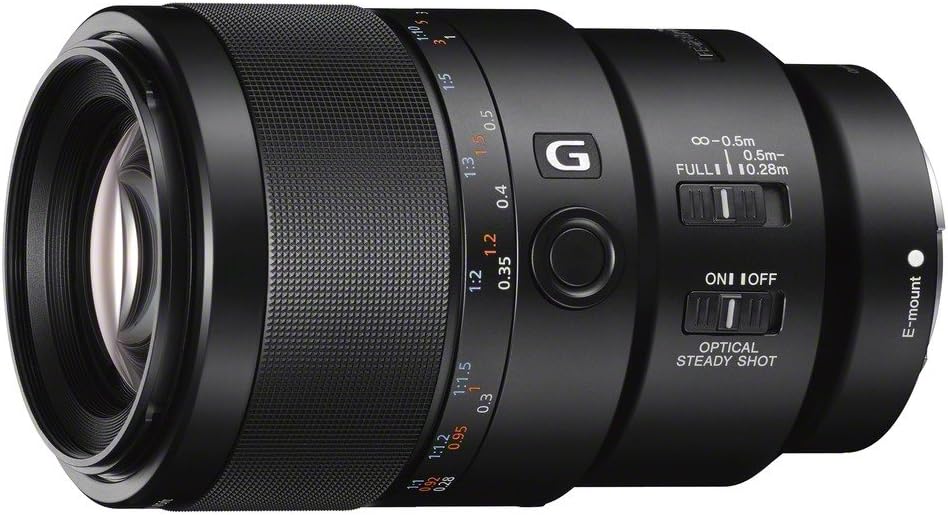
This Sony lens is a staple for professional macro photographers. With a 4.6 rating, it balances robust build quality with outstanding optical clarity for full-frame shooters.
We may earn a commission when you buy through this link, at no additional cost to you.
Nano AR coating effectively reduces flare and ghosting, ensuring high contrast images even in bright outdoor conditions. Dust and moisture resistance make it durable for field work.
Direct Drive SSM provides quiet, precise focusing, essential when working with skittish insects. The 9-blade aperture delivers gorgeous bokeh to separate subjects from backgrounds.
If you use Sony E-mount full-frame cameras and demand excellence, this lens is top-tier. Its corner-to-corner sharpness ensures every detail of your insect subject is rendered with precision.
Nano AR coating maintains image integrity by suppressing unwanted reflections.
Dust and moisture resistance protect internal optics against harsh outdoor environments.
We may earn a commission when you buy through this link, at no additional cost to you.
This affordable kit is perfect for those exploring macro photography without investing in dedicated lenses. It carries a 4.4 rating for providing versatile options to magnify small subjects easily.
We may earn a commission when you buy through this link, at no additional cost to you.
The set includes +1, +2, +4, and +10 filters, allowing flexible magnification choices. You can stack them to create custom power combinations, offering significant versatility for various subjects.
Double-threaded design allows attaching other optics like polarizers, expanding creative potential. Despite its low cost, it maintains resolution while magnifying, ideal for beginners.
Ideal for photographers wanting to experiment with macro. If you own a 67mm lens and want an economical entry point for insect photography, this filter kit delivers impressive results.
Filters can be combined to create new diopter values for specific magnification needs.
Includes pouch and cleaning cloth to maintain optical quality during storage.
We may earn a commission when you buy through this link, at no additional cost to you.
This kit is designed for social media creators and casual users looking to enhance phone shots. With a 4.1 rating, it provides reliable performance and useful accessories like an LED light for macro shots.
We may earn a commission when you buy through this link, at no additional cost to you.
The Clarus 15x Macro lens magnifies nearby subjects for crisp photos. Combined with the GlowClip LED light, you can illuminate dark subjects effectively without blinding flash issues.
Universal clips fit most smartphones and tablets. The TruGrip clip ensures secure attachment during action, making it practical for field photography.
Best for hobbyists needing a complete mobile solution. If you want an all-in-one kit with macro, wide angle, and lighting for your phone, the Xenvo Pro Lens Kit is a comprehensive choice.
The GlowClip light provides warm continuous illumination superior to phone flash.
Includes case, lanyard, and multiple lenses for versatile mobile photography.
We may earn a commission when you buy through this link, at no additional cost to you.
This specialized lens is built for extreme close-up work. It earns a 4.2 rating for delivering unique magnification levels that standard macro lenses cannot achieve easily on Sony E-Mount cameras.
We may earn a commission when you buy through this link, at no additional cost to you.
With a 2-5x magnification range, it captures imagery surpassing life-size proportions. The wide-angle configuration offers greater depth of field compared to telephoto counterparts at similar magnifications.
Manual focus control ensures precise focus, crucial when working with tiny subjects. The slim design provides ample space to illuminate close-up subjects effectively.
Recommended for users seeking extreme detail. If you want to capture insect structures with high magnification and don't mind manual focus, this AstrHori lens offers unique capabilities.
The wide-angle design provides better depth of field for detailed macro shots.
Lightweight design facilitates handheld use during close-up photography.
We may earn a commission when you buy through this link, at no additional cost to you.
This smartphone lens offers an entry-level macro experience. It holds a 4.0 rating and provides 10x magnification to help users capture fine details of insects and plants on mobile devices.
We may earn a commission when you buy through this link, at no additional cost to you.
The F1.05 aperture helps manage low-light conditions, reducing grain in indoor shots. Multi-lens technology boosts light transmittance to minimize reflections, ensuring clearer images.
Universal clip-on design makes it easy to attach to most iPhones and Androids. It allows for versatile shooting without complex setups, perfect for spontaneous macro photography.
Ideal for casual mobile photographers. If you want to start macro photography without buying a camera, this APEXEL lens provides an affordable and accessible option.
The large aperture improves visibility in dim environments, allowing better mobile shots.
Universal clip-on design allows quick attachment without needing tools or apps.
We may earn a commission when you buy through this link, at no additional cost to you.
Selecting the right macro lens requires evaluating several technical factors to ensure it matches your camera system and specific photography goals.
Magnification ratio determines how large your subject appears on the sensor. Standard macro lenses offer 1:1 magnification, meaning the subject is life-size on the sensor. For insects, ratios like 1:1 are typically sufficient to capture fine details like eye structures.
For extreme detail, you may consider lenses offering higher magnification like 2:1 or beyond. However, standard 1:1 remains the industry benchmark for most insect photography needs.
Focal length affects your working distance from the subject. Shorter focal lengths like 40mm or 50mm force you closer, which might disturb insects. Longer focal lengths like 90mm or 100mm allow you to shoot from a comfortable distance without scaring the subject.
Select a focal length that balances field of view with working distance. For insects, 90mm to 100mm is often the sweet spot for wildlife photography.
Aperture controls the amount of light entering the lens. Wide apertures like f/2.8 allow more light and create a shallow depth of field, isolating the insect from the background. This is vital for macro photography where depth of field is naturally shallow.
A bright aperture ensures sharp images in low light and better bokeh. Look for lenses with f/2.8 or wider for optimal performance in various lighting conditions.
Autofocus provides speed and convenience, especially for moving insects. However, manual focus offers precise control necessary for static macro work. Some lenses provide hybrid systems or focus limiters to speed up autofocus performance.
Consider your shooting style; if you shoot mostly static subjects, manual focus is preferred. If you capture moving insects, an accurate autofocus system is beneficial.
Optical Image Stabilization (OIS) compensates for camera shake, which is magnified at high magnifications. Many macro lenses include stabilization up to 5 stops, allowing handheld shooting at slower shutter speeds.
Stabilization is crucial for handheld macro work. If you plan to shoot without a tripod, ensure your lens includes effective image stabilization.
Macro photography often takes place outdoors in dusty or humid conditions. Weather sealing protects the internal elements from moisture and debris. Build materials like metal offer durability against bumps and drops.
Look for dust and moisture resistance for field work. Weather sealing ensures your lens remains functional even in challenging environments.
Ensure the lens mount matches your camera body perfectly. For Canon users, RF mounts are required for RF lenses. Sony users need E-mount lenses. Smartphone lenses are universal but depend on specific phone models or adapters.
Check your camera mount before purchasing. Incompatible mounts will require adapters that might compromise image quality.
Prices range significantly from under $50 for attachments to over $1000 for professional lenses. Determine if you need a specialized lens or if a conversion filter kit suffices for your current skill level.
For beginners, a conversion kit or phone lens is cost-effective. Professionals should invest in dedicated lenses for maximum optical performance.
To use a macro lens effectively, start by mounting it securely on your camera. For handheld shooting, use a tripod or stabilizer if possible to minimize shake caused by the shallow depth of field.
Focus carefully on the most critical part of the insect, such as the eyes. Use manual focus if autofocus struggles at close distances, and consider focus stacking techniques to increase sharpness.
Maintain your lens by cleaning glass gently with a microfiber cloth and storing it in a dry place. Avoid touching the glass with fingers to prevent oils, and keep the lens cap on when not in use.
A focal length of 90mm to 100mm is widely considered the best for insect photography. This range allows a comfortable working distance to avoid disturbing the subject while providing a good field of view for detailed shots.
While not strictly mandatory, a tripod is highly recommended for static subjects. It ensures stability, reduces camera shake, and allows for precise focus. However, if you shoot moving insects, a handheld setup with image stabilization is often more practical.
Yes, close-up filters are a cost-effective alternative for beginners. They screw onto your existing lens and provide magnification. While quality is generally lower than dedicated macro lenses, they are excellent for testing the waters.
Blurriness is often caused by camera shake or shallow depth of field. Ensure you use a fast shutter speed and a tripod. Also, check that your focus point is sharp on the subject, as even slight movement can ruin the shot at high magnification.
Use a blower to remove dust first, then wipe the glass gently with a microfiber cloth. Avoid paper towels or tissues that might scratch the coating. Store the lens in a dry, cool place to prevent fungal growth.
Autofocus is useful for moving subjects but can struggle at close distances. Many macro lenses offer manual focus modes or hybrid systems. For precise static shots, manual focus often provides better control and accuracy.
While f/2.8 provides great bokeh, many macro photographers prefer f/8 to f/11 for greater depth of field. This ensures more of the subject remains sharp, which is critical when capturing detailed insect anatomy.
Choosing a macro lens depends on your specific needs and equipment. The Canon RF100mm and Sony FE 90mm lead the pack for professional full-frame shooters, while smartphone options like APEXEL offer accessible entry points.
Prioritize magnification ratio and focal length to match your subject distance. Ensure your lens has sufficient stabilization and weather sealing if you plan to shoot outdoors frequently.
Verify current prices and availability before purchase. The market changes frequently, so checking the latest offers ensures you get the best deal for your investment today.