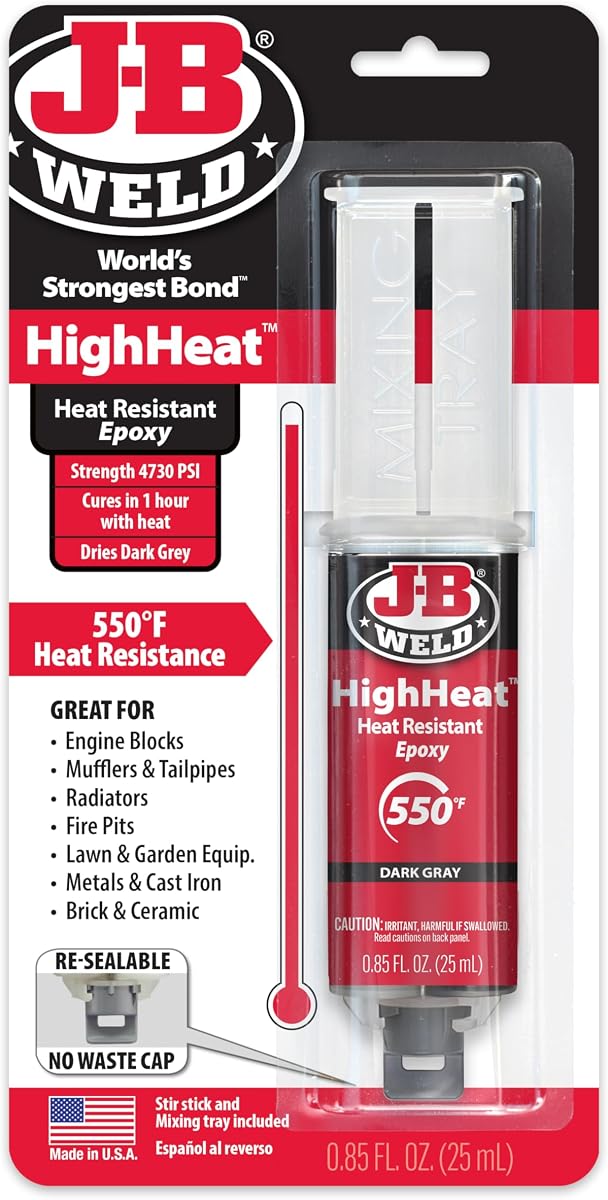
J-B Weld High Heat Epoxy Syringe
4.6Editor score
550°F heat resistance
1:1 mixing ratio
Permanent bond strength
This guide compares the top heat resistant adhesive options for ovens, fireplaces, and industrial uses based on temperature ratings and durability.
Finding the right heat resistant adhesive is crucial for maintaining safety and functionality in high-temperature environments. Whether you are repairing an oven seal or sealing a fireplace, the right glue ensures longevity.
We compared ten top-rated products based on their temperature tolerance, bonding strength, curing time, and ease of application. Each option was evaluated for its suitability across various materials and specific use cases.
Each pick below highlights key features and real-world performance metrics to help you choose wisely. Please note that product availability and pricing can change frequently, so check current listings before purchasing.
4.6Editor score

4.6Editor score

4.6Editor score
The following table provides a side-by-side comparison of all ten selected products, highlighting their primary specifications and intended applications to simplify your decision process.


This high temperature silicone adhesive stands out for its exceptional heat resistance and rapid drying capabilities. Rated for use in environments ranging from freezing cold to over 550 degrees Celsius, it is a versatile choice for demanding repairs.
We may earn a commission when you buy through this link, at no additional cost to you.
Its advanced formula maintains strength even under prolonged exposure to intense heat, ensuring that your repairs do not crack due to thermal expansion. The flexible bond is ideal for surfaces that shift or vibrate slightly during operation.
While the surface dries quickly, allowing for immediate handling, the full cure time can vary based on humidity. This trade-off is acceptable as it ensures a deep, permanent bond that withstands harsh conditions.
For anyone needing a reliable seal for ovens, fireplaces, or industrial grills, this product delivers consistent performance. It is the top recommendation for users seeking a balance of speed, strength, and thermal resilience.
The adhesive retains its structural integrity across an extreme temperature range, making it suitable for both heating and cooling cycles.
With a surface dry time of just a few minutes, you can complete repairs quickly without waiting days for the material to set.
We may earn a commission when you buy through this link, at no additional cost to you.
This two-part epoxy system offers a cost-effective solution for high-heat repairs where permanent strength is needed. It sets quickly and cures to a bond that resists chemicals and fuels effectively.
We may earn a commission when you buy through this link, at no additional cost to you.
The 1:1 mixing ratio is straightforward, and the resulting 4730 PSI strength ensures that the repair holds firm even under significant stress. Heat can also accelerate the curing process if needed for faster turnaround.
While it lacks the flexibility of silicone, its rigidity makes it perfect for structural fixes on metal parts. Users should ensure surfaces are clean and properly mixed for the best results.
For budget-conscious users needing a tough repair for machinery or appliances, this epoxy is a reliable choice. It provides professional-grade results without the premium price tag.
The high PSI rating ensures that the adhesive can bear heavy loads, making it suitable for load-bearing mechanical repairs.
Unlike standard glues, this epoxy withstands exposure to oil, fuel, and various chemicals common in automotive and industrial settings.
We may earn a commission when you buy through this link, at no additional cost to you.
Rutland is a trusted name in fireplace maintenance, and this black silicone sealant lives up to its reputation. It forms a tough seal that handles the thermal shocks common in wood-burning stoves.
We may earn a commission when you buy through this link, at no additional cost to you.
The adhesive bonds well to glass, metal, and brick, allowing for versatile repairs around fireplaces and wood stoves. Its flexibility ensures the seal stays intact even as materials expand and contract.
While it is rated for 500 degrees Fahrenheit, it is not designed for extreme industrial heat. For home heating appliances, however, it performs excellently and blends in with dark surfaces.
If you are looking for a specialized sealant for your fireplace or wood stove, this product is a dependable option. It is widely available and easy to use for DIY enthusiasts.
This sealant adheres to a wide variety of common fireplace materials, including glass, stone, and metal, reducing the need for multiple products.
The flexible nature of the silicone prevents cracking during the constant heating and cooling cycles of a firebox.
We may earn a commission when you buy through this link, at no additional cost to you.
This silicone adhesive is engineered for environments where heat and moisture are constant challenges. Its black color and waterproof properties make it ideal for sealing gaps in ovens and cooktops.
We may earn a commission when you buy through this link, at no additional cost to you.
The formula maintains elasticity after curing, which is crucial for preventing cracks during thermal expansion. It is specifically designed to prevent heat and smoke leakage, ensuring safety in your kitchen.
While the full cure takes a full day, the initial set is fast enough to hold the seal in place. This delay ensures the bond is fully resilient to temperature changes over time.
For general sealing tasks that involve high heat and humidity, this glue is a solid choice. It balances durability with ease of use for both novice and experienced users.
The adhesive creates a moisture-proof barrier that is essential for appliances like ovens where steam and cleaning water are common.
Flexibility allows the glue to stretch and compress with the surrounding metal, preventing seal failure during heating cycles.
We may earn a commission when you buy through this link, at no additional cost to you.
Designed for smaller gaps and detailed work, this sealant is perfect for precise appliance repairs. The white-to-translucent cure provides a clean look that blends well with glass and metal panels.
We may earn a commission when you buy through this link, at no additional cost to you.
The precision nozzle allows you to reach narrow seams without creating a mess. It is ideal for sealing induction cooktops or range hoods where visibility of the seam is important.
While the temperature rating is lower than other options, it is sufficient for most household appliance applications. The small 100ml tube reduces waste for minor jobs.
If you need a discreet seal for high-quality appliances, this product is worth considering. It offers professional results for specific small-scale maintenance tasks.
The semi-translucent cure minimizes visual disruption, ensuring the repair is less noticeable on visible appliance surfaces.
The included nozzle and scraper help achieve smooth, even application in tight spaces that larger tubes might miss.
We may earn a commission when you buy through this link, at no additional cost to you.
This metallic paste is formulated specifically for high-temperature repairs on metal parts that are subject to extreme stress. It can withstand temperatures up to 1000 degrees Fahrenheit, making it suitable for exhaust systems.
We may earn a commission when you buy through this link, at no additional cost to you.
Once cured, the bond is strong enough to be machined, drilled, or sanded, which adds significant versatility to repairs. It acts as a cold welding alternative for filling cracks and gaps.
It is rigid and not flexible, so it is best used where movement is minimal. The non-flammable nature adds an extra layer of safety for automotive and furnace applications.
For industrial or automotive repairs where standard silicone would fail, this paste provides a durable solution. It is a go-to for structural metal fixes in hot environments.
Once the paste sets, it hardens to a metallic consistency that can be modified with tools to match the original part shape.
Its extreme heat tolerance makes it ideal for sealing leaks in manifolds and mufflers that reach temperatures beyond standard adhesives.
We may earn a commission when you buy through this link, at no additional cost to you.
This red RTV silicone is a top choice for automotive gaskets and sealing applications where reliability is paramount. It is designed to withstand continuous heat up to 550 degrees and intermittent peaks higher.
We may earn a commission when you buy through this link, at no additional cost to you.
Being sensor safe ensures it won't damage oxygen sensors or other sensitive components under the hood. Its waterproof seal prevents leaks in engine bays exposed to oil and water.
The formula is resistant to shrinking and cracking, maintaining a secure seal over long periods. This makes it a reliable choice for professional mechanics and DIY enthusiasts alike.
If you are repairing engine components or oven doors, this gasket maker is a solid option. It is widely trusted in the automotive industry for its consistency.
The non-silicon formula prevents sensor damage, which is crucial for modern vehicles with emission control systems.
Resistance to weathering and temperature swings ensures the gasket remains intact for the life of the repair.
We may earn a commission when you buy through this link, at no additional cost to you.
This clear RTV sealant offers premium performance for automotive and industrial gasket applications. Its fuel-resistant formula makes it superior to standard silicones when exposed to harsh chemicals.
We may earn a commission when you buy through this link, at no additional cost to you.
The clear cure allows for invisible repairs on visible components, maintaining the aesthetic of the project. It is used by professionals for engine rebuilds where traditional paper gaskets are not ideal.
While the price is higher, the durability and chemical resistance justify the cost. It forms a flexible bond that withstands oil, coolant, and transmission fluids without degrading.
For critical repairs where chemical resistance and appearance matter, this is an excellent choice. It combines high-grade performance with user-friendly application.
The advanced formula resists gasoline and oils that would typically dissolve standard silicone, ensuring long-term integrity.
Used in aviation and automotive industries, this sealant meets high standards for reliability and performance under pressure.
We may earn a commission when you buy through this link, at no additional cost to you.
This sodium silicate adhesive is designed for industrial applications where heat resistance is paramount. It can withstand temperatures up to 2000 degrees, making it suitable for refractories and ceramic blankets.
We may earn a commission when you buy through this link, at no additional cost to you.
It dries to a clear solid form and is commonly used in pottery, concrete sealing, and fire protection. Its inorganic nature ensures stability where organic adhesives would burn.
The viscosity is similar to syrup, allowing for easy application on vertical surfaces. However, it is specific to refractory needs and not for general household repairs.
For industrial or heavy-duty furnace work, this adhesive provides unmatched heat resistance. It is a specialized tool for professionals in high-temperature manufacturing.
The sodium silicate formula is non-combustible, ensuring it does not break down or emit fumes at extreme temperatures.
It bonds well to ceramic fiber blankets and boards, essential for insulating kilns and furnaces effectively.
We may earn a commission when you buy through this link, at no additional cost to you.
This clear glue is specifically designed for sealing high-temperature electrical equipment in the kitchen. Its 570-degree rating ensures it handles oven and grill temperatures without degrading.
We may earn a commission when you buy through this link, at no additional cost to you.
The fast-curing formula is tacky within minutes, allowing for quick repairs. It is waterproof and moisture-proof, which is essential for cleaning appliances regularly.
While the tube is small, it is sufficient for most minor appliance repairs. The clear finish ensures the repair remains discreet on modern glass panels.
For maintaining induction cooktops or microwave doors, this adhesive is a convenient choice. It balances speed with durability for everyday household needs.
The fast drying time minimizes wait periods, allowing you to return to your appliance sooner after repairs.
Designed for electrical equipment, this adhesive maintains its integrity around heating elements without causing electrical issues.
We may earn a commission when you buy through this link, at no additional cost to you.
Choosing the right adhesive requires understanding your specific temperature needs and the materials involved. The following factors will help you narrow down the best option for your project.
The most critical factor is the maximum temperature the adhesive can withstand. Industrial adhesives like sodium silicate can handle 2000°F, while general silicone might top out at 550°F. Always select a product with a rating higher than your expected operating heat.
Look for the maximum temperature rating on the product label. This ensures the bond will not degrade or fail when exposed to extreme heat during use.
Adhesives range from flexible sealants to rigid epoxies. If the joint requires structural support, a high-strength epoxy like J-B Weld is preferable. For dynamic seals that might move, a flexible silicone is more appropriate.
Determine if you need a rigid or flexible bond. Rigid adhesives offer higher shear strength, while flexible ones prevent cracking during thermal expansion.
Curing times vary from minutes to full days. Fast-curing adhesives are convenient for quick fixes but may require less time before full strength. Standard silicones often need 24 hours to fully cure for maximum heat resistance.
Check the surface dry time versus the full cure time. If you need to put the item back into use immediately, look for fast-curing options.
Not all adhesives bond to every surface. Ensure the product is compatible with your materials, such as glass, metal, ceramic, or brick. Some specialized products are designed specifically for automotive or refractory materials.
Verify the adhesion specs on the packaging. A strong seal is only possible if the adhesive can chemically bond to the specific surface you are repairing.
In industrial or kitchen settings, exposure to oil, water, or fuel is common. Look for water-resistant or fuel-resistant formulas to ensure the seal does not break down when exposed to these elements.
Consider the environment where the repair will live. If the seal will face fluids, choose a product specifically labeled for waterproof or chemical resistance.
Some products come in syringes, tubes, or bottles. Precision nozzles allow for easy application in tight spaces. For larger jobs, a product that can be applied with a spreader might be better.
Select a container that fits your project scale. Small tubes are good for detail work, while larger containers suit bigger gaps.
Some adhesives emit fumes during curing. Ensure the product is non-flammable and safe for indoor use if you are working in a kitchen or confined space.
Prioritize products labeled as safe for indoor or specific appliance use to ensure they do not release harmful vapors.
Established brands like Rutland and J-B Weld have decades of testing behind their products. This trust often translates to consistent performance and accurate temperature ratings.
Stick with trusted manufacturers when possible. Their long history often indicates reliable quality control and accurate product specifications.
Start by preparing the surface thoroughly. Clean the area to remove any dust, grease, or old adhesive residue to ensure a strong bond. Most products require a dry surface before application.
Apply the adhesive steadily using the provided nozzle or a tool. Fill the gap completely but avoid over-applying to prevent excess waste. Smooth the surface for a cleaner finish if visible.
Allow the adhesive to cure fully before exposing it to heat. Follow the manufacturer's recommended curing time to ensure maximum strength. Avoid moving the bonded parts until the time has passed.
Industrial options like sodium silicate can withstand up to 2000 degrees Fahrenheit. Most standard household silicones top out around 500 to 650 degrees.
Yes, many products are specifically designed for ovens and are food-safe after curing. Always verify the safety specs on the label before using near food preparation areas.
Surface drying can happen in minutes, but full curing often takes 24 hours. High-temperature curing can speed up the process for some epoxies.
Some metallic pastes like ExtremeHeat can be machined or sanded after curing. Standard silicones usually cannot be machined as they remain flexible.
Epoxy adhesives require a two-part mix, while silicones come ready-to-use. Check the product type to see if mixing is necessary before application.
Many silicones bond well to glass, especially those used for appliance repair. Ensure the product specifies glass compatibility on the label for best results.
Choosing the right heat resistant adhesive depends heavily on your specific temperature needs and the materials you are joining. For household appliances, the top-rated silicone sealants provide a reliable and flexible seal that handles thermal expansion well.
For industrial or structural repairs, high-strength epoxies or specialized pastes offer the durability needed to withstand extreme conditions. Always prioritize products with verified temperature ratings that exceed your project's requirements.
Remember to check current availability and pricing before purchasing, as stock levels change frequently. With the right adhesive, you can extend the life of your equipment and ensure safe operation.