
Handheld Fish Finder Portable Fishing Kayak
4.2Editor score
Portable and lightweight design
Battery powered operation
200 kHz sonar frequency
This guide compares the top affordable fishfinder models for 2026, helping anglers choose the right sonar technology and features for their budget.
Finding a reliable fishfinder does not have to break the bank. Modern budget models offer essential sonar capabilities that help you locate fish and structure efficiently. Whether you fish from a kayak or a small boat, the right device can significantly improve your time on the water.
We compared ten top-rated affordable fishfinders based on sonar clarity, display quality, ease of installation, and overall value. Our analysis focuses on real-world performance metrics and user feedback to ensure you get the most accurate data for your specific fishing needs without overspending.
Each pick highlights key strengths and potential trade-offs to help you decide quickly. Note that prices fluctuate frequently due to promotions and inventory changes. Always check the current listing before purchasing to ensure you get the best deal available for your chosen model.
4.2Editor score
4.5Editor score

4.7Editor score
The following table provides a side-by-side comparison of all ten products analyzed in this guide, highlighting key specifications to help you make an informed decision.


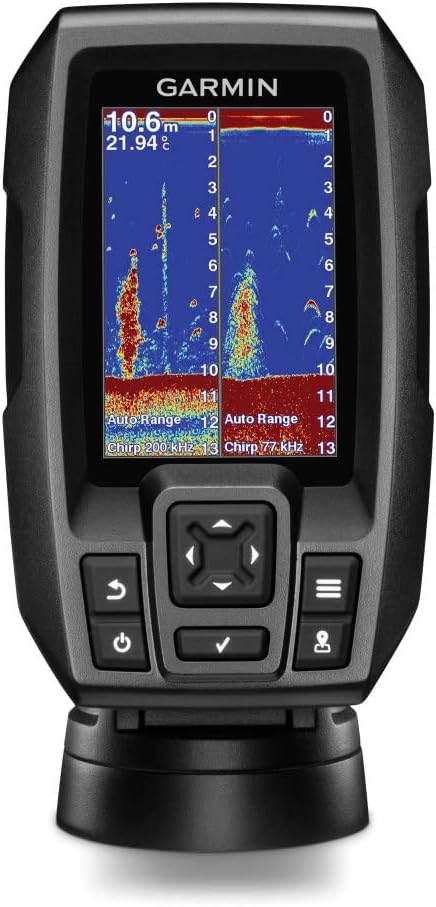
The Garmin Striker 4 stands out as a top choice for anglers seeking a balance of performance and affordability. It delivers high-frequency sonar capable of showing near photographic images of objects and fish in the water. This model is highly rated for its ease of use and installation.
We may earn a commission when you buy through this link, at no additional cost to you.
Its CHIRP sonar technology sends a continuous sweep of frequencies, which provides a wider range of information than traditional sonar. This results in crisper fish arches and better target separation. The built-in GPS allows you to mark waypoints and navigate to specific locations like brush piles or docks.
While the 3.5 inch display is compact, it remains readable in various lighting conditions thanks to the dedicated interface buttons. The device is water-resistant with an IPX7 rating. Some users may find the mapping features basic compared to higher-end models, but it serves the purpose well for casual fishing.
This fishfinder is ideal for small boat owners and kayakers who need reliable data without clutter. The included transducer and simple setup make it a great starting point for anyone new to electronics on the water. We recommend it for those prioritizing clarity and simplicity.
This high frequency sonar gives near photographic images with detailed representations of objects, structure and fish.
Use the waypoint map to easily view, mark and navigate to locations such as brush piles, stumps and docks.
We may earn a commission when you buy through this link, at no additional cost to you.
The Lowrance Eagle offers a straightforward solution for anglers who want a clear view of the water without complex features. Its 4-inch IPS portrait screen stays clear in bright sunlight and is visible through polarized sunglasses. This makes it a reliable tool for daytime fishing trips.
We may earn a commission when you buy through this link, at no additional cost to you.
Auto-Tuning Sonar automatically provides optimized settings so you can focus on finding fish rather than adjusting knobs. The included 200 kHz Bullet Skimmer delivers a broad 44-degree beam, which is ideal for kayaks and small boats. View fish icons with depth to quickly identify targets.
Installation is simple with a twist-lock connector that makes connecting and removing the display easy. The compact portrait design fits well in limited spaces. However, it lacks built-in GPS, which might be a limitation for those who need navigation features on the water.
We recommend this unit for budget-conscious anglers who prioritize a good screen and reliable sonar. It is a solid choice for lake fishing or where you already have a separate GPS system. The ease of use makes it a strong contender for entry-level setups.
The 4-inch IPS portrait screen stays clear in bright sunlight, from wide viewing angles, and through polarized sunglasses.
Auto-Tuning Sonar automatically provides optimized settings so you can focus on finding fish.
We may earn a commission when you buy through this link, at no additional cost to you.
This handheld fish finder is designed for ultimate portability, making it perfect for kayak fishing or shore fishing. It shows water depth and approximate fish location with a simple LCD display. The unit is powered by four AAA batteries, ensuring you can use it without worrying about complex wiring or charging.
We may earn a commission when you buy through this link, at no additional cost to you.
It detects short and tall weeds, sand and rocks, and various fish sizes. The 200 kHz sonar frequency provides a detectable depth range from 3 feet to 328 feet. You can use it on a moving kayak with slow speed below 5 mph to get accurate readings while drifting.
The device includes a neck strap allowing you to wear it around your neck while busy on the kayak. Settings can be saved when turned off so you do not have to reconfigure them each time. A 2-year warranty provides peace of mind for this budget option.
Ideal for anglers who fish from the shore or a kayak, this unit is lightweight and fits easily in a tackle box. While it may not offer advanced features, its simplicity and low cost make it a great backup or primary unit for casual fishing. Keep in mind it is best used at slow speeds.
It comes with neck strap that allow you to wear it around neck when you are busy on the kayak and store in tackle box.
Sonar Frequency is 200 kHZ and detectable depth range is from 3ft to 328ft below the sonar transducer.
We may earn a commission when you buy through this link, at no additional cost to you.
The Garmin STRIKER Vivid 4cv brings advanced features to a compact package with its 4-inch color display. It features vivid scanning sonar color palettes that make it easy to distinguish fish and structure. This model is highly rated for its clarity and user-friendly interface.
We may earn a commission when you buy through this link, at no additional cost to you.
It includes a GT20 transducer for built-in Garmin CHIRP traditional sonar and CHIRP ClearVü scanning sonar, providing detailed views of the water column. High-sensitivity GPS helps you mark waypoints and create routes. The built-in Quickdraw Contours mapping adds significant value for navigation.
While the price is higher than other budget options, the inclusion of GPS and advanced sonar technology justifies the cost. The tilt/swivel bailmount bracket included allows you to adjust the viewing angle easily. The color display makes it easier to read in bright sunlight.
We recommend this fishfinder for anglers who want high-quality data without spending a fortune on a large unit. It is perfect for small boats where space is limited. The combination of mapping and scanning sonar makes it a versatile tool for various fishing environments.
The vivid scanning sonar color palettes help you easily distinguish fish and structure on the screen.
High-sensitivity GPS marks waypoints and routes with Quickdraw Contours mapping for enhanced navigation.
We may earn a commission when you buy through this link, at no additional cost to you.
The Humminbird PiranhaMAX 4 is a straightforward fishfinder designed for ease of use. It offers Dual Beam Sonar which lets you choose between a narrow beam for detail or a wide beam for coverage. This helps identify fish, structure, and contours effectively.
We may earn a commission when you buy through this link, at no additional cost to you.
The unit includes a Tilt and Swivel Mount that allows you to quickly adjust your viewing area angle. It comes with a transom-mount transducer and is simple to install. The interface is designed to be intuitive so you can focus on the water rather than the menu.
While it does not have built-in GPS or advanced mapping, it provides accurate depth readings and fish location. The display is compact and fits well on small boats. It is a durable unit backed by a 1-year limited warranty.
Ideal for anglers who value simplicity and reliability, this unit works well for basic fishing needs. It is a good option for those who already have a separate GPS system. The ability to switch beam widths makes it versatile for different fishing scenarios.
Choose from a narrow and a wide beam for great detail or a generous coverage area.
Tilt and Swivel Mount allows quick adjustment of your viewing area angle.
We may earn a commission when you buy through this link, at no additional cost to you.
The LUCKY Kayak Portable Fish Depth Finder is designed to be lightweight and easy to carry. It displays approximate fish location and water depth, making it suitable for shore, kayak, or boat fishing. The sonar transducer can be attached to the hull or cast into the water.
We may earn a commission when you buy through this link, at no additional cost to you.
It displays fish depth, water depth, and bottom features like weeds and rocks. The display has a backlight for visibility in sunshine or darkness. It includes a fish alarm that alerts you when fish or schools pass by. Battery life is rated at 4-5 hours with new batteries.
Five levels of sensitivity adjustment make fishing possible in clear or turbid water. The unit can work longer by turning on battery save mode. It is a great gift for anglers who need a simple tool without complex wiring.
This unit is best for casual fishing or as a secondary tool for a main setup. The portability is its strongest feature. If you need to check depths quickly while moving between spots, this is a practical choice that fits easily in your gear.
The size is designed for one hand held with a neck strap for easy carrying.
Display fish depth, water depth, and bottom features with switchable feet or meter units.
We may earn a commission when you buy through this link, at no additional cost to you.
The Humminbird Helix 5 Chirp GPS G3 offers more advanced capabilities than typical budget units. It features Dual Spectrum CHIRP Sonar that delivers views of fish arches and structure. The enhanced GPS includes a Basemap with coverage of over 10,000 lakes.
We may earn a commission when you buy through this link, at no additional cost to you.
Real-Time Mapping with AutoChart Live creates maps of depth contours and vegetation while boating. The user-friendly menu system allows reliable operation in any weather conditions. It is compatible with premium charts like LakeMaster for further detail.
While the price is higher, the mapping features justify the investment for serious anglers. The 5 inch display provides a good viewing area. The keypad control is reliable and allows you to navigate views quickly.
We recommend this unit for those who need detailed navigation and chart plotting. It is ideal for fishing in new waters where mapping helps you find safe routes and productive spots. The sonar quality is excellent for finding structure.
Delivers views of fish arches with Wide Mode for coverage and Narrow Mode for detailed scanning.
Includes Basemap coverage of 10,000+ lakes and continental U.S. coastlines.
We may earn a commission when you buy through this link, at no additional cost to you.
This portable fish finder uses a wireless sonar probe that can be cast onto the water. The maximum distance between the sensor and handheld unit is 262 feet. This allows you to check depth without drilling holes in your boat hull.
We may earn a commission when you buy through this link, at no additional cost to you.
It detects water depth, temperature, fish size, and bottom contour. The display has two background colors selectable for better visibility in sunlight or at night. The sensor has a 105 degree beam angle and a depth range of up to 164 feet.
Two small holes on the sensor allow tethering with a fishing line. You can cast it onto water as far as you want for remote readings. The unit supports various fishing environments including lake, river, sea, and ice.
We recommend this for shore fishers or those who cannot mount transducers. The wireless capability provides flexibility. Keep in mind the range limits and battery status indicators may behave differently if the sensor is not in water.
Maximum distance between sensor and handheld unit is 262FT so no drilling required.
Clear color display with selectable background colors for reading in sunlight or at night.
We may earn a commission when you buy through this link, at no additional cost to you.
The DANOPLUS portable fish finder features a colorful LCD screen that supports multiple operating languages. It detects fish size icons with depth, water temperature, and bottom contour. The sonar sensor supports 147 feet underwater detection with a 90 degree detective angle.
We may earn a commission when you buy through this link, at no additional cost to you.
The wireless sensor automatically turns on when touching water. It includes a fish alarm that shows and emits sound when fish pass by. The unit is user-friendly and suitable for kayak, ice, river, and sea fishing.
This unit is compact and ideal for anglers who need basic depth and fish detection without complex setup. The rechargeable sensor is convenient for repeated use. The lamp feature on the sensor helps attract fish in some scenarios.
We recommend this for casual anglers who need a simple tool for depth and temp. The language options make it accessible globally. The fish alarm is a useful feature for those who want alerts when fish are in the area.
Sensor automatically turns on while touching water with 147 feet detection depth.
Shows and emits alarm on screen when fish are in the coverage place.
We may earn a commission when you buy through this link, at no additional cost to you.
This wireless fish finder uses dual frequencies for sonar and radio to fine tune readings. It displays water depth, temperature, fish size, and bottom contour. The sensor can be mounted on a boat or fishing rod or floated to an accessible area.
We may earn a commission when you buy through this link, at no additional cost to you.
The receiver and sensor are both rechargeable with a battery life of about 6 hours. The display has two screen background selectable colors for better readability. It is suitable for ice fishing and kayak or boat fishing.
It allows you to mount the sensor with a string or float it. The unit works well for detecting depth and temperature changes. Note that it will not display fish icon if the sensor is in shallows less than 1 meter.
We recommend this for those who want dual frequency flexibility. The rechargeable aspect reduces battery waste. Always place the sensor in water to check battery status accurately. It is a functional tool for small scale fishing.
Equipped with 2 functional airwave frequencies of 125 kHz and 433 kHz.
Receiver and sensor are both rechargeable and work about 6 hours.
We may earn a commission when you buy through this link, at no additional cost to you.
Choosing the right fishfinder involves evaluating features that match your specific fishing style and budget. Here are the key factors to consider.
Sonar technology determines how clearly you see fish and structure. CHIRP sonar offers better target separation than traditional sonar. Look for models that use frequencies suited to your water depth.
Prioritize CHIRP if you need crisp images of fish arches.
Display size affects readability especially in bright sunlight. IPS screens provide better viewing angles than standard LCDs. Larger screens show more data but cost more.
Choose an IPS display for best visibility.
GPS allows you to mark waypoints and navigate. Built-in maps help identify spots like brush piles. If you fish many lakes a GPS unit is valuable.
Ensure GPS is included if navigation is a priority.
The transducer sends and receives sonar signals. Check if it is compatible with your boat type. Some require mounting on the hull while others are handheld.
Verify transducer type before purchasing.
Power sources range from batteries to 12V systems. Rechargeable units reduce waste. Check battery life for long trips.
Select a power source that matches your usage.
If you kayak or fish from shore portability is key. Handheld units are easy to carry. Consider weight and size.
Choose handheld for shore fishing.
User interfaces should be intuitive. Keyed buttons help when wearing gloves. Menus should not require complex navigation.
Opt for simple interfaces for efficiency.
Water resistance ratings like IPX7 ensure protection. A warranty covers defects. Look for brands with good support.
Check warranty terms for peace of mind.
To start using your fishfinder read the manual for setup instructions. Ensure the transducer is clean and properly positioned in the water for accurate readings.
Adjust settings like sensitivity and zoom based on water conditions. Use the fish alarm to notify you of passing targets. Save waypoints to return to productive spots.
After use rinse the unit with fresh water to remove salt and debris. Store it in a cool dry place. Charge batteries regularly and check connections periodically.
The Garmin Striker 4 and Lowrance Eagle are excellent choices for kayaks due to their compact design and essential features. Handheld units are also great for portability.
Yes many fishfinders work in both fresh and saltwater. Check the product specs to ensure it is suitable for saltwater use.
Detection depth varies by model and frequency. Most budget units detect up to 300 feet but some go deeper depending on conditions.
CHIRP uses a sweep of frequencies for better target separation. Traditional sonar uses a single frequency which may be less clear.
Most fishfinders require 12V power or batteries. Some have rechargeable options but you need a power source to operate them.
Handheld units are great for shore fishing and budget setups. They offer basic depth and fish detection without the need for installation.
Install the transducer below the waterline on the hull. Use included mounting brackets and ensure it faces down. Avoid air bubbles.
Yes flasher format fishfinders are popular for ice fishing as they show real-time fish data. Many units support this mode.
The top picks in this guide offer a range of features to suit various fishing needs. The Garmin Striker 4 is a standout for its sonar quality while budget units like the Handheld Finder provide basic utility.
Consider your primary fishing environment and vessel type when making a choice. Features like GPS and display size may dictate value depending on your habits.
Prices are subject to change so check current listings before buying. Investing in the right model will enhance your time on the water.