
LONGER LK5 Pro 3
4.1Editor score
Large 300x300x400mm build
95 percent pre-assembled design
Silent open source motherboard
Compare the top 10 FDM printers for large prints including build volume, speed, and material compatibility to find the best machine for your workshop needs.
Finding a reliable FDM printer for large prints requires careful consideration of build volume, speed, and material compatibility. Large format machines allow you to create massive prototypes without assembly, saving time and effort on complex projects.
We evaluated ten top models based on their construction, calibration systems, and printing capabilities. Our analysis focuses on how well each printer handles oversized jobs while maintaining precision and reliability for various filament types.
Each pick highlights key strengths like speed, multi-color options, or bed size. Note that specifications and availability can change, so verify current details before purchasing to ensure the best fit for your specific workflow requirements.
4.1Editor score

4.5Editor score

4.5Editor score
This side-by-side comparison highlights the core specifications of each model to help you quickly identify which machine offers the right balance of size, speed, and features for your large-scale printing projects.


The Bambu Lab P1S is a top-tier FDM printer designed for users who need reliable large-scale printing. With its enclosed structure and high-speed capabilities, it delivers consistent results for complex projects requiring advanced materials.
We may earn a commission when you buy through this link, at no additional cost to you.
Its standout features include a robust enclosed design that supports ABS and ASA, along with multi-color capabilities when connected to the AMS. The high-speed motion system ensures you can produce prototypes quickly without sacrificing quality.
While the printer is powerful, it requires the AMS module for full multi-color printing, which adds to the initial investment. This limitation is acceptable for users prioritizing performance and material versatility over budget constraints.
This printer is ideal for professionals and enthusiasts who want a plug-and-play solution for large prints. It offers the reliability and speed needed to handle demanding workflows in a compact yet powerful package.
The fully enclosed body helps maintain stable temperatures for advanced filaments like ABS and ASA, reducing warping risks during large print jobs.
Connecting the AMS system unlocks 16-color printing capabilities, allowing you to create vibrant and detailed models without manual swaps.
We may earn a commission when you buy through this link, at no additional cost to you.
The Snapmaker U1 stands out for its innovative SnapSwap toolhead system that enables true multi-material printing without manual filament purging. This feature allows users to create functional parts and detailed prototypes efficiently.
We may earn a commission when you buy through this link, at no additional cost to you.
It features four independent toolheads that can switch in just five seconds, minimizing waste and maximizing productivity. The CoreXY system ensures stability and accuracy across the build volume for high-quality output.
However, the specialized toolhead system adds complexity to the workflow and the build volume is smaller than other large-format options. This makes it best suited for those prioritizing multi-material versatility over massive part sizes.
Ideal for creators needing flexible material options in single prints, this printer excels at prototyping and engineering tasks. It provides a unique solution for users who want to mix rigid and flexible materials easily.
The 5-second tool changer significantly reduces downtime compared to traditional systems, allowing for more efficient production of multi-color parts.
Support for various filaments including TPU and water-soluble supports enables complex designs that are difficult to achieve with single-extruder printers.
We may earn a commission when you buy through this link, at no additional cost to you.
The Creality Ender 5 Max is built for those who need significant build volume, offering a 400x400x400mm space for oversized prototypes. Its CoreXY system supports high speeds, making it efficient for batch production tasks.
We may earn a commission when you buy through this link, at no additional cost to you.
With a rigid all-metal frame and dual gear extruder, this printer ensures stability and reliable extrusion for continuous workflows. The 64-point auto leveling system simplifies the setup process for consistent first layers.
Users should be aware that the size demands a dedicated space and the speed may require fine-tuning for optimal quality on very tall parts. These trade-offs are acceptable for large-scale production needs.
This printer is perfect for print farms or businesses expanding their capacity for large items. It balances size and speed effectively, providing a solid foundation for demanding industrial applications.
The 400mm cube build volume allows you to print large objects without splitting, saving assembly time and improving structural integrity.
Multi-printer control over WLAN lets you manage multiple units centrally, streamlining operations for larger workshops and factories.
We may earn a commission when you buy through this link, at no additional cost to you.
The Creality K2 Plus Combo integrates high-speed printing with advanced automation features like dual AI cameras and the CFS for multi-color work. It targets users seeking a complete solution for complex large prints.
We may earn a commission when you buy through this link, at no additional cost to you.
It achieves 600mm/s speeds with stable acceleration thanks to step-servo motors and a rigid matrix frame. The active temperature control enables printing of high-end engineering materials like ASA and PPA effectively.
While feature-rich, the system requires careful setup and maintenance to maximize the value of its automation and camera systems. These requirements are manageable for dedicated users looking for top-tier performance.
Best for advanced makers and studios, this printer combines speed, material range, and smart monitoring. It is a powerful choice for those who need precision and versatility in large-format printing.
Dual AI cameras monitor both the chamber and toolhead to detect issues early, preventing failed prints and saving material.
The CFS system automatically selects and switches filaments, streamlining multi-color prints and reducing manual intervention.
We may earn a commission when you buy through this link, at no additional cost to you.
The ANYCUBIC Kobra X is designed for efficiency, offering native 4-color printing with significant waste reduction compared to standard systems. Its LeviQ leveling ensures reliable starts for every print.
We may earn a commission when you buy through this link, at no additional cost to you.
With a top-mount design, it saves space on the workbench while maintaining a decent build volume. The integrated AI camera and object detection provide professional control over the printing process.
The printer is less suited for very large single objects due to its compact build area. However, for batch production and colorful parts, it offers excellent productivity and reliability.
Ideal for print farms and businesses focusing on multi-color batches, this machine delivers consistent quality. It simplifies color printing workflows and helps maximize material usage effectively.
Shortening filament change length reduces purge waste by 81.25 percent, cutting costs and improving efficiency for small parts.
LeviQ 3.0 uses a 49-point mesh to eliminate bed variances, ensuring perfect first layers every time.
We may earn a commission when you buy through this link, at no additional cost to you.
The LONGER LK10 Plus provides a large tall build volume of 320x320x400mm, suitable for prototyping and batch production. Its Klipper firmware enables high-speed printing up to 500mm/s for faster turnaround.
We may earn a commission when you buy through this link, at no additional cost to you.
It features a high-flow direct drive extruder compatible with various filaments including TPU and Nylon. Smart Z offset calibration and WiFi connectivity simplify remote management and setup.
While reliable, it lacks some advanced automation found in premium models. For users seeking a large volume printer with solid speed and compatibility, it offers a balanced option.
Best for makers needing a balance of size and affordability, this printer handles daily projects well. It provides the necessary features for efficient large format printing without unnecessary complexity.
Klipper firmware allows for high speeds and stable quality, enabling users to finish large prints quickly.
High flow extruder and eddy current sensor support a wide range of materials, ensuring versatility for different project needs.
We may earn a commission when you buy through this link, at no additional cost to you.
The QIDI Max4 Combo is designed for industrial-grade large prints with an ultra-large build volume and active heated chamber. It supports high-temperature materials like ABS-CF and PC effectively.
We may earn a commission when you buy through this link, at no additional cost to you.
Closed-loop motors and high acceleration ensure precision and speed, while the AI camera detects abnormalities instantly. The hardened steel nozzle handles abrasive materials for functional prototypes.
The main trade-off is the cost and the need to purchase the Polar Cooler separately for some setups. However, the performance and reliability make it a strong investment for professional use.
Ideal for engineers and studios needing large and robust parts, this printer delivers consistent quality. It combines industrial size with smart features for advanced applications.
A 65C active heated chamber prevents warping in high-temperature materials, ensuring stable large prints.
Built-in AI camera pauses printing on failure detection, saving time and material on long industrial jobs.
We may earn a commission when you buy through this link, at no additional cost to you.
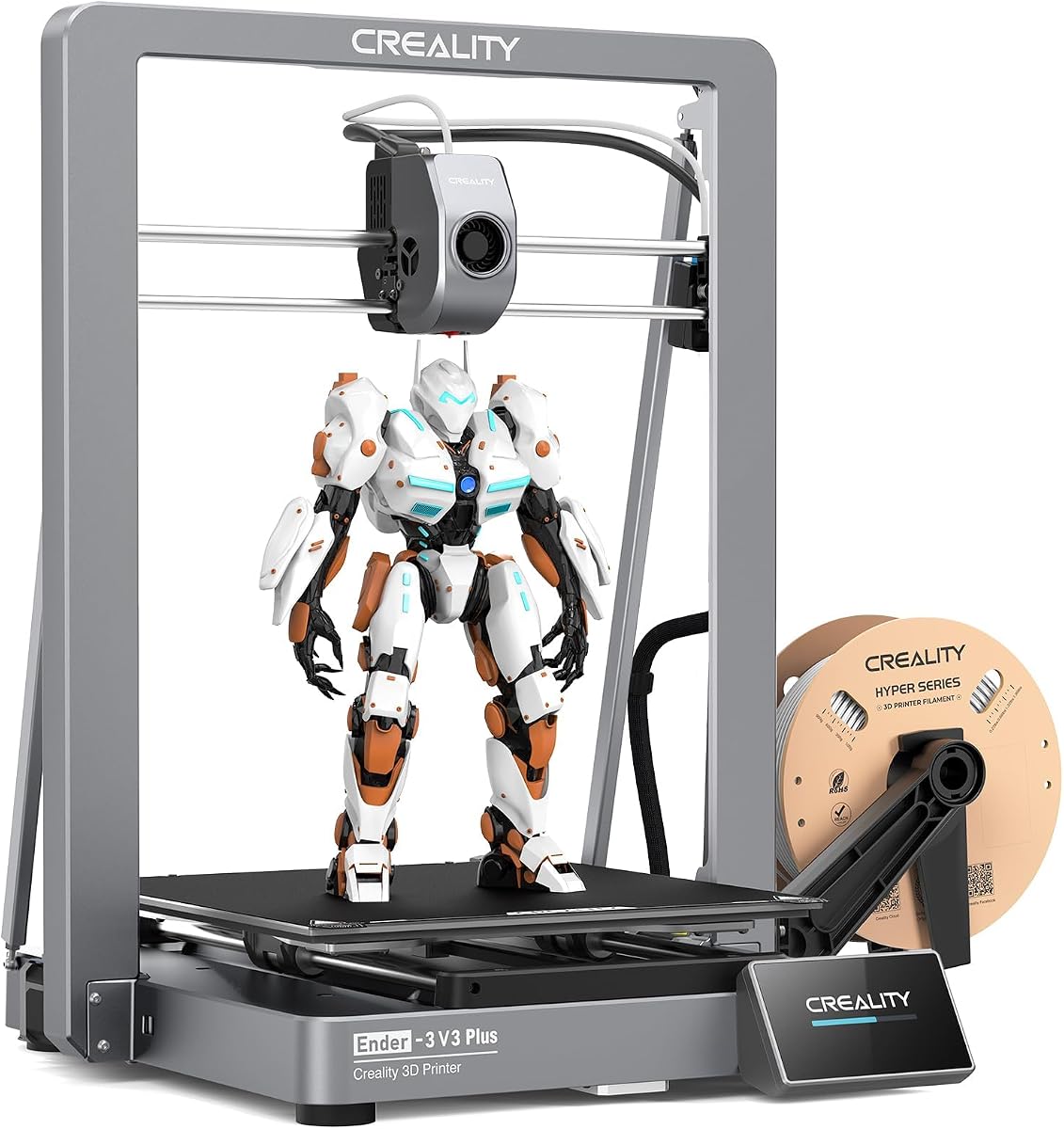
The Creality Ender 3 V3 Plus offers a CoreXZ system for high speeds and auto leveling in a compact package. It targets users who want modern speed without large footprint.
We may earn a commission when you buy through this link, at no additional cost to you.
Features like the tri-metal nozzle and auto input shaping help maintain quality during rapid printing. The robust extruder ensures stable feeding for various filaments.
As a newer model, it may require user tuning to maximize speed and precision. It is a good choice for those starting large-scale work on a budget.
Best for hobbyists and small shops, this printer balances speed and size well. It provides advanced features in a form factor that fits easily on a workbench.
CoreXZ motion and input shaping enable 600mm/s printing with stability, reducing print time significantly.
One-tap calibration simplifies the process, ensuring quick deployment for production tasks.
We may earn a commission when you buy through this link, at no additional cost to you.
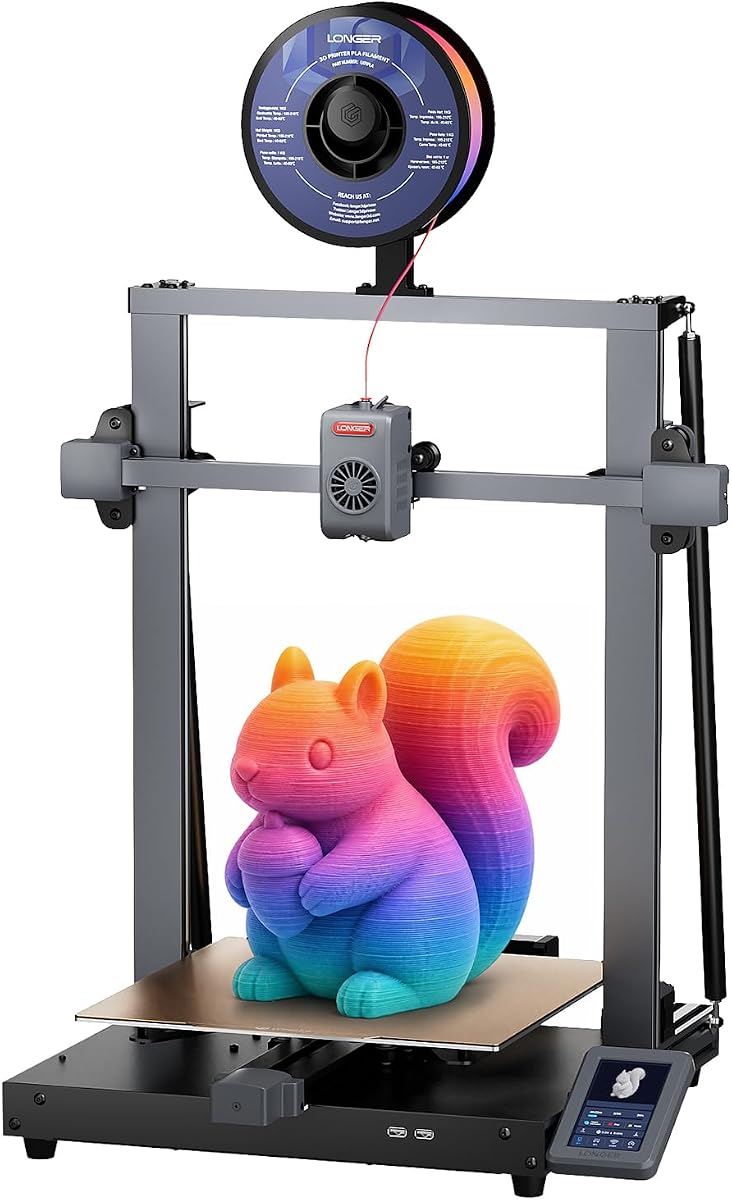
The LONGER LK5 Pro 3 is an affordable option for large prints with a 95 percent pre-assembled design. It simplifies setup with an open-source motherboard and silent drivers for smooth operation.
We may earn a commission when you buy through this link, at no additional cost to you.
Its triangular structure ensures stability during printing, while the resume printing function prevents failure loss. The 4.3-inch touchscreen provides easy control and monitoring.
While it lacks advanced sensors found in higher-end models, it delivers solid performance for the price. It is ideal for beginners or users prioritizing simplicity and cost.
This printer is best for those starting with large format printing on a budget. It offers reliable results and ease of use without compromising on build size.
95% pre-assembled design reduces assembly time, letting you start printing almost immediately.
Diagonal rods form a stable triangle that minimizes vibration for better print quality on large parts.
We may earn a commission when you buy through this link, at no additional cost to you.
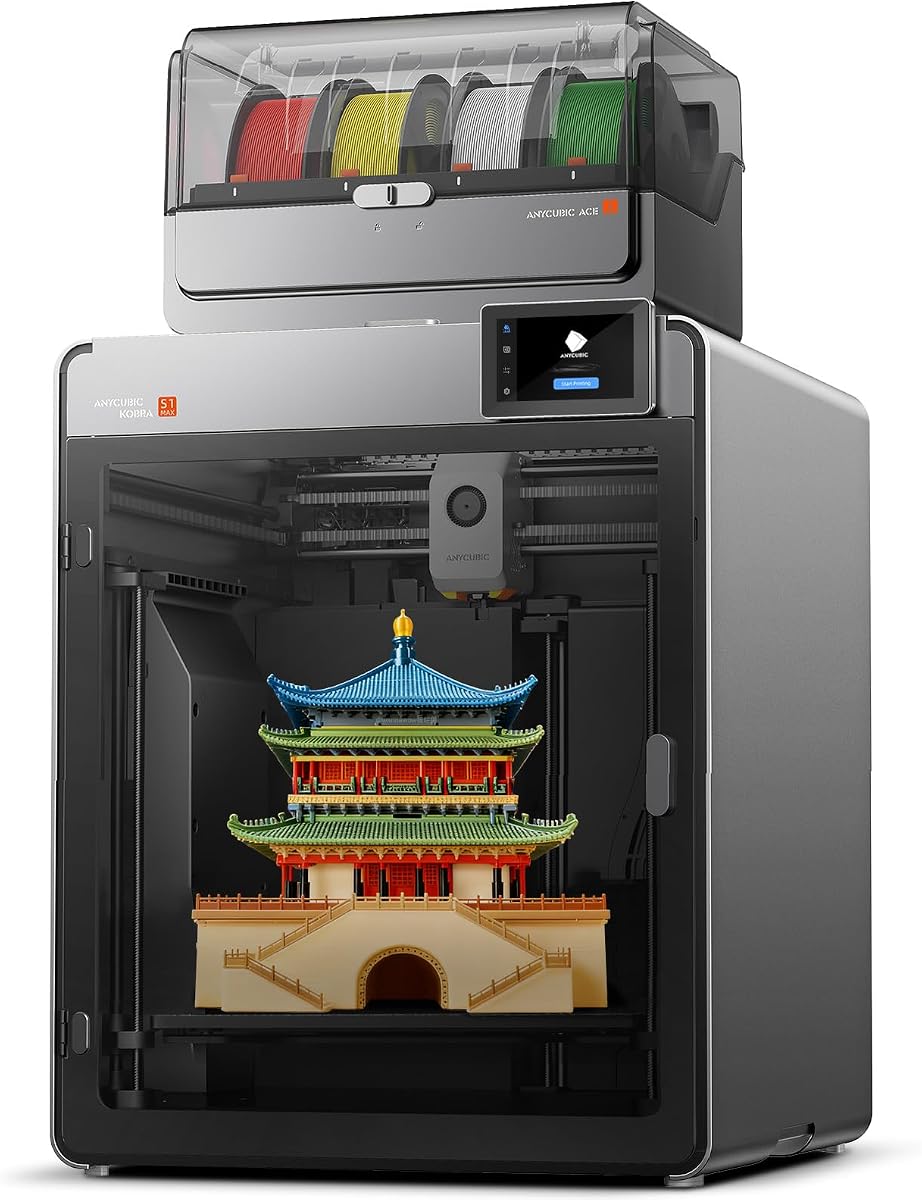
The Anycubic Kobra S1 Max Combo offers a balanced package for large-format printing with a CoreXY system and ACE 2 Pro for multi-color work. It ensures quality with LeviQ auto leveling and vibration compensation.
We may earn a commission when you buy through this link, at no additional cost to you.
Features like the heated chamber and hardened extrusion system support a range of materials including ABS and PETG. It combines standard reliability with modern convenience features.
It is a solid choice for users seeking a dependable printer for large models. While not the most advanced, it provides the necessary tools for consistent production.
Ideal for general-purpose large printing, this model delivers steady performance. It is suitable for makers and professionals who need a dependable large format solution.
Active vibration compensation reduces ringing, ensuring consistent quality at high speeds.
The ACE 2 Pro system allows seamless 4-color printing out of the box.
We may earn a commission when you buy through this link, at no additional cost to you.
Selecting the right FDM printer for large prints involves evaluating several critical factors beyond just build volume. This guide explores essential aspects to help you make an informed decision.
The most critical factor for large prints is the build volume. Ensure the printer offers enough space for your largest intended part to avoid splitting and assembly. Look for models that provide a cube or rectangular build area that matches your workflow needs.
Choose a build volume that accommodates your biggest frequent projects while considering the physical footprint of the printer.
High speed and acceleration help reduce the time required for large prints. Models with CoreXY systems or advanced motors allow for faster output without sacrificing detail. This is crucial for production environments where throughput matters.
Prioritize printers with high acceleration values to maintain efficiency on large models.
Large parts often require stronger engineering materials like ABS, ASA, or Nylon. Check if the printer has an enclosed chamber and heated bed to handle these filaments effectively. Without temperature control, warping can ruin large prints.
Verify the printer supports the materials you need for durability and heat resistance.
Accurate leveling is essential for large prints to ensure bed adhesion. Automatic systems with mesh leveling or sensors simplify setup and improve success rates. Manual leveling can be tedious and error-prone on larger surfaces.
Look for advanced auto leveling features to minimize calibration time and print failures.
A sturdy frame reduces vibration and ensures consistent extrusion during long large prints. Metal or reinforced frames help maintain precision over time. Flexible or weak frames may result in layer shifting or defects.
Select a printer with a rigid construction to ensure high-quality results for large objects.
Modern printers offer WiFi or LAN connectivity for remote monitoring and management. This allows you to track progress without being physically present. Features like pause/resume help prevent interruptions during long prints.
Ensure the printer has reliable connectivity options for better control and convenience.
Good slicing software integration helps optimize prints for large formats. Features like support generation and print time estimation are valuable. User-friendly interfaces simplify workflow and reduce setup errors.
Check that the printer is compatible with intuitive slicing tools for efficient preparation.
Some large projects benefit from color variation or functional materials. Multi-color systems with automatic changers save time and reduce waste. Consider if your projects require multiple materials or vibrant finishes.
Evaluate multi-color features if your workflow demands diverse material properties in one print.
Always start by ensuring your build plate is clean and level. For large prints, proper adhesion is vital to prevent warping or detachment. Use recommended bed surfaces like PEI or glass with appropriate adhesives.
Regularly maintain moving parts like belts and rods to ensure smooth motion. Clean the extruder and nozzle to prevent clogs that can ruin long large prints. Lubricate guide rails as needed based on the manufacturer's schedule.
Monitor your prints during the initial layers to catch issues early. For long runs, consider using a camera or remote monitoring. Keeping the environment stable and free from drafts helps maintain print consistency.
A build volume of at least 300mm in all dimensions is generally suitable for large prints. However, for very large objects, consider models offering 400mm or more to reduce the need for part splitting and assembly.
Yes, you can print large parts without an enclosure if using materials like PLA or PETG. However, for ABS or ASA, an enclosure is highly recommended to maintain temperature and prevent warping during large prints.
A speed of 500mm/s or higher is considered fast for large printers, allowing for quicker turnaround. However, balance speed with quality by adjusting acceleration settings to maintain detail on large models.
Yes, auto leveling is crucial for large prints to ensure even bed adhesion across the entire surface. Manual leveling can lead to inconsistent results, especially on larger build plates where precision is key.
PLA is easy to print but less durable, while PETG and ABS offer better strength and heat resistance. For functional parts, consider Nylon or TPU depending on flexibility requirements.
Use a heated bed and enclosure, ensure proper bed adhesion with adhesives or textured surfaces, and avoid drafts. Additionally, slow down the first few layers to establish strong foundation.
Multi-color printing can be beneficial for prototypes or models needing distinct features without assembly. It adds complexity and cost, so evaluate based on your specific design requirements.
Clean the printer regularly, checking nozzles every few weeks and rods monthly. For frequent users, weekly maintenance ensures consistent performance and longevity of the machine.
We explored ten top FDM printers that excel in large format printing capabilities. From the high-speed Bambu Lab P1S to the budget-friendly LONGER LK5 Pro 3, each option offers distinct advantages.
When choosing, prioritize build volume, speed, and material compatibility based on your specific project needs. Consider automation features that can save time and improve success rates for large prints.
Always check current availability and specifications as the market evolves rapidly. Verify that the selected model aligns with your workshop space and long-term goals.