Digital Electric Sub Meters for Landlords
4.5Editor score
Easy ANSI Form 2S install
Bright LCD kWh readings
Solar import export tracking
This comprehensive guide compares the top electric sub meter options for landlords, solar users, and renters to ensure accurate energy monitoring and fair
Electric sub meters are essential devices for tracking individual energy usage within larger electrical systems. They allow property owners and facility managers to allocate costs fairly among tenants or specific circuits without needing complex infrastructure upgrades.
We evaluated ten leading models based on accuracy, installation ease, communication features, and durability. Our analysis covers single-phase and three-phase options suitable for residential, commercial, and industrial applications across various voltage requirements.
Each selection highlights unique capabilities like Modbus support, cloud integration, or solar import/export tracking. Prices fluctuate frequently so verify current listings before purchasing to ensure you get the best value for your specific monitoring needs today.
4.5Editor score

4.8Editor score
4.5Editor score
The following table provides a side-by-side comparison of all ten selected electric sub meter models. It highlights key specifications such as voltage compatibility, amperage ratings, communication protocols, and unique features to help you make an informed decision quickly.


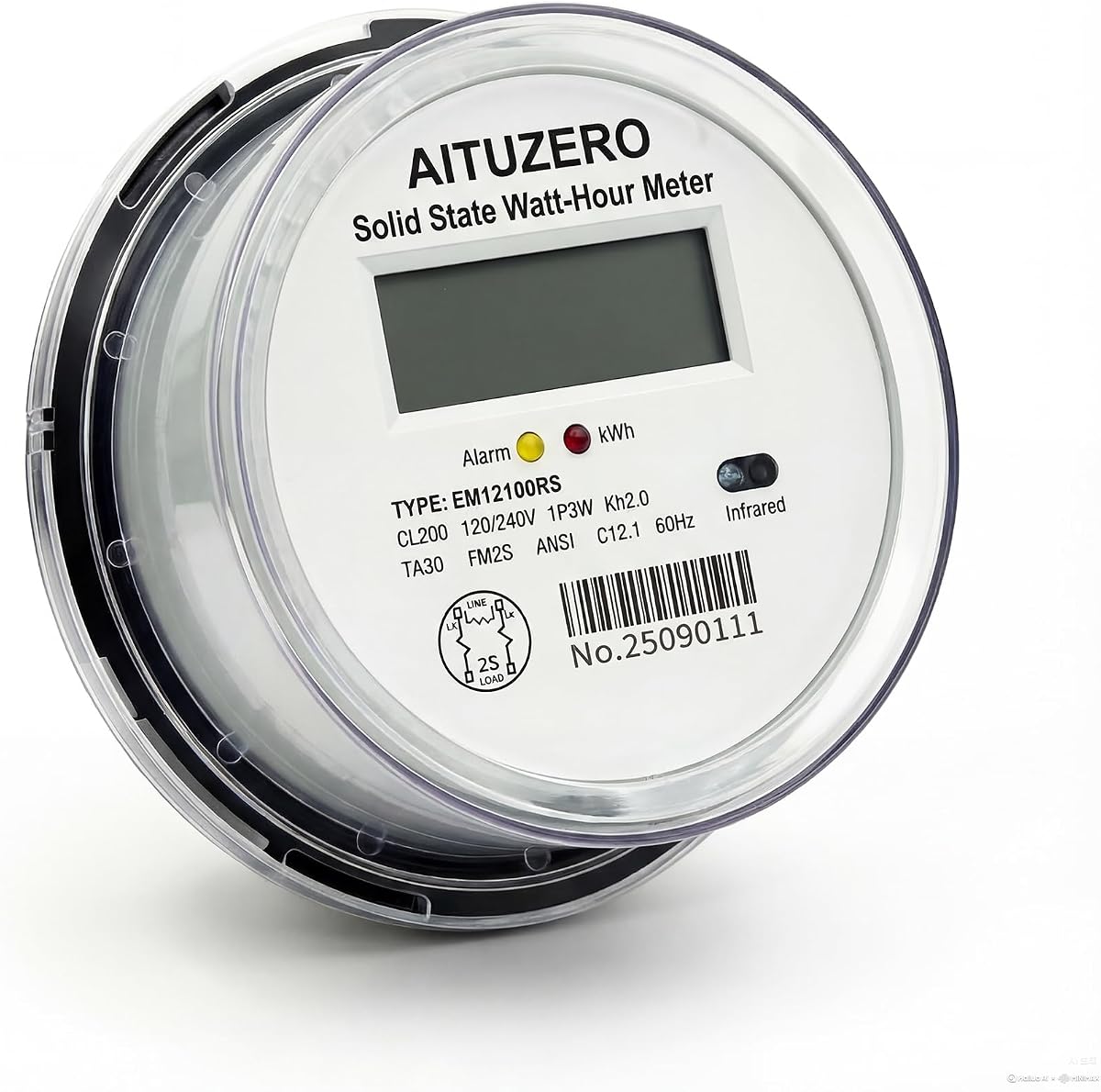
This affordable digital sub meter offers a straightforward solution for landlords and property managers needing basic energy tracking. With a 4.5 star rating, it is praised for its simple ANSI Form 2S installation and reliable performance in residential settings.
We may earn a commission when you buy through this link, at no additional cost to you.
The device measures kWh accurately across standard 120/240V systems and includes helpful features like a reverse LED to confirm correct wiring. Its bright LCD display ensures easy reading even in dimly lit panels, while pulse and Modbus outputs allow for basic external integration if needed.
While it lacks advanced cloud connectivity out of the box, the solid-state design provides long-term stability against electrical fluctuations. Users find the labeled terminals simplify wiring significantly compared to older mechanical models, making it a practical choice for small-scale applications.
This meter is ideal for DIY enthusiasts managing rental units or RV parks who want accurate data without overspending. It balances cost and functionality effectively, offering essential monitoring tools for fair billing and energy conservation efforts.
The labeled terminals and standard socket fit mean you can connect line and load quickly without specialized tools.
Integrated import export monitoring helps solar users track generation and consumption trends directly on the display.
We may earn a commission when you buy through this link, at no additional cost to you.
Ranked as the top choice, this meter excels with its RS485 Modbus interface allowing seamless connection to centralized monitoring systems. Its 4.8 star rating reflects user satisfaction with its detailed display capabilities and accurate energy measurement across complex electrical setups.
We may earn a commission when you buy through this link, at no additional cost to you.
The display cycles through critical metrics like voltage, current, power factor, and accumulated kWh ensuring comprehensive visibility into energy usage. Non-volatile EEPROM memory ensures data integrity during power outages, while the front IR interface allows authorized configuration without opening the panel.
Advanced professionals appreciate the ability to monitor multiple meters on a single network, making it perfect for apartment complexes or industrial facilities. The import/export feature provides essential feedback for solar installations, highlighting any backfeed issues quickly via a dedicated LED indicator.
Choose this meter if you require professional-grade data collection and integration capabilities. It offers the best balance of features and reliability for users who need real-time insights and networked monitoring solutions.
RS485 networking allows multiple units to be monitored from a single gateway reducing hardware complexity.
View voltage current and power factor directly on the screen to diagnose electrical issues instantly.
We may earn a commission when you buy through this link, at no additional cost to you.
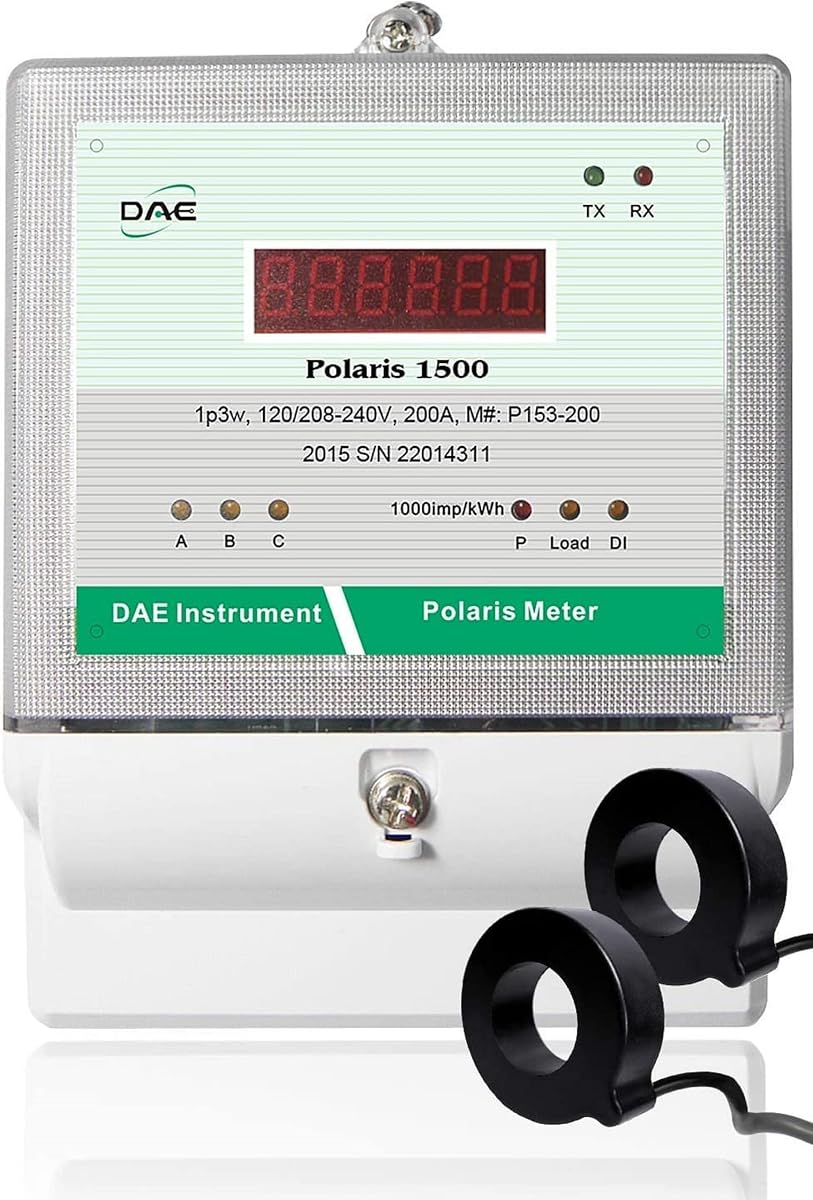
This premium kit stands out for its revenue-grade accuracy and full compliance with UL and CTEP standards ensuring legally defensible billing data. It integrates with cloud servers to provide landlords with accessible real-time usage data and monthly reports via any web device.
We may earn a commission when you buy through this link, at no additional cost to you.
Designed for robust commercial and rental applications it includes built-in fuses and knockout options for easy conduit connections. The included RS485 communication port enables integration with gateways that support time-of-use billing logic helping property managers optimize utility charges.
While it requires an additional gateway for full cloud features the setup process is straightforward with detailed guides available. The high amperage capacity ensures it handles heavy loads reliably without compromising measurement precision over extended operational periods.
Ideal for large-scale landlords and facility managers who need professional billing capabilities and remote access. This kit delivers trusted accuracy and advanced reporting tools necessary for serious property management operations.
Revenue grade compliance means usage data is legally sound for billing and dispute resolution purposes.
Access usage reports and tenant data securely from any internet-connected device without onsite visits.
We may earn a commission when you buy through this link, at no additional cost to you.
This Series 2000 meter focuses on high capacity monitoring capable of handling up to 200 amps in single-phase environments. Its robust construction makes it suitable for outdoor installations where durability against environmental elements is critical.
We may earn a commission when you buy through this link, at no additional cost to you.
It supports multiple wiring configurations including 1PH 2W and 3W allowing flexibility across various electrical systems and voltage inputs like 120 208 or 240V. The compact design ensures it fits into tight spaces while maintaining clear labeling for safe installation.
While the user rating suggests some challenges exist the high voltage compatibility and amp capacity remain key advantages for industrial applications. It serves well as a basic utility monitoring tool for sites requiring a simple reliable measurement point.
Consider this for applications needing high current monitoring without complex communication needs. It provides a solid foundation for heavy duty energy tracking in demanding conditions.
The enclosure protects internal electronics from weather and debris ensuring long service life.
Designed to manage heavy electrical loads up to 200 amps safely and accurately.
We may earn a commission when you buy through this link, at no additional cost to you.
The DEM730P simplifies installation by integrating current transformers directly into the unit eliminating external wiring complexity. It complies with IEC61036 standards ensuring global reliability and compatibility with various utility measurement protocols.
We may earn a commission when you buy through this link, at no additional cost to you.
With a 50A limit it suits smaller circuits or branch panel monitoring where space is limited. The device supports cloud connectivity via gateway and includes wireless converter options for existing buildings where running new cables is difficult.
While designed for indoor use it can be paired with watertight enclosures for outdoor deployment when necessary. Its RS485 interface enables standard data export for basic analysis or future expansion needs.
Choose this meter for small-scale commercial or residential projects requiring easy setup and cloud capabilities. It balances simplicity with modern connectivity features effectively.
Built-in current transformers mean no external clamps are needed for power measurement.
Use RF converters to connect to gateways without running long data cables between sites.
We may earn a commission when you buy through this link, at no additional cost to you.
This three-phase kit is designed for larger commercial or industrial loads needing accurate multi-phase monitoring. Its UL CTEP approval ensures it meets revenue grade standards for legal and financial reporting requirements.
We may earn a commission when you buy through this link, at no additional cost to you.
It supports a wide voltage range from 120 to 480V making it versatile for diverse industrial setups. The included RS485 port facilitates easy networking with other devices while the cloud gateway options provide remote data access and analysis.
The kit includes necessary fuses and knockouts to simplify electrical connections according to code. Its high accuracy and multi-phase design make it ideal for facilities tracking total facility usage across three distinct phases.
Select this meter for heavy industrial applications where precision and compliance are paramount. It offers a complete solution for monitoring complex power systems efficiently.
Tracks all three phases accurately ensuring balanced load distribution and precise billing.
Revenue grade certification means data is suitable for official utility billing and audits.
We may earn a commission when you buy through this link, at no additional cost to you.
This pass-through meter simplifies installation by allowing current wires to run directly through the unit. It supports both 2 and 3-wire setups making it adaptable for various residential and light commercial circuits.
We may earn a commission when you buy through this link, at no additional cost to you.
The LCD display provides clear local readings while pulse outputs allow remote monitoring via simple counters. It handles up to 100A and operates across 120 to 240V systems reliably under typical operating conditions.
While it lacks advanced communication like Modbus the straightforward design ensures easy maintenance and troubleshooting. It serves well for users needing local visibility and simple remote tracking without complex network setups.
Ideal for DIY upgrades or small businesses needing reliable energy monitoring. This meter balances functionality with ease of use effectively.
Wires pass straight through the unit reducing connection points and potential failure risks.
View data instantly on the LCD or send pulses to external counters for tracking.
We may earn a commission when you buy through this link, at no additional cost to you.
With a perfect 5.0 rating this meter is highly favored for its compact din rail mount and internal CT design. It simplifies panel integration by eliminating bulky external transformers while maintaining high accuracy standards.
We may earn a commission when you buy through this link, at no additional cost to you.
The device allows pass through of neutral conductors reducing wiring complexity in crowded panels. It connects easily to cloud gateways for remote monitoring making it a strong choice for tech-enabled property management.
Designed primarily for indoor use it can be adapted for outdoor environments with appropriate watertight enclosures. Its compliance with IEC standards ensures consistent performance across different utility networks.
Select this for panel upgrades where space is limited and modern connectivity is desired. It offers excellent value and reliability for smart monitoring applications.
Din rail mounting saves valuable panel space compared to traditional socket based meters.
Compatible with gateways to enable remote access and automated reporting features.
We may earn a commission when you buy through this link, at no additional cost to you.
This universal meter offers broad compatibility with both 2 and 3-wire setups across standard 120 to 240V systems. It is designed to handle up to 100A reliably providing a simple solution for general energy tracking.
We may earn a commission when you buy through this link, at no additional cost to you.
The LCD display allows quick local verification of usage while pulse outputs enable basic remote tracking needs. It avoids complex networking keeping the device straightforward for maintenance and daily checks.
While it lacks advanced reporting features it provides accurate measurement for straightforward billing or conservation purposes. Its universal design makes it a safe fallback choice for diverse wiring configurations.
Best for simple residential or light commercial setups needing reliable measurement. This meter delivers consistent performance without unnecessary complexity.
Accommodates various wiring types reducing the need for specific model selection.
Pulse outputs enable simple external counters without needing expensive network gear.
We may earn a commission when you buy through this link, at no additional cost to you.
This Class 1000 meter is built for commercial environments requiring high reliability and precision. It supports both 1 and 2-phase systems providing flexibility for varied electrical infrastructure needs.
We may earn a commission when you buy through this link, at no additional cost to you.
Its robust design handles up to 100A ensuring it can manage significant loads without measurement degradation. The device is optimized for steady operation in demanding settings where consistent tracking is critical.
While it may require more technical setup its high performance rating justifies the effort for professional users. It is suitable for facilities needing accurate data for compliance or efficiency audits.
Ideal for commercial applications where quality and durability are priorities. This meter offers a dependable platform for serious energy management.
Designed to withstand rigorous commercial use ensuring long term reliability.
Adapts to single or dual phase needs allowing use in diverse building types.
We may earn a commission when you buy through this link, at no additional cost to you.
Selecting the right electric sub meter involves evaluating voltage compatibility, capacity, and desired connectivity features. This guide breaks down the essential factors to consider before making a purchase.
Ensure the meter supports your system voltage like 120V 240V or 480V. Most residential models handle 120/240V single phase while commercial units often support multi-phase options.
Always verify voltage ratings match your breaker panel specifications to prevent equipment damage or inaccurate readings.
Choose a meter rated for at least your maximum expected load. Models range from 50A for light circuits to 200A or higher for main panel monitoring.
Selecting an appropriate amp rating ensures safety and longevity of the measurement device under peak conditions.
For remote access consider meters with RS485 Modbus or pulse outputs. Cloud-enabled models allow web-based data access for easier monitoring.
Basic setups may only need a local LCD while advanced users benefit from networked data collection systems.
Decide between DIN rail mount or socket base installation. Socket bases like ANSI Form 2S are common for direct panel replacements while DIN rail saves space.
Ensure the mount type fits your panel or enclosure constraints to avoid costly modifications or extra kits.
Revenue grade meters offer 0.5% accuracy suitable for billing. Less critical monitoring may accept standard accuracy classes found in general use models.
Higher accuracy ensures fair tenant billing and compliance with regulatory reporting standards.
If you have solar panels choose a meter that tracks import and export energy. Reverse flow indicators help detect backfeed issues immediately.
Bidirectional tracking is essential for net metering and optimizing renewable energy usage efficiently.
Outdoor installations require watertight enclosures or weather-resistant housing. Indoor units may lack seals making them unsafe for exposed environments.
Check IP ratings or enclosure types to match the installation location humidity and temperature exposure.
Look for non-volatile memory like EEPROM that retains data during power outages. This ensures historical usage records remain intact.
Persistent data storage helps avoid losing critical usage history during grid failures.
Turn off power to the panel before installation to ensure safety. Verify voltage and amperage matches the meter specs before connecting wires.
After wiring reset the meter display if necessary and allow a few minutes for calibration. Check the LCD for initial readings to confirm correct installation.
Perform annual inspections of terminals and seals to ensure continued accuracy. Avoid exposing internal components to moisture or extreme temperature swings.
An electric sub meter measures individual energy consumption for specific tenants or circuits within a larger main system. It enables accurate billing and helps track usage without upgrading the entire utility infrastructure.
DIY installation is possible if you have electrical experience and local permits allow it. However professional installation is recommended for safety and code compliance especially with high voltage circuits.
Basic models display data locally on an LCD screen without internet. Advanced cloud-connected models require a gateway and internet connection to send data to remote servers.
Most digital sub meters offer accuracy within 0.5% to 2% depending on the model and class. Revenue grade units provide higher precision needed for official billing purposes.
Pass-through meters have internal sensors while CT meters use external current transformers. CT models are safer for high voltage setups since they isolate current measurement from live lines.
Yes many modern sub meters include import and export tracking features. This bidirectional monitoring helps track energy generation from solar panels separately from grid usage.
Data can be read directly from the LCD screen or retrieved via RS485 Modbus or pulse outputs. Cloud models offer web dashboards for viewing historical data remotely on devices.
Indoor use does not typically require extra enclosures. Outdoor installations should use NEMA rated watertight boxes to protect electronics from rain and dust.
The top picks cover a range of needs from budget-friendly landlords to professional facilities. The CL200 model offers the best balance of features while the P153 KIT leads in revenue grade compliance.
Prioritize accuracy and communication needs based on your project scale. Smart meters with Modbus support provide the most flexibility for future monitoring expansion.
Always verify current pricing and availability before buying. Prices fluctuate frequently so check the latest listings to ensure you secure the best value for your application.