
AMD Ryzen 7 7800X3D
4.8Editor score
8 Core 16 Thread Design
96MB L3 Cache Memory
Excellent Power Efficiency
This guide compares the top ten CPUs for Machine Learning to help you choose the best processor for AI workloads, training, and inference tasks effectively.
Choosing the right CPU for machine learning is crucial for efficient model training and deployment. Modern processors offer specialized architectures that accelerate AI tasks significantly compared to traditional computing solutions.
We evaluated ten top-rated processors based on core counts, cache sizes, and AI-specific features. Our analysis focuses on performance metrics relevant to data scientists and developers building local AI systems.
Each pick highlights unique strengths for different use cases and budgets. Note that specifications and availability may vary over time, so verify current details before making your final purchase decision today.
4.8Editor score

5.0Editor score

5.0Editor score
The following table provides a side-by-side comparison of all ten processors evaluated in this guide to help you quickly identify the right fit for your specific machine learning needs and constraints.



The NVIDIA DGX Spark 2 Pack stands out as a premier choice for serious machine learning professionals seeking desktop supercomputer capabilities. With a perfect rating from users, it delivers enterprise-grade performance directly to your workspace.
We may earn a commission when you buy through this link, at no additional cost to you.
Its Grace Blackwell architecture provides up to 1 petaFLOP of AI performance, enabling local fine-tuning of models with up to 200 billion parameters. The 128GB unified memory per unit ensures seamless data handling without bottlenecks.
While the investment is significant, the ROI comes from eliminating cloud dependency for prototyping. The seamless integration with the full NVIDIA AI software stack allows developers to build locally and deploy anywhere with consistency.
This system is ideal for teams needing secure, high-performance environments for validation. If you require rapid iteration on large models without remote latency, this is the definitive desktop solution available today.
You gain the freedom to experiment and prototype faster by augmenting existing laptop or cloud resources with dedicated local power.
The design supports everything from initial idea unlocking to validation, driving innovation in a secure setting efficiently.
We may earn a commission when you buy through this link, at no additional cost to you.
The AMD RYZEN 7 9800X3D offers a compelling balance for those entering machine learning on a budget. Its Zen5 technology and 3D V-Cache make it incredibly fast for general tasks and moderate workloads.
We may earn a commission when you buy through this link, at no additional cost to you.
With 8 cores and 16 threads, it handles multitasking well during data preprocessing. The 96MB L3 cache significantly improves hit rates for short access times, boosting overall system responsiveness during coding sessions.
Users appreciate the drop-in readiness for Socket AM5 infrastructure which simplifies upgrades. However, the lack of an included cooler means additional budget allocation is necessary for thermal management.
Choose this processor if you need speed for lighter models and daily productivity. It pairs well with discrete GPUs for inference tasks where raw CPU core count is less critical than clock speed.
Better thermal performance vs previous generation allows higher clock speeds while maintaining stability under load.
Built on Next Gen 3D V-Cache technology to deliver significant IPC uplift for your computing needs.
We may earn a commission when you buy through this link, at no additional cost to you.
Intel Core Ultra 9 285K brings advanced hybrid architecture to the desktop space for machine learning tasks. Its 24 cores prioritize workloads effectively to optimize performance across different types of computing tasks.
We may earn a commission when you buy through this link, at no additional cost to you.
The Performance Hybrid Architecture integrates P-cores and E-cores to run your PC cooler and quieter while processing data. Unlocked speeds up to 5.7 GHz ensure rapid responsiveness for compilation and lightweight inference jobs.
Compatibility with Intel 800 series chipsets provides a modern foundation for expansion. The inclusion of PCIe 5.0 support future-proofs your system for next-generation accelerators and storage devices.
This CPU is suitable for developers needing balanced performance without specialized AI silicon. It works well in systems where you want a single processor to handle both system tasks and background ML jobs.
Two core microarchitectures prioritize and distribute workloads to optimize performance for specific tasks.
Ultra-efficient design improves performance so your system runs cooler, quieter, and quicker overall.
We may earn a commission when you buy through this link, at no additional cost to you.
The AMD Ryzen 9 9950X3D is engineered for high-performance content creation and complex machine learning preprocessing. With 16 cores, it manages parallel processing tasks more effectively than many standard desktop chips.
We may earn a commission when you buy through this link, at no additional cost to you.
Operating with a maximum boost clock up to 5.7 GHz, it ensures rapid execution of instructions during heavy data manipulation. The Zen 5 architecture underpins its reliability and speed in demanding scenarios.
Its Granite Ridge AM5 codename indicates modern platform compatibility. The boxed processor format ensures you receive a complete unit ready for installation into compatible AM5 motherboards immediately.
Choose this if your workflow involves large datasets that need extensive CPU handling before GPU transfer. It bridges the gap between gaming speed and workstation-level multitasking capabilities efficiently.
Base clock of 4.3 GHz combined with high boost allows for flexible performance scaling.
Zen 5 architecture delivers the efficiency needed for sustained high-load operations.
We may earn a commission when you buy through this link, at no additional cost to you.
AMD Ryzen 9 9900X offers a robust mid-range option for those building a machine learning capable workstation. Its 12 cores and 24 threads provide ample parallelism for data loading and preprocessing scripts.
We may earn a commission when you buy through this link, at no additional cost to you.
The 5.6 GHz Max Boost ensures quick responses when running interactive applications. Support for DDR5-5600 memory means data bandwidth is high enough to keep the cores fed during intensive tasks.
Unlocked for overclocking, it gives enthusiasts room to tune performance further if needed. The AM5 platform support allows for future upgrades without replacing the entire motherboard infrastructure.
This processor is great for balancing cost and performance in a home lab environment. It handles background training jobs well while leaving system resources free for other development work.
DDR5-5600 support ensures you get the latest memory bandwidth for high speed processing.
State-of-the-art Socket AM5 platform support with PCIe 5.0 on select motherboards.
We may earn a commission when you buy through this link, at no additional cost to you.
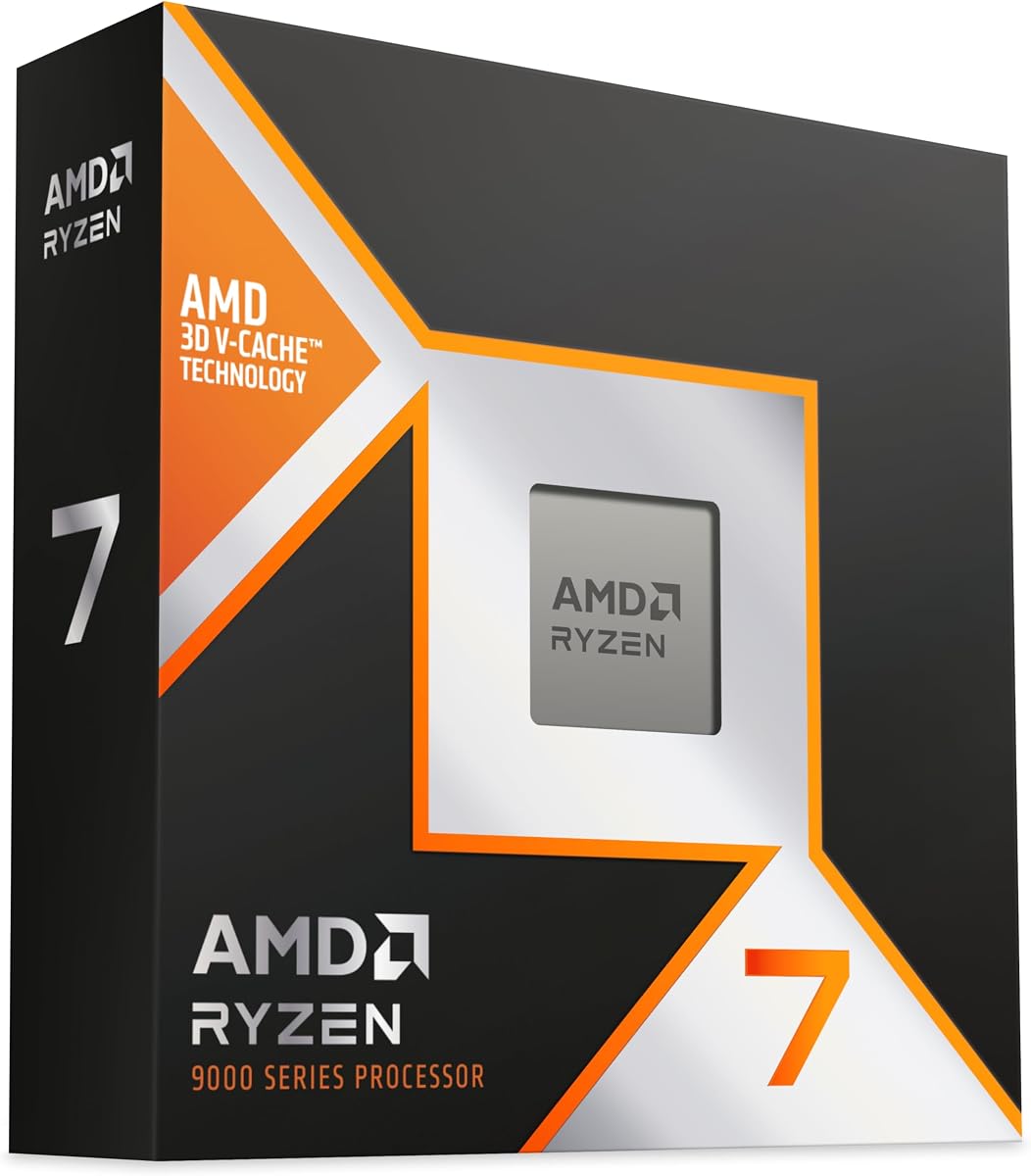
The AMD Ryzen 7 7800X3D provides dependable and fast execution of tasks with maximum efficiency for budget builds. It is a top choice for developers focusing on inference rather than heavy training on the CPU.
We may earn a commission when you buy through this link, at no additional cost to you.
With 5nm process technology, it offers reliable performance with maximum productivity. The 96 MB L3 cache memory provides excellent hit rate in short access time enabling improved system performance.
While it comes with AMD Radeon Graphics for output, it excels in pure computational tasks. The 4.20 GHz clock speed ensures reliable execution of instructions to ensure maximum convenience.
For those starting in machine learning, this processor offers a strong entry point. It handles daily development tasks smoothly while leaving budget for a dedicated GPU which is critical for AI.
High L3 cache ensures excellent hit rate in short access time for improved system performance.
5nm process technology allows for reliable performance and maximum efficiency in use.
We may earn a commission when you buy through this link, at no additional cost to you.
AMD Ryzen AI Halo is designed specifically for local AI development and inference workflows. It features 128GB unified memory which supports running models with up to 200B parameters locally without external servers.
We may earn a commission when you buy through this link, at no additional cost to you.
The AMD Ryzen AI Max+ 395 Processor pairs Zen 5 architecture with AMD Radeon 8060S graphics and an AMD XDNA 2 NPU. This configuration delivers up to 50 TOPS of AI performance for efficient inference.
As a purpose-built Linux AI Developer Platform, it includes preloaded tools and workflows optimized for local AI. This reduces setup time significantly compared to configuring a general purpose machine from scratch.
This system is perfect for privacy focused developers needing a portable high performance unit. If you value seamless integration of CPU GPU and NPU for larger models, this stands as a top contender.
Features 128GB LPDDR5x unified memory providing a shared memory pool across CPU GPU and NPU.
Full AMD ROCm software support and preloaded tools optimized for local AI development.
We may earn a commission when you buy through this link, at no additional cost to you.
Intel Core i9 14900K offers leading max clock speed of up to 6.0 GHz for smooth responsiveness. It brings 24 cores and 32 threads to the table for heavy multitasking and data processing.
We may earn a commission when you buy through this link, at no additional cost to you.
Compatible with Intel 600 series or 700 series chipset based motherboards, it offers flexibility for existing users. DDR4 and DDR5 platform support cuts your load times giving you space to run demanding games.
While it is a powerful unit, it lacks specific AI accelerators found in newer models. The integrated Intel UHD Graphics 770 helps with basic output but not accelerated compute tasks.
This processor is suitable for those who need raw clock speed for legacy compatibility. It performs well in environments where you already have the motherboard infrastructure and want an upgrade.
Leading max clock speed of up to 6.0 GHz gives you smoother game play and rapid responsiveness.
DDR4 and DDR5 platform support cuts your load times and gives you space to run games.
We may earn a commission when you buy through this link, at no additional cost to you.
AMD Ryzen 7 9850X3D is a desktop processor that brings the 9000 series to the market. It utilizes X3D Cache technology to enhance performance for specific workloads and general computing.
We may earn a commission when you buy through this link, at no additional cost to you.
While detailed specifications are limited in the provided data, its placement suggests it shares traits with the 9800X3D. It likely offers significant improvements in cache bandwidth for data intensive tasks.
The AM5 socket readiness ensures compatibility with modern motherboards. It serves as a viable option for those looking to upgrade to the latest Ryzen generation without a full system rebuild.
For users focusing on cache benefits, this unit is worth considering. It fits into workflows where memory access speed is the primary bottleneck for overall system throughput.
X3D Cache Technology typically improves memory performance for data intensive tasks.
The 9000 series offers modern features including AM5 socket compatibility.
We may earn a commission when you buy through this link, at no additional cost to you.
NVIDIA DGX Spark delivers supercomputer performance directly to your desk in a compact energy-efficient design. It enables enterprise-scale AI and high-performance computing right where you need it without remote reliance.
We may earn a commission when you buy through this link, at no additional cost to you.
The power of Grace Blackwell architecture delivers up to 1 petaFLOP of AI performance for local model fine-tuning and analytics. This accelerates your time-to-solution significantly compared to traditional CPU only systems.
It allows you to experiment with large models up to 200 billion parameters directly on your desktop with 128GB of unified memory. This provides rapid testing and validation in a secure high-performance setting.
This desktop supercomputer is best for professionals needing high capacity memory locally. If you want to augment cloud resources with local power for prototyping, this unit delivers exceptional ROI.
Grace Blackwell architecture delivering up to 1 petaFLOP of AI performance.
128GB of unified memory unlocks ideas for experiments with large models directly.
We may earn a commission when you buy through this link, at no additional cost to you.
Selecting the right processor involves understanding core counts, architecture, and memory capabilities tailored to your specific AI workloads and budget constraints.
More cores and threads allow for better parallel processing during data preprocessing. Look for processors with at least 12 cores for comfortable multitasking in development environments.
Prioritize higher thread counts to manage background tasks while training or running inference jobs.
AI tasks often require large amounts of data to be moved quickly between memory and the processor. Ensure your CPU supports DDR5 memory and has sufficient bandwidth for your model sizes.
Higher bandwidth reduces bottlenecks when feeding data into your machine learning pipelines.
Large L3 cache sizes improve the hit rate for frequently accessed data. This is crucial for models that rely on rapid data access patterns without latency.
Look for processors with 96MB or more of L3 cache for improved system performance.
Some modern CPUs include NPUs for neural processing which offload specific AI tasks. This can significantly reduce the load on your CPU for inference workloads.
Choose a model with an NPU if you plan to run local AI assistants or small models.
Ensure the processor socket matches your motherboard to avoid compatibility issues. AM5 and LGA1700 are common standards for modern systems.
Check chipset support to confirm future upgrade paths and expansion options.
Efficient CPUs generate less heat and consume less energy during long training sessions. Look for models with advanced process technology like 5nm.
Better efficiency helps maintain stable performance without thermal throttling.
Unlocked processors allow for overclocking if you need extra performance. This can be useful for tuning systems to specific workloads.
Ensure you have adequate cooling solutions before attempting to unlock performance.
Consider the software ecosystem your brand offers for optimization and drivers. Some providers offer specific tools for AI developers to tune their systems.
Choose a brand that aligns with your existing tools and software requirements.
Begin by installing your processor carefully to ensure all pins and contacts are aligned properly. This prevents physical damage and ensures reliable electrical connection.
Install a high-quality cooling solution to maintain optimal operating temperatures. AI workloads often push systems to their limits for long periods.
Update your BIOS and drivers regularly to ensure compatibility with new software libraries and optimizations. This keeps your system efficient and secure for development.
While GPUs are primary for training, a good CPU helps with data preprocessing and running inference. Look for high core counts and memory bandwidth to keep tasks flowing smoothly.
Yes, unified memory allows different components to share data without bottlenecks. This is critical for running large models locally without swapping to slower storage.
P-cores are for performance critical tasks while E-cores handle background tasks. This hybrid architecture helps balance power and efficiency during development.
You can train small models but large models require significant resources. It is better to use GPUs for training and CPUs for data handling.
Large caches store frequently accessed data closer to the processor. This reduces latency when moving data during model training or inference.
Prebuilt systems offer convenience and integration but can be expensive. Consider building your own if you need specific customization.
The NVIDIA DGX Spark leads for professionals needing dedicated AI power locally. AMD processors like the 9800X3D offer excellent value for general tasks.
Prioritize core counts and memory bandwidth when selecting a unit. Balance your budget with the specific requirements of your models.
Always verify current availability and compatibility before purchasing. Technology evolves quickly so check for the latest support.