
Sntieecr STEM Electric Circuit Motor Kit,Science Experiment Educational Kit
4.2Editor score
Includes motors and propellers
Complete circuit accessories
Ideal for school STEM projects
Discover the top electricity learning kits for 2026. This guide compares 10 best products for kids and students to build circuits and explore physics.
Electricity learning kits provide an engaging way for students to understand complex physics concepts through hands-on experimentation and discovery.
We compared ten top-rated kits based on project variety, component quality, instructional clarity, and safety features to help you choose the right one.
Each pick highlights unique educational benefits while noting that prices may vary by retailer and time, so check current listings before purchasing.
4.2Editor score

4.7Editor score

4.5Editor score
This side-by-side comparison highlights the key specifications and project capabilities of each kit to help you make an informed decision quickly.



This National Geographic kit stands out as the top choice with its massive collection of over 120 electrical projects designed to captivate young minds.
We may earn a commission when you buy through this link, at no additional cost to you.
The inclusion of video instructions via QR codes and the ability to create complex setups like light shows and sound systems make learning incredibly interactive.
While the price is higher, the value provided by the sheer number of projects and the safety of no-tool assembly justifies the investment for serious learners.
Parents and educators looking for a comprehensive solution that grows with the child should prioritize this kit for its unmatched project diversity.
The video instructions and diverse projects encourage active engagement rather than passive reading.
Kid-friendly components and snap-together wires eliminate the need for risky tools.
We may earn a commission when you buy through this link, at no additional cost to you.
This STEM kit offers a fantastic entry point for younger children eager to explore electricity without a heavy financial commitment.
We may earn a commission when you buy through this link, at no additional cost to you.
The detailed circuit book provides clear guidance while the fruit battery project adds a unique element of fun that resonates well with kids.
Although it lacks the complexity of premium options, its focus on critical thinking and basic engineering makes it an excellent choice for beginners.
For parents seeking a balance between education and entertainment, this kit delivers solid value at a very accessible price point.
The guided book encourages kids to solve problems creatively during experiments.
Saltwater and fruit experiments introduce energy concepts in a fun way.
We may earn a commission when you buy through this link, at no additional cost to you.
Designed for high school students, this EUDAX kit provides a rigorous exploration of electricity and magnetism suitable for advanced physics curriculums.
We may earn a commission when you buy through this link, at no additional cost to you.
The inclusion of a color manual and specialized tools allows students to perform complex experiments like Oersted and Amper's force investigations.
While the battery requirement is a minor inconvenience, the educational depth offered by the diverse project range makes it a top-tier choice.
Students aiming to excel in STEM subjects will find the theoretical and practical integration in this kit particularly beneficial for their studies.
Projects like measuring resistors with Ohm's law deepen theoretical understanding.
The kit uniquely combines electrical circuits with magnetic field experiments.
We may earn a commission when you buy through this link, at no additional cost to you.
This kit distinguishes itself with unique physics modules that offer a more specialized learning experience for interested students.
We may earn a commission when you buy through this link, at no additional cost to you.
The manual goes beyond simple instructions to explain the underlying scientific principles, fostering a deeper understanding of how electronics work.
While it might appeal more to older kids, the structured learning path ensures no concept is left unexplored during the build process.
Ideal for students preparing for science fairs or those who want to grasp the theoretical side of electronics alongside practical application.
Detailed explanations ensure students learn the science, not just the build.
The fixed storage case makes it easy to take experiments anywhere.
We may earn a commission when you buy through this link, at no additional cost to you.
As one of the most affordable options, this kit provides a quick introduction to circuits with a focus on motion and motors.
We may earn a commission when you buy through this link, at no additional cost to you.
The inclusion of motors and propellers adds a dynamic element that allows kids to see electricity in action through movement.
Although usage time must be monitored to avoid heat, the low cost allows for frequent replacement if parts wear out during play.
Perfect for classrooms or families needing multiple kits for group learning without breaking the bank on expensive equipment.
Motors and propellers make the invisible force of electricity visible.
Low cost allows schools to stock multiple units easily.
We may earn a commission when you buy through this link, at no additional cost to you.
This kit is specifically geared towards parent-child discovery, making it an excellent choice for family science nights at home.
We may earn a commission when you buy through this link, at no additional cost to you.
The manual and component selection are designed to be engaging for both adults and children to collaborate on effectively.
While it offers fewer experiments than some competitors, the quality of interactions and shared learning moments are a key highlight.
Families looking for a structured way to spend quality time together while teaching science principles will love this set.
Projects are designed to be collaborative rather than solitary.
High-quality materials ensure components last through repeated use.
We may earn a commission when you buy through this link, at no additional cost to you.
This kit mirrors the rigor of school labs, offering tools like sensitive ammeters that allow for precise scientific measurement.
We may earn a commission when you buy through this link, at no additional cost to you.
The manual provides thorough operational guidance, ensuring students understand not only how to build but also why specific steps are taken.
The storage box design is excellent for educators needing to pack and unpack kits efficiently between different class periods.
Ideal for schools or older students needing a more academic approach to understanding electricity and magnetism concepts.
Sensitive ammeters allow students to measure current accurately.
Fixed storage positions prevent loss of critical components.
We may earn a commission when you buy through this link, at no additional cost to you.
Targeting junior high students, this kit focuses on solidifying textbook knowledge through practical application of basic circuit theory.
We may earn a commission when you buy through this link, at no additional cost to you.
The English instructions are a significant benefit, reducing confusion and allowing students to focus on the building process.
While the projects are fundamental, they provide the necessary groundwork for understanding more complex electrical engineering concepts later.
Schools or parents looking for a straightforward introduction to circuits without overwhelming complexity will find this a reliable choice.
Focuses on core series and parallel circuit concepts.
English instructions remove language barriers for learning.
We may earn a commission when you buy through this link, at no additional cost to you.
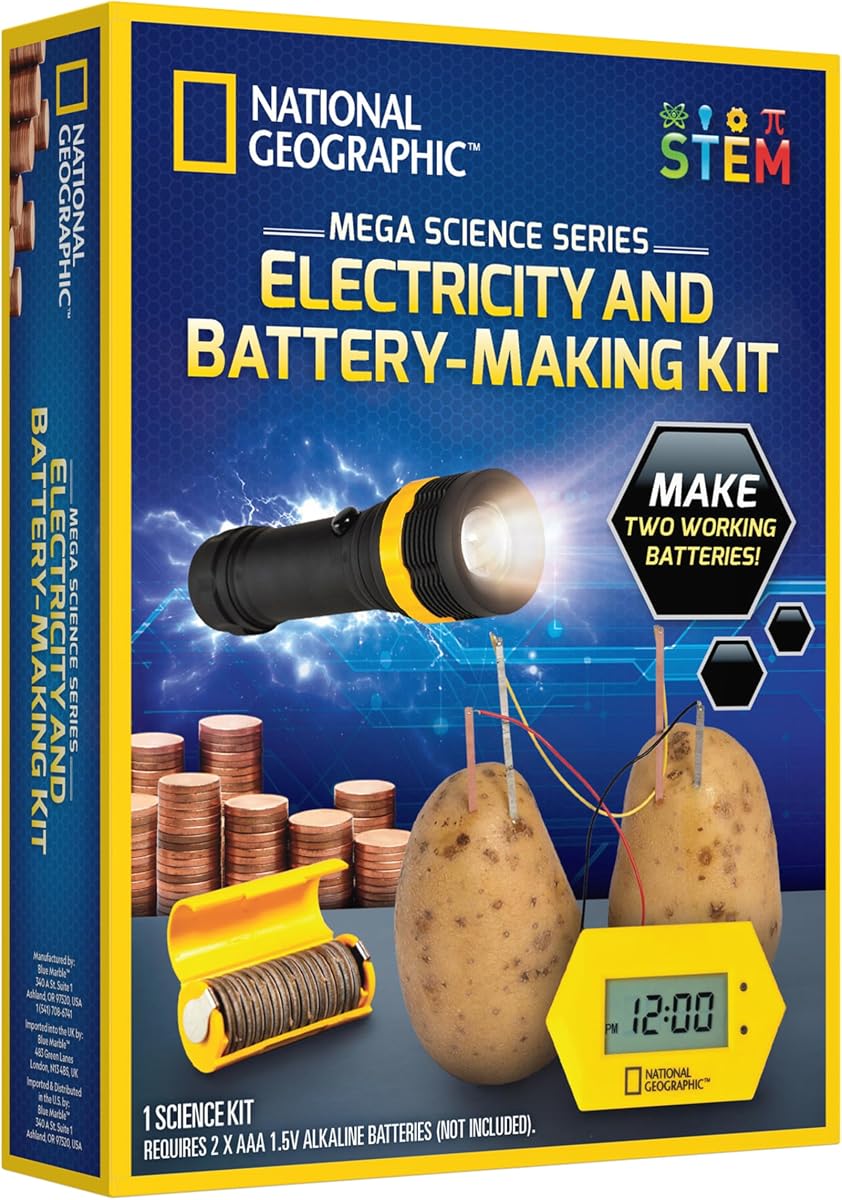
This specialized kit offers a focused dive into electrochemistry, allowing kids to create a battery using simple vegetables like potatoes.
We may earn a commission when you buy through this link, at no additional cost to you.
The learning guide provides fascinating insights into why these batteries work, making the science accessible and memorable.
While limited in number, the projects are highly engaging and demonstrate the core principles of electricity generation effectively.
Perfect as a supplementary kit or for families looking for a quick but impactful science weekend project.
Uses food items to teach battery generation concepts.
The coin flashlight shows how batteries power devices.
We may earn a commission when you buy through this link, at no additional cost to you.
This upgrade kit is designed with educational institutions in mind, offering projects that align well with teacher lesson plans.
We may earn a commission when you buy through this link, at no additional cost to you.
The transparent storage box helps educators quickly verify all components are present before starting a class activity.
While it requires batteries and adult guidance, the projects like traffic lights offer practical examples of circuit logic.
Teachers looking for a structured kit that supports curriculum standards will find this upgrade version particularly useful.
Projects align with standard middle and high school curricula.
Transparent boxes make it easy to track components.
We may earn a commission when you buy through this link, at no additional cost to you.
Selecting the right electricity learning kit depends on several factors including age appropriateness, project complexity, and educational goals.
Ensure the kit is designed for the child's age range to avoid frustration or safety issues.
Check the manufacturer's age recommendations to find a kit that matches their skill level.
A good kit should offer a wide range of projects to keep the learner engaged over time.
Look for kits with multiple experiments rather than just a single static build.
Clear, step-by-step instructions are vital for successful assembly and learning.
Manuals that explain the science behind the steps provide deeper educational value.
Durable parts ensure the kit lasts longer and withstands repeated use by children.
High-quality wires and connectors make it easier to build secure circuits.
Organized storage boxes help keep small parts safe and easy to find.
A well-designed case makes the kit portable and reduces the risk of losing pieces.
Check if the kit requires batteries or extra tools that are sold separately.
Account for these extra costs to ensure the total price fits your budget.
Consider whether the kit focuses on basic concepts or more advanced physics principles.
Choose a kit that aligns with the student's current academic level and interests.
Look for kits designed with safety in mind, such as low voltage components.
Ensure the product meets safety standards and includes warnings for supervision.
Start by reading the manual thoroughly to understand the components and safety warnings before beginning any experiments.
Organize all parts in the provided storage box after each use to prevent losing small connectors and components.
Always supervise children during experiments and ensure batteries are removed when the kit is not in use to prevent leakage.
Most kits do not include batteries to reduce shipping costs and allow for flexible power options. You should check the product description carefully to see if AA or other specific batteries are required separately.
Electricity learning kits generally range from age 8 and up to high school students. The specific kit you choose will depend on the complexity of the projects and the child's prior knowledge.
Most modern kits are designed to be tool-free, using snap-on connectors instead of soldering. However, always check the specs as some advanced kits might require simple tools like screwdrivers.
Reputable kits are designed with safety features like low voltage components and insulated wires. Always ensure adult supervision is provided and instructions are followed to avoid overheating or short circuits.
Yes, many of these kits are explicitly designed to support school science curriculums and science fair projects. They provide hands-on experience that reinforces theoretical concepts taught in class.
Yes, there are kits specifically targeting high school students that include components like magnetism experiments and precise measuring tools. These are ideal for students looking to pursue STEM careers.
Use the storage boxes provided in the kit or separate small containers for different parts. Labeling the containers can help you find specific components quickly when starting a new project.
Most reputable manufacturers offer customer support to replace broken parts or provide troubleshooting advice. Contact the seller directly if you experience issues to get the best service.
Choosing the right electricity learning kit can inspire a lifelong passion for science and engineering in students of all ages.
Prioritize kits that offer a balance of fun projects and educational value to ensure children learn while they play.
Always check current listings for the best deals and ensure you have the necessary batteries ready to start building immediately.