
Behringer X AIR XR18
4.6Editor score
18 input channels
Tablet control
WiFi integration
This guide compares the top digital mixing consoles for live sound and studio use, evaluating features, audio quality, and connectivity to help you choose the
Digital mixing consoles have transformed the way audio engineers manage sound in live and studio environments. These devices offer powerful processing, flexible routing, and intuitive controls that analog mixers simply cannot match. Finding the right console depends on your specific needs, budget, and the scale of your productions.
To compile this list, we analyzed specifications, user feedback, and professional reviews across the industry. We focused on consoles that deliver reliable performance, high-quality preamps, and robust connectivity options. Our goal is to provide a clear comparison of the most trusted models available today.
Each pick in this guide highlights key strengths and ideal use cases for different users. Whether you need a compact mixer for small venues or a large-scale system for touring, there is a suitable option here. Please note that prices and availability can change over time, so check current listings before purchasing.
4.6Editor score

4.7Editor score

4.8Editor score
The following table provides a side-by-side comparison of all ten featured digital mixing consoles. It highlights essential specifications to help you quickly identify which model fits your workflow and venue requirements.




The Behringer X32 stands out as a top contender in the digital mixing console market, earning a 4.7 rating from users. It combines audiophile sound quality with advanced automation features suitable for both studio and live applications.
We may earn a commission when you buy through this link, at no additional cost to you.
Its 32 MIDAS-designed mic preamps deliver pristine audio capture, while the 25 fully automated motorized faders allow for instant overview and powerful scene management. The 16 XLR outputs plus 6 additional line in/outputs provide flexible connectivity for complex setups.
One trade-off is the initial complexity, as mastering the interface requires time. However, the individual LCD Scribble Strips on all channels make assignment intuitive and reduce confusion during live events.
Engineers seeking a versatile, professional-grade console should consider this model. It balances high-end audio performance with a robust feature set that justifies its investment for serious production work.
The MIDAS-designed preamps ensure minimal noise and maximum clarity, essential for high fidelity recording and broadcast.
Motorized faders enable automatic scene recall, saving time during transitions and allowing focus on creative mixing decisions.
We may earn a commission when you buy through this link, at no additional cost to you.
The Yamaha DM3 Standard offers a compact solution with a 4.4 user rating, ideal for smaller setups that need premium sound. It features 22 channels and a best-in-class 9 inch touch screen for easy operation.
We may earn a commission when you buy through this link, at no additional cost to you.
With 16 Professional Yamaha Pre-Amps and 96kHz sample rate, it delivers high fidelity audio. The 18×18 USB Audio Interface supports playback and recording directly, streamlining your workflow for podcasting or streaming.
While the channel count is lower than larger consoles, the quality and touch interface compensate for many small venue needs. The USB recorder adds convenience for capturing mixes without extra hardware.
This console is perfect for users prioritizing portability and sound clarity over extensive routing. It is a strong choice for fixed installations or mobile performers seeking reliable performance in a small package.
The 96kHz sample rate ensures detailed audio capture, making it suitable for high-quality recordings and broadcasts.
The large touch screen simplifies parameter adjustment, reducing the need to memorize complex layer assignments.
We may earn a commission when you buy through this link, at no additional cost to you.
The Behringer WING is a powerful 48-channel console with a 4.2 rating, targeting advanced users needing extensive control. It includes 8 award-winning Midas PRO mic preamps and 24 motorized 100 mm faders for precise adjustments.
We may earn a commission when you buy through this link, at no additional cost to you.
Connectivity is robust with 3 AES50 ports featuring Klark Teknik’s SuperMAC technology, supporting up to 144 input and output signals with ultra-low jitter. The large main display with capacitive touch screen enhances navigation and editing.
Its scale may be overwhelming for smaller projects, but for large productions, the flexibility is unmatched. The unique touch-sensitive channel editing section provides dedicated color TFTs to manage complex channel properties efficiently.
Engineers handling complex live or broadcast productions will appreciate the depth of this console. It represents a premium investment for those requiring top-tier audio quality and extensive I/O capabilities.
AES50 SuperMAC technology ensures stable signal transmission over long distances, essential for distributed audio setups.
Dedicated TFTs on channels allow quick access to EQ and dynamics without navigating through layers.
We may earn a commission when you buy through this link, at no additional cost to you.
The Yamaha MGX12 has achieved a perfect 5.0 rating, making it a standout for streaming and content creation. It features tactile faders and a 4.3 touchscreen with 5 control knobs for simple yet effective mixing.
We may earn a commission when you buy through this link, at no additional cost to you.
The USB-HDMI interface supports 4K video capture and pass-through, which is ideal for streamers needing high-quality visuals alongside audio. Built-in DSP processing ensures professional sound with latency-free monitoring for real-time performance.
While it lacks the expandability of larger consoles, its features are tailored for modern digital workflows. The included software bundle adds significant value for recording and broadcasting without extra costs.
Content creators and small bands looking for an all-in-one solution will find this console highly effective. It simplifies technical setup so you can focus on delivering great content to your audience.
4K video capture capabilities allow seamless audio visual synchronization directly from the console.
Assistive features like Auto Gain and Clip Safe reduce the risk of technical errors during live streams.
We may earn a commission when you buy through this link, at no additional cost to you.
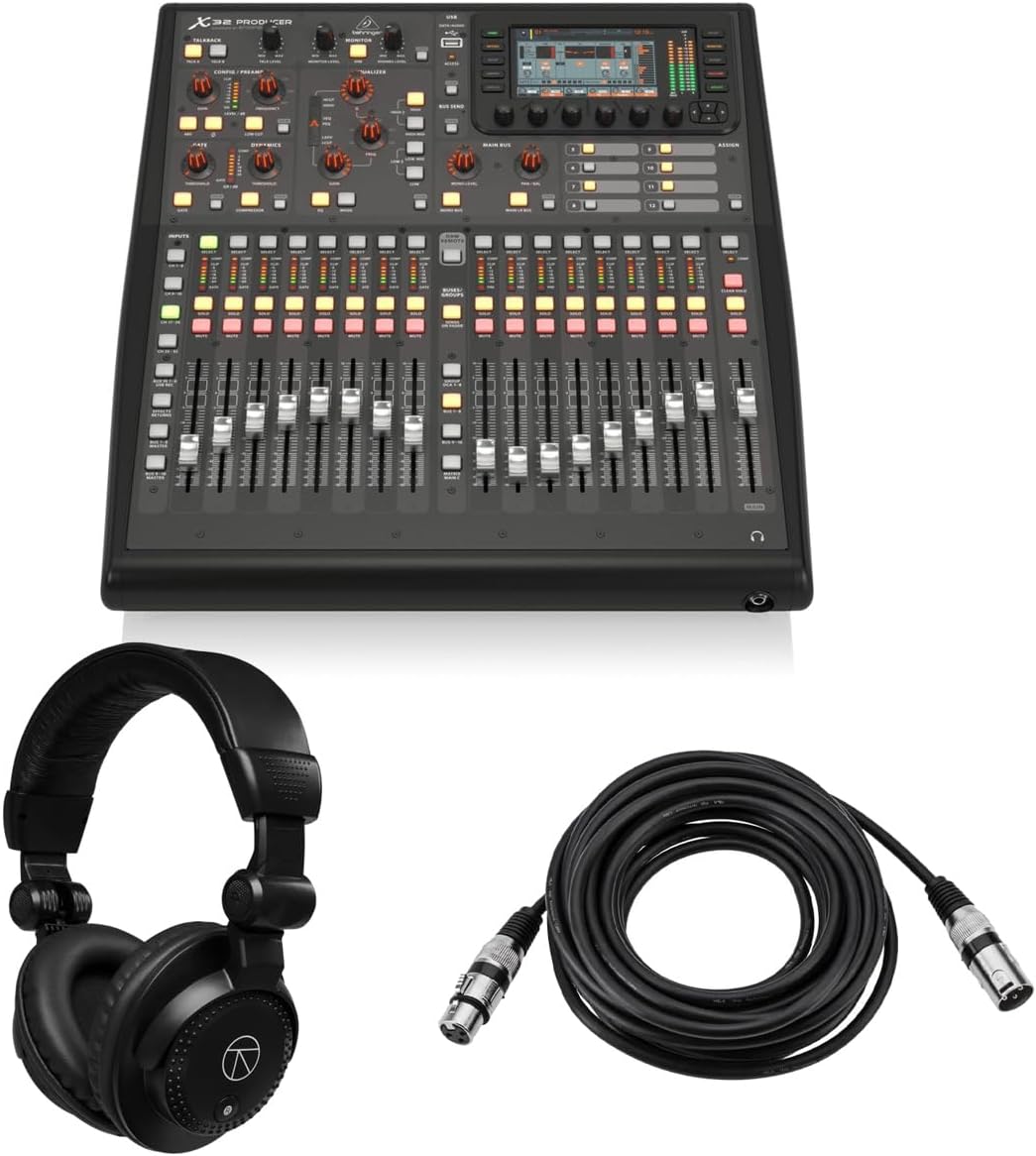
The Behringer X32 PRODUCER bundle has received a perfect 5.0 rating, offering exceptional value for new producers. It includes the console plus headphones and a microphone cable, providing a ready-to-use setup.
We may earn a commission when you buy through this link, at no additional cost to you.
With 16 programmable MIDAS Preamps and a 114 dB dynamic range, it delivers professional-grade sound. The rack-mountable design saves space in studios, and the 5 inch day-viewable Color TFT displays workflow components clearly.
The bundle convenience means you can start working immediately without sourcing extra gear. While the included accessories are basic, the console itself supports extensive creative control with internal effects and recall scenes.
This package is ideal for entry-level engineers wanting a reliable tool without hidden costs. It delivers high performance and includes necessary peripherals to streamline your setup process quickly.
Including essential cables and headphones reduces initial setup time and budget for new studio builds.
A 114 dB dynamic range captures subtle nuances in audio, ensuring clean recordings even in loud environments.
We may earn a commission when you buy through this link, at no additional cost to you.
The Behringer X32 COMPACT achieves a 4.7 rating by delivering the same power as the full X32 in a smaller frame. It features 16 MIDAS-designed mic preamps for audiophile sound quality across all channels.
We may earn a commission when you buy through this link, at no additional cost to you.
With 17 Fully automated motorized 100 mm faders, you get instant overview and powerful scene management. The compact design makes it easier to transport, while still supporting studio and live applications effectively.
Users gain the benefits of the X32 ecosystem without needing the largest physical space. The LCD Scribble Strips ensure intuitive channel distinction, reducing errors during live performances.
This model is recommended for touring bands or mobile engineers needing portability without compromising features. It balances size and capability to meet demanding production standards efficiently.
The compact design allows for easier transport, making it ideal for musicians who frequently move between venues.
Most controls match the full X32, ensuring existing users can switch models without relearning workflows.
We may earn a commission when you buy through this link, at no additional cost to you.
The PreSonus StudioLive Classic holds a 3.9 rating but remains relevant for its comprehensive recording capabilities. It features 16 Class A XMAX solid-state mic preamplifiers for low-noise audio capture.
We may earn a commission when you buy through this link, at no additional cost to you.
With 18-in/16-out USB 2.0 interface, you can record all channels directly to your computer. Fat Channel signal processing provides EQ, compressor, and limiter on all channels, giving you control at the source.
Some users find the interface dated compared to newer models, but the software library including Studio One Artist adds significant value. It serves as a robust entry point for those wanting integrated recording solutions.
This console is best for home studios prioritizing ease of recording. It offers all the basic tools needed to capture high-quality audio without requiring external audio interfaces.
Direct multitrack recording simplifies the path to production, removing the need for extra interfaces.
Built-in dynamics processors ensure clean signal flow, reducing the need for plugins in your DAW.
We may earn a commission when you buy through this link, at no additional cost to you.
The Behringer X AIR XR18 is a standout budget option with a 4.6 rating, designed for tablet control. It features 16 award-winning MIDAS-designed mic preamps for audiophile sound quality in a small form factor.
We may earn a commission when you buy through this link, at no additional cost to you.
Built-in Tri-mode Wi-Fi allows direct operation without external routers, making it ideal for small venues. The 18 x 18 channel USB interface supports direct recording on mobile devices and computers.
Lack of physical faders can be a drawback for those who prefer tactile controls. However, the affordability and remote accessibility make it a great tool for live streaming or house of worship use.
Budget-conscious users who value wireless flexibility will find this mixer highly useful. It brings professional preamp quality to the smallest price point on this list.
Integrated Wi-Fi enables you to mix from anywhere in the room, freeing you from the console spot.
High-end preamps at an entry price level provide a cost-effective way to improve recording quality.
We may earn a commission when you buy through this link, at no additional cost to you.
The Allen & Heath Qu-5 is a premium choice with a 4.8 rating, delivering exceptional audio quality. Its 96kHz XCVI FPGA Processing ensures ultra-low latency for professional live sound and installed audio applications.
We may earn a commission when you buy through this link, at no additional cost to you.
It includes a 7-inch capacitive touchscreen and 17 motorized faders for precise control. The USB-C 32×32 multichannel audio interface and SLink expansion port provide extensive connectivity options for growing systems.
The price is higher than average, but the processing power and build quality justify the cost. Features like SD card support for 32-channel capture add versatility for complex productions.
This console is ideal for professionals needing top-tier performance and expandability. It is a reliable investment for those committed to high-fidelity audio and advanced routing requirements.
FPGA architecture allows for real-time processing with minimal delay, essential for live performance.
Multiple ports including USB-C and SLink support complex setups without needing external boxes.
We may earn a commission when you buy through this link, at no additional cost to you.
The QSC TouchMix-16 has a 4.4 rating and is known for its user-friendly design and simplicity. It offers 20 Full Function Inputs and 6 Aux outputs, making it versatile for various applications.
We may earn a commission when you buy through this link, at no additional cost to you.
Each input channel features 4-band full parametric EQ, variable filters, gate and compressor. The TRS Aux outs drive wired In Ear Monitors directly, which is convenient for performers monitoring their mix.
While it lacks advanced automation, the physical design ensures quick access to controls. It is a great solution for users who prefer straightforward operation over complex digital menus.
This mixer is ideal for small venues or presenters needing a plug-and-play solution. It offers high-quality sound processing without the complexity of larger systems.
Physical knobs and buttons allow for faster adjustments than menu-driven digital interfaces.
Direct IEM support simplifies stage monitoring, reducing the need for additional hardware.
We may earn a commission when you buy through this link, at no additional cost to you.
Selecting the right digital mixing console requires evaluating several key factors to ensure it meets your specific needs.
Channel count determines how many sources you can mix simultaneously. Larger venues need higher counts, while smaller setups work well with fewer.
Choose a console that fits your current setup but allows room for future growth.
Mic preamps are critical for capturing clear audio. Look for consoles with reputable preamp designs like Midas or Yamaha.
High-quality preamps reduce noise and provide a better signal-to-noise ratio.
Connectivity includes physical inputs like XLR and digital interfaces like USB or Ethernet. Ensure the console supports your recording and playback needs.
More connectivity options provide flexibility for complex setups and external devices.
An intuitive interface speeds up your workflow. Touchscreens and motorized faders can simplify navigation and adjustments.
Consider how easy it is to access parameters during live performances.
For mobile use, weight and size matter. Rack-mountable consoles save space but add weight.
Choose a design that balances power with transportability.
Digital mixers range from affordable to high-end. Set a realistic budget based on your needs and return on investment.
Higher costs often correlate with better durability and features.
Check if the console supports your DAW or streaming software. Integrated recording or USB audio interfaces simplify setups.
Good software support ensures seamless workflow integration.
Professional environments require rugged build quality. Look for metal chassis and reliable components.
Investing in durability ensures long-term performance and reliability.
Start by connecting inputs and outputs correctly to avoid signal issues. Refer to the manual for specific routing diagrams.
Use gain staging to optimize levels at each stage. This prevents clipping and ensures clean audio throughout the chain.
Regularly clean the console and store it in a dry place to protect electronics. Avoid exposure to extreme temperatures.
Digital mixers offer advanced processing, flexible routing, and scene recall capabilities that analog units cannot match. They also provide better integration with recording software and remote control options for modern workflows.
Yes, most digital mixers include USB audio interfaces that connect directly to computers. Many models also support video capture or have built-in features tailored for streaming content creators.
Touchscreens offer intuitive navigation for complex settings, while faders provide tactile control for levels during live shows. Choose based on whether you prioritize workflow speed or physical precision.
Midas preamps are renowned for low noise and high dynamic range. They are often preferred in professional settings for their ability to capture detailed audio with minimal interference.
Most digital mixers have built-in USB interfaces, eliminating the need for external units. However, some workflows may still benefit from additional interfaces for expanded recording options.
Save scenes for common configurations like vocal solos or full band setups. Label them clearly and practice recalling them to ensure smooth transitions during live performances.
This guide has explored ten top digital mixing consoles ranging from budget-friendly options to premium professional systems. Each model offers unique strengths suited for different production scales and use cases.
Prioritize factors like channel count, preamp quality, and connectivity that align with your current and future needs. A console that fits your workflow will significantly improve your audio results.
Remember that prices and availability may change over time. Always check current listings before purchasing to ensure you get the best deal available.