
JHS Pedals 3 Series Reverb
4.7Editor score
Made in USA
Versatile tonal range
Compact pedal design
This guide compares the top ten hardware reverb units available in October 2026 for musicians and producers seeking premium analog and digital reverberation
Hardware reverb units remain essential for musicians who demand tactile control and superior sound quality that software alone cannot always provide during live or studio sessions.
We evaluated ten top-rated models based on sound quality, feature sets, build durability, and user feedback to help you find the perfect reverberation processor for your specific needs.
Each selection highlights unique strengths and practical applications so you can make an informed decision, keeping in mind that retail prices may vary slightly over time.
4.7Editor score

4.9Editor score

4.8Editor score
The following table offers a quick side-by-side look at the key specifications and features of each unit to streamline your research process.
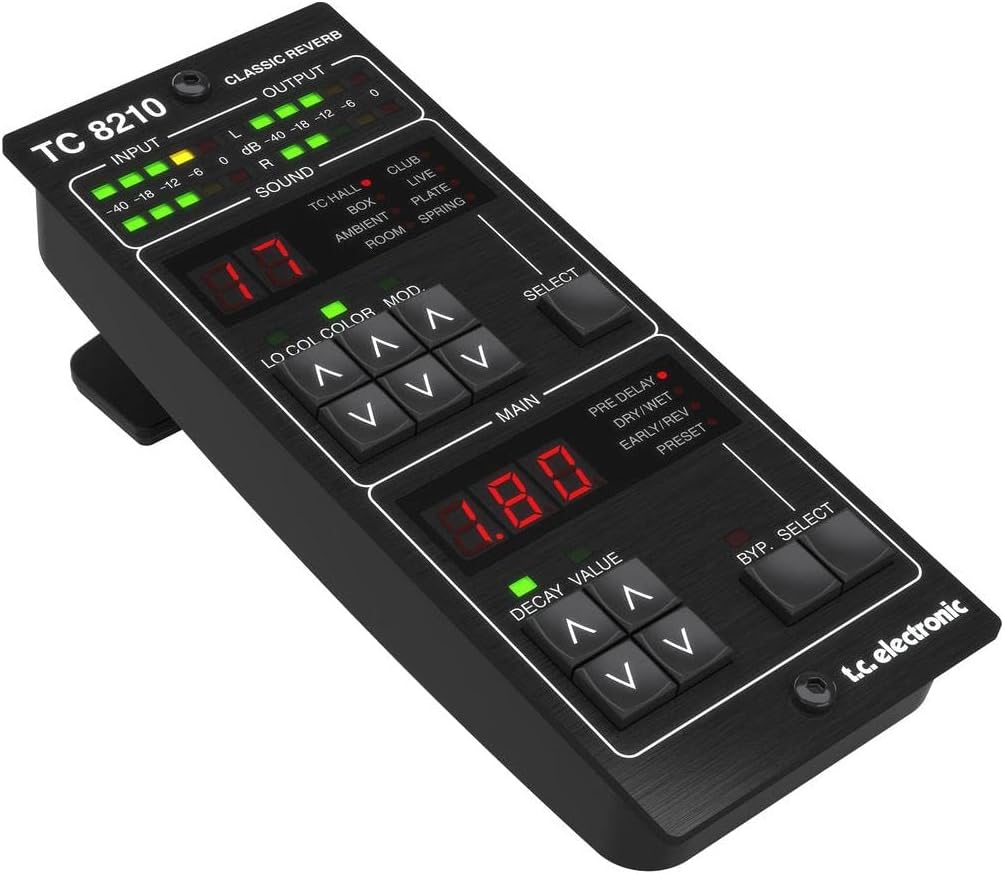




The TC Electronic TC8210-DT brings classic reverb sound directly into your digital workflow with optional hardware control. It scores highly for blending analog warmth with digital convenience.
We may earn a commission when you buy through this link, at no additional cost to you.
Its standout quality is the combination of intuitive hands-on control and massive variety. You get custom-built signature presets that save time during mixing sessions.
One trade-off is the reliance on software. While it preserves natural characteristics perfectly, you do need a computer running your DAW to access the full feature set.
Buy this if you work primarily in a studio environment and value having tactile knobs alongside the flexibility of a plugin interface for your tracks.
This unit delivers the trusted TC sound while giving you physical knobs to tweak decay and mix during a performance.
The included presets from favorite artists provide a quick starting point for achieving professional sounding reverb on your recordings.
We may earn a commission when you buy through this link, at no additional cost to you.
The Behringer Spring Reverberation 66 is a dedicated analog module designed for those who crave the raw character of physical springs. It offers a straightforward way to add grit.
We may earn a commission when you buy through this link, at no additional cost to you.
Its dual-spring design provides a rich, organic texture that digital emulation often struggles to match. The hardware is built to integrate directly into your existing modular setup.
However, it does require space in a rack. You lose some flexibility compared to pedals but gain pure analog authenticity. It is best for stationary studio use.
Choose this unit if you are building a Eurorack system and want genuine spring reverb without relying on digital algorithms or external processing units.
This module uses actual springs to create the reverberation effect, resulting in a unique and unpredictable sound signature.
Designed as a 72HP module, it fits perfectly into standard modular cases allowing you to patch it into any signal chain.
We may earn a commission when you buy through this link, at no additional cost to you.
This rackmount unit offers an impressive array of features including 199 presets and dual channel processing. It is designed for versatility across live and studio environments.
We may earn a commission when you buy through this link, at no additional cost to you.
The 24-bit signal processing ensures high quality sound with minimal noise. You can route different effects to separate sources simultaneously for complex setups.
While the interface is straightforward, deep editing requires navigating menus. However, the sturdy metal construction and wide variety of effects make it a solid choice.
This is an excellent pick for users needing a reliable workhorse in a rack without spending a premium price on boutique gear.
The 24-bit processing delivers clear sound reproduction that keeps noise low even during long recording sessions.
You can apply different effects to two separate audio sources at once or combine them for layered soundscapes.
We may earn a commission when you buy through this link, at no additional cost to you.
The Donner Reverb Pedal is a versatile little box that packs seven modes into a mini footprint. It is perfect for adding space to your tone without taking up too much room.
We may earn a commission when you buy through this link, at no additional cost to you.
Modes like Hall, Church, and Plate cover most needs. The true bypass design ensures your dry signal stays transparent when the pedal is off.
You do need to supply your own power. The aluminum construction is tough but simple. It is a reliable choice for gigging musicians who need a small reverb.
Select this pedal if board real estate is tight and you want a dependable unit that covers a wide range of standard reverb types.
With seven different modes you can switch between Room and Hall instantly to suit different songs in your set.
The circuit design ensures that when the effect is off your guitar tone passes through without any coloration or signal loss.
We may earn a commission when you buy through this link, at no additional cost to you.
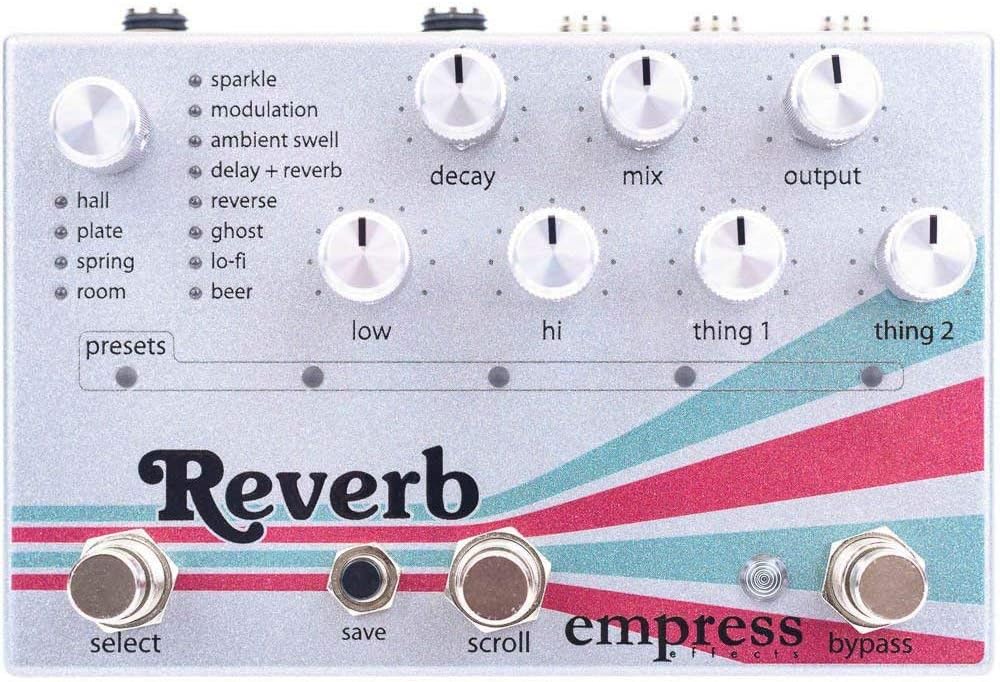
Empress Effects Reverb is known for its quality and ease of use. It provides 24 studio grade algorithms that sound professional out of the box.
We may earn a commission when you buy through this link, at no additional cost to you.
The ambient sounds are particularly useful for creating vast textures. The tap functions allow you to sync your effects to your playing tempo quickly.
While it is a compact pedal it feels full featured. The cost is higher than budget options but the sound quality justifies the investment.
This unit is ideal for players who want studio quality reverb on their pedalboard without needing to tweak endless menus for every song.
The 24 algorithms are designed to replicate the best studio gear giving you professional sounding reverbs in a pedal.
Unique ambient settings allow you to create soundscapes that go beyond standard reverb for atmospheric tracks.
We may earn a commission when you buy through this link, at no additional cost to you.
The Strymon BigSky is a benchmark in reverb pedals. It offers a multidimensional control scheme that lets you shape sound in ways most pedals cannot.
We may earn a commission when you buy through this link, at no additional cost to you.
It supports extensive routing and preset management. The algorithms are studio grade and produce lush detailed textures. It is a dream unit for sound designers.
Its size and feature set might be overkill for simple needs. However if you want the absolute best in digital reverb this is the choice to make.
Buy this if you are an advanced player or producer who wants maximum flexibility and top tier sound quality in a physical pedal.
The pedal allows you to control multiple parameters simultaneously giving you precise control over the shape of your reverb.
The internal algorithms are based on top studio processors ensuring that your tone sounds professional in any mix.
We may earn a commission when you buy through this link, at no additional cost to you.
The Strymon blueSky V2 offers a perfect balance of power and simplicity. It delivers stereo reverb with high fidelity and essential controls for shaping tone.
We may earn a commission when you buy through this link, at no additional cost to you.
You get dedicated controls for decay and pre-delay. The shimmer switch adds a unique top end that is great for ambient passages.
It is easy to use and fits well in most boards. While it does not have the depth of the BigSky it covers 90 percent of needs easily.
This is a top recommendation for most guitarists who want high end digital reverb that sounds great and is easy to use on stage.
The stereo outputs allow you to spread the reverb across two amps or speakers creating a wider and more immersive sound.
The dedicated shimmer switch adds a pitch shifted octave to your reverb tails for a magical and atmospheric effect.
We may earn a commission when you buy through this link, at no additional cost to you.
The Walrus Audio Mako MKII R1 is rebuilt to deliver vast tonal improvement. It includes 128 onboard presets and new features like ducking for more dynamics.
We may earn a commission when you buy through this link, at no additional cost to you.
Feedback EQ controls let you tailor the tone of the reverb tail to fit perfectly in your mix. The screen makes navigation simple.
It is a high fidelity unit that stands out for its variety. The complexity of menus might be a hurdle but the flexibility is worth it.
Choose this unit if you need a powerful unit that can handle many different styles and you enjoy having many presets at your fingertips.
The ducking and swelling feature allows the reverb to recede when you play notes keeping your rhythm clean and defined.
You can adjust the frequency response of the feedback loop to cut harsh highs or boost warmth in the reverb tail.
We may earn a commission when you buy through this link, at no additional cost to you.
Universal Audio Galaxy 74 offers the most authentic emulation of classic mid-70s Japanese hardware. It models the tape delay mechanism and spring reverb precisely.
We may earn a commission when you buy through this link, at no additional cost to you.
The capture of the analog preamp section adds character. You can use the app to tweak oscillation sounds and footswitch functions.
It excels at specific vintage tones. If you need modern room reverb this is not the one. But for retro warmth it is definitive.
This pedal is perfect for those chasing a specific retro sound that relies on tape delay and spring reverb characteristics.
This unit captures the exact sound of the classic Japanese ambience devices used on countless vintage records.
The UAFX Control app lets you customize oscillation sounds and footswitch functionality to suit your specific needs.
We may earn a commission when you buy through this link, at no additional cost to you.
The JHS Pedals 3 Series Reverb is a versatile unit made in Kansas City USA. It allows you to achieve anything from small room sounds to endless washes.
We may earn a commission when you buy through this link, at no additional cost to you.
The EQ and pre-delay knobs let you tune the texture perfectly. It is simple to use and sounds professional for the price.
It lacks some advanced features but that keeps it simple. The build quality is robust and the sound is reliable for most playing styles.
This is the best budget choice for players who want a reliable American made reverb pedal that covers all the essentials.
You can go from tight room sounds to massive washes making it suitable for both clean and heavy playing styles.
A dedicated knob allows you to add a short delay before the reverb starts which clarifies your notes in a mix.
We may earn a commission when you buy through this link, at no additional cost to you.
Selecting the right reverb unit requires understanding your specific needs and the context in which you will use the gear.
Different units offer different types of reverb such as spring plate room hall or algorithmic. You should choose a unit that supports the specific sounds you need for your music style.
Focus on models that include the specific types you rely on most such as spring for guitar or hall for vocals.
Stereo reverb creates a wider soundscape by using two outputs to spread the effect. This is essential if you have a stereo setup and want a spacious tone.
If you only have a single amp mono units are sufficient and often simpler to integrate into a compact pedalboard.
Consider how you will adjust the settings. Units with dedicated knobs allow for quick adjustments during live performance while menu driven units offer more options but slower access.
For live use prioritize units with immediate physical control over key parameters like mix decay and pre delay.
Hardware units must withstand the rigors of touring and transport. Look for metal casings and robust footswitches that ensure longevity.
Check reviews for reports of durability issues and choose brands known for rugged construction if you plan to take the gear on the road.
Having the ability to save and recall presets is crucial for consistency during live shows or studio sessions. This allows you to switch sounds instantly without reprogramming.
Select a unit with sufficient memory slots for all the sounds you use regularly to avoid losing your settings.
Always check the power needs of the unit. Some pedals require standard center negative 9v supplies while others may need specific isolated power or AC adapters.
Ensure you have the correct power supply ready to avoid damage to the unit and ensure it works as intended.
Look for features like expression inputs MIDI control or stereo outputs. These expand the utility of the unit allowing you to integrate it into complex setups.
If you plan to use the unit for more than just reverb ensure it has the necessary I/O for your specific routing needs.
Reverb units range from affordable budget models to high-end professional devices. Determine how much you are willing to spend based on the quality and features you require.
Often a mid-range unit offers the best balance of features and cost for most users.
Start by connecting your instrument to the input and your amp to the output. Ensure that the power supply matches the unit's specifications before turning it on.
Use the pre-delay knob to clarify your notes before the reverb starts and the mix knob to balance the dry signal with the wet signal for a natural sound.
Store your unit in a dry and cool place when not in use. Avoid exposing it to extreme temperatures or humidity which can damage the internal circuitry.
Analog units use physical components like springs or plates to create reverberation which results in a warmer sound. Digital units use algorithms to simulate space offering more versatility and control.
Not necessarily. Many reverb units work in mono and will sound good on a single amp. However stereo setups provide a wider and more immersive sound.
Connect your instrument to the input jack and your amp to the output. Set the mix knob to a low level and increase it until the reverb sits well with your tone.
Yes many pedal units are compatible with keyboards if they can handle the frequency range and impedance. Look for units with sufficient headroom for keyboard signals.
Pre-delay is the time delay before the reverb effect starts. It helps separate the dry signal from the reverb to keep your notes clear and defined.
Yes you can chain multiple units for complex effects. However use caution as this can clutter your mix. It is often better to use one high quality unit.
We hope this guide has helped you find the ideal hardware reverb unit for your needs from the versatile JHS Pedals 3 Series to the powerful Strymon BigSky.
Consider your budget and specific sound goals when making your decision. A unit that fits your workflow will serve you better than one that is too complex.
Remember to check current prices and availability before buying as offerings can change over time and stock may vary by region.